
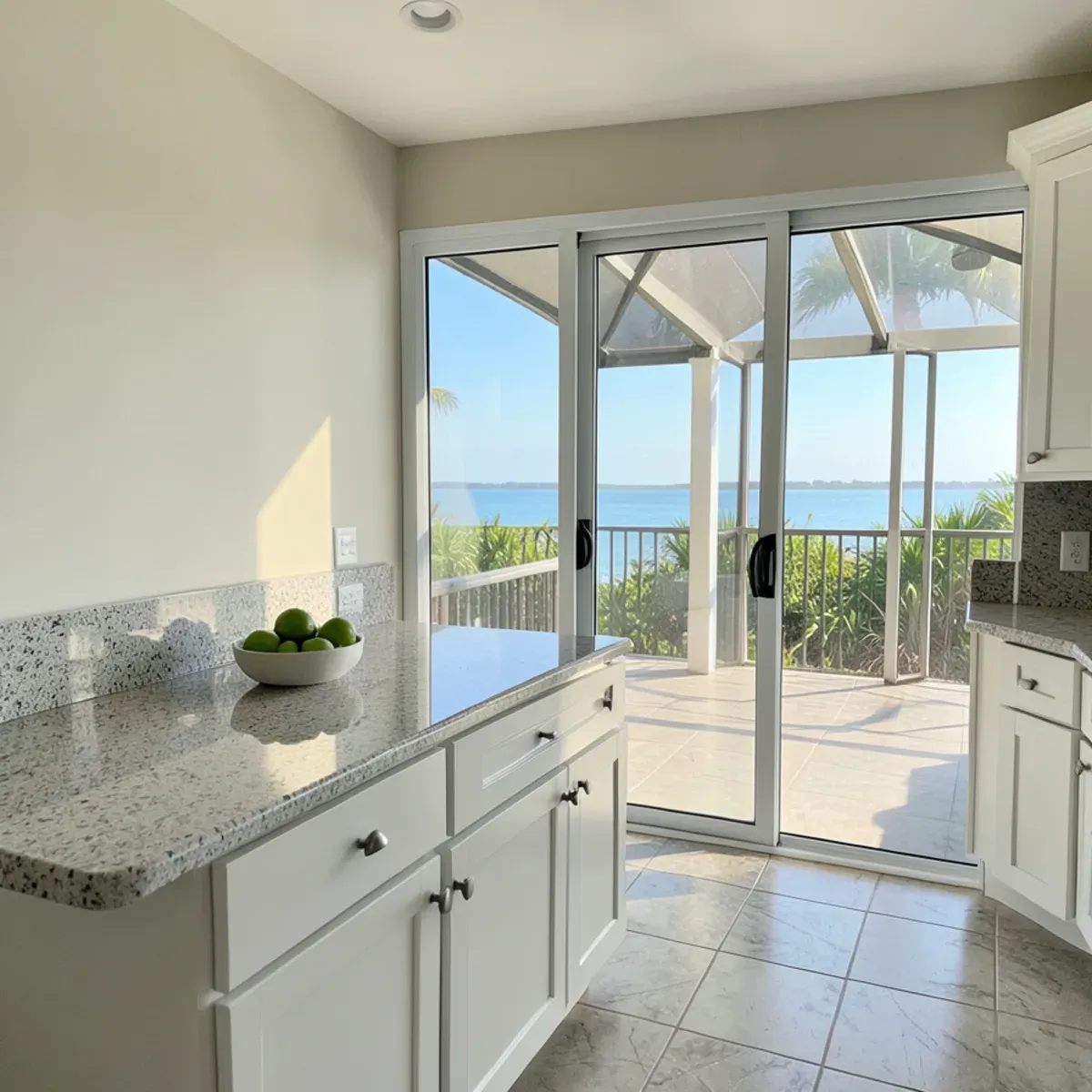
For bright coastal kitchens on the Treasure Coast, the easiest granite colors to live with are light grays, creams and mid-tone speckled stones with some movement, because they hide sand, crumbs and dried water spots better than solid black or plain white. Start with your kitchen's light, then the cabinet pairing, and save dramatic dark stone for an island.
Near the beach and the Indian River Lagoon, a countertop deals with things an inland kitchen rarely sees in the same amount: fine sand tracked in from the beach, salty drips from rinsed gear, and strong reflected light off water and white walls. A color that looked calm in a sample can show every speck once it is installed under a big slider.
This guide groups granite colors by how they behave in that setting, with the cabinet colors each one tends to suit. Color names vary between suppliers, so use them as a starting point for what to ask to see.
How Does Coastal Light Change the Way Granite Looks?
Light decides more about a granite color than the sample tile does. East-facing kitchens get warm, low morning sun that brings out gold and cream; west-facing kitchens and lanai sliders get hard afternoon glare that makes polished dark stone look like a mirror. North light is cooler and pushes whites toward gray.
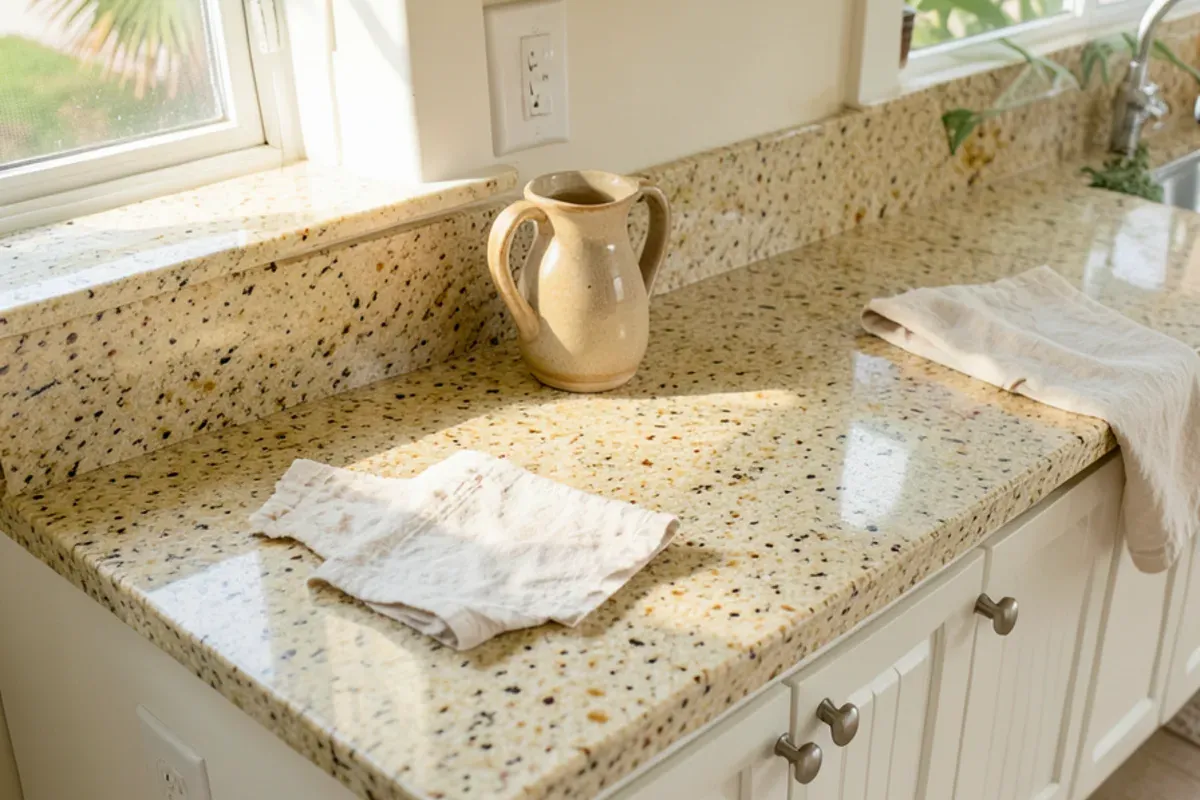
Granite is natural stone, so its color holds up in strong Florida sun; the issue is how much it reflects and what it reveals. View a sample at the counter's height, at the time of day you cook, before you commit.
Want a straight answer for your kitchen? Call the shop.
Free in-home estimates · Mon–Fri 7:00–4:30 · weekend estimates by appointment
Which Granite Colors Hide Sand, Salt and Water Spots?
Busy, mid-tone patterns forgive the most. Solid colors at either end of the scale show the most. The table groups common families; check the actual slab, since every quarry block varies.
| Color family | Examples often seen | Hides well | Shows more | Pairs with |
|---|---|---|---|---|
| White and light gray with movement | Alaska White, Colonial White, River White | Sand, dust, light crumbs | Oil, coffee and wine if not sealed | White, light gray or pale wood cabinets |
| Cream and gold speckle | Santa Cecilia, New Venetian Gold, Giallo Ornamental | Crumbs, sand, water spots | Little; can feel busy with patterned tile | White, cream or cherry and maple |
| Mid-gray speckle | Luna Pearl, Steel Grey | Almost everything day to day | Very little | White, navy, light oak |
| Black with sparkle | Black Pearl, Blue Pearl | Crumbs among the crystals | Fingerprints and streaks when polished | White or pale gray cabinets |
| Solid black | Absolute Black | Stains | Sand, salty water spots, dust, smudges | White cabinets, as an island or accent |
Is White Granite a Good Fit Near the Beach?
Light granites are popular in coastal kitchens because they keep a room bright without the etching problems of marble. They are also, as a group, more porous than darker stones, so sealing at install and checking the seal around the sink matter more. For a side-by-side of the usual whites and how each wears, see white granite countertops.
- Pick a white with some gray or wine-colored flecks rather than a near-solid white; the flecks absorb sand and crumbs visually
- Hold the sample next to your cabinet paint; a warm white stone beside a cool white cabinet can look dingy
- Ask whether the slab has been resin-treated and how it tested for absorption
When Does Black Granite Work in a Coastal Kitchen?
Black granite resists staining well and gives strong contrast with white cabinets, but polished black shows fine sand, dust and the white rings left when salty or hard water dries. A leathered black hides those far better, and black works especially well as an island top against lighter perimeter stone. Our black granite countertops page covers finishes and how to check a black slab for dye.
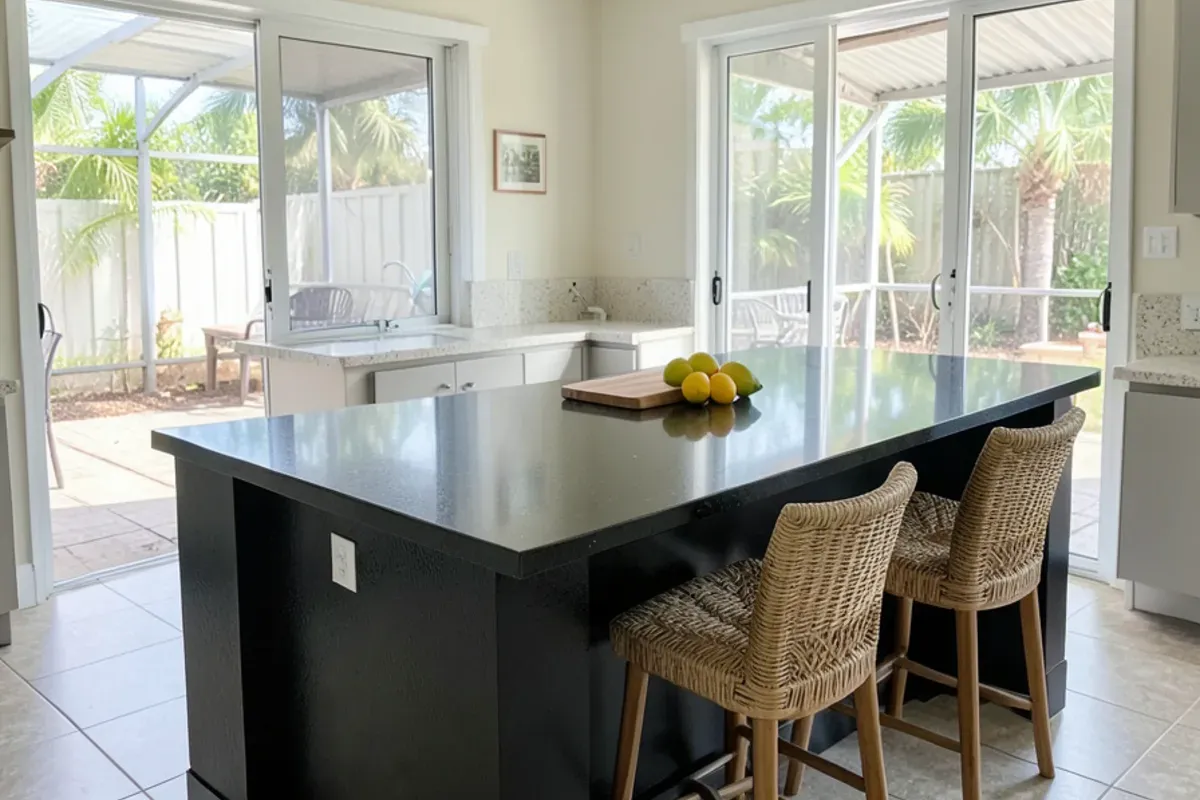
For the whole range of colors we template and install, see our granite countertops page.
Pairing Granite With White or Wood Cabinets
Cabinets cover more wall than the counter, so pick the stone to work with them rather than the other way around.
- White cabinets: nearly anything works; light gray or cream granite keeps the room soft, black or blue-black adds contrast
- Pale oak or maple: cool grays and whites keep wood from turning orange in afternoon light
- Cherry or darker wood: cream and gold speckles echo the warmth; black can look heavy in a small kitchen
- Painted navy or sage: white granite with gray movement, or a soft mid-gray speckle
Smaller cottage kitchens and Hutchinson Island condos around Jensen Beach often benefit from lighter, low-contrast stone that keeps a compact room open. Larger kitchens with more wall and window can carry a darker island.
Which Granite Colors Hold Up on a Sunny Lanai Counter?
Outdoors, color affects comfort as well as looks. Granite keeps its color in direct sun, which is one reason it is common on lanais where most quartz makers exclude outdoor use. But a dark top in open afternoon sun soaks up heat and can be too warm to lean on, while light and mid-tone stones stay noticeably cooler.
- Open patio, west or south sun: light gray, cream or mid-tone speckle, so the surface stays comfortable
- Covered lanai under a roof: darker stone works, since the roof keeps direct sun off most of the day
- Near the pool: a leathered or honed finish hides the dried spots pool water and salty rinse water leave, and feels less slick when wet
- Grill and bar side by side: a busy pattern blurs grease spatter and charcoal dust between cleanings
Outdoor granite also needs its seal checked more often than an indoor top, because rain and pool water reach it. Plan on testing it each spring and fall.
A Six-Step Shortlist for Coastal Granite
- Note which way the kitchen faces and when you cook, then view samples at that hour.
- Pick one or two color families from the table above based on what you want hidden.
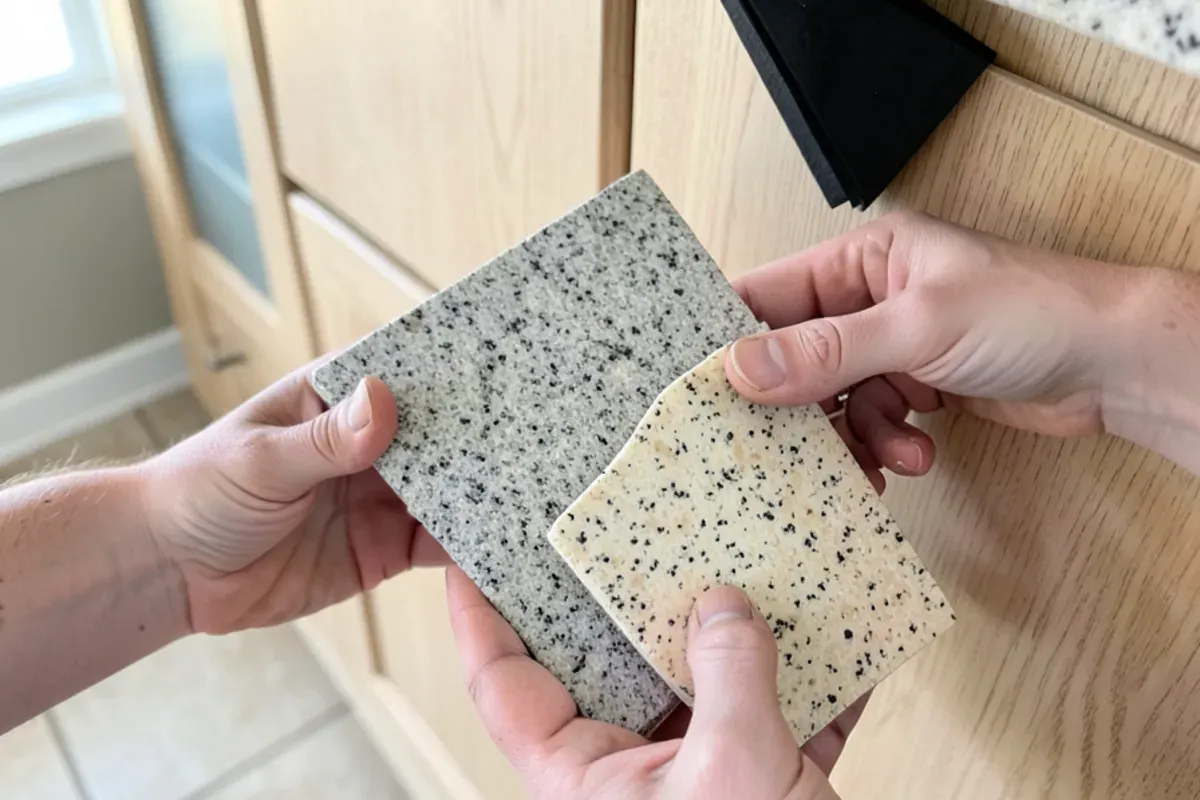
- Hold each sample against a cabinet door and next to the floor.
- Choose the finish; our comparison of honed, leathered and polished granite covers how each handles fingerprints and glare.
- See the full slab, and put a few drops of water on a sample to judge how readily it absorbs.
- Have the first choice and one backup color written on the estimate, in case the slab you saw sells.
From Our Shop: Judge the Stone Where It Will Live
We tell people to judge samples on the existing counter near the sink and the slider, not on a dining table or under store lighting. Two minutes of real light settles more color debates than an hour in a store. If you can, leave a sample there for a day and look at it in the morning and at dinner.
We also suggest looking at your floor. Many Treasure Coast homes have terrazzo, travertine-look tile or wood-look plank, and the counter will sit between that and the cabinets. A stone that bridges the two usually ages better in your eye than one chosen to stand out.
Then there is the light after dark. Under-cabinet LEDs come in warm and cool tones, and they shift a granite more than people expect: warm strips push a gray stone toward beige, and cool strips make a cream stone look flat. If you are replacing the lighting too, pick the bulbs before the slab, or at least hold the sample under a similar light at night.
Questions We Hear About This
Which granite color is easiest to keep clean in a beach house?
A mid-tone speckled granite, gray, cream or gold, is the most forgiving for a beach house. The small, varied crystals blur sand, crumbs and the white spots left by drying salty water, so the counter looks clean between wipes. Light whites with movement come next. Solid black polished granite is the most demanding. When we visit, we can lay samples near your sink to compare.
Will light granite fade or yellow in Florida sun?
Granite is natural stone, and its color is stable in sunlight, which is one advantage over some engineered materials near big windows. What can change a light granite's look is staining or a darkened area around the sink where water soaks in over time if the seal wears. Keeping it sealed and testing it with a few drops of water every so often prevents most of that.
Should the granite match my floor tile?
It does not need to match, but it should get along with it. Choose a stone that shares a tone with the floor, or one that sits between the floor and the cabinets in lightness. A busy granite above a busy terrazzo or patterned tile can fight; in that case a calmer speckle works better. Bring a floor tile or photo to the estimate and we'll compare samples against it.
Does dark granite get too hot on an outdoor counter?
It can, if it sits in open sun. Black and deep green stone absorb a lot of heat on a summer afternoon, and the surface can become uncomfortable to touch or set a drink on. The stone itself is not harmed. Under a covered lanai the difference is small. For an exposed patio, a light gray, cream or mid-tone speckle stays cooler and still hides grill dust.
The Bottom Line
Pick coastal granite in three steps: test it in your own light, choose a pattern busy enough to hide sand and dried water, and make it sit comfortably between your cabinets and floor. Use dark polished stone sparingly unless you enjoy wiping.
Call us to set up a free in-home estimate. Victor will look at your kitchen's light with you, talk through the colors you are weighing and price your shortlist in writing.