
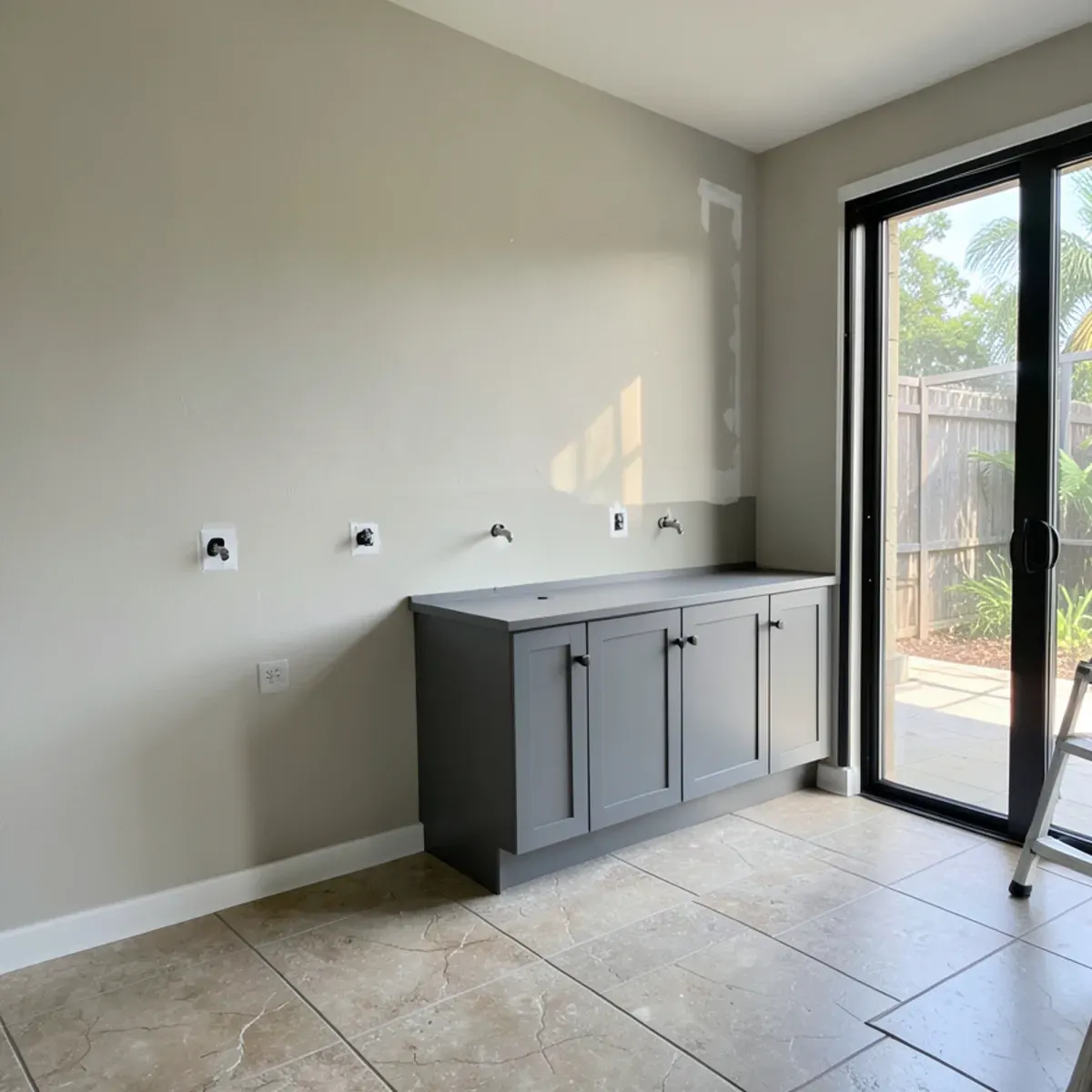
In unincorporated St. Lucie County, replacing kitchen cabinets with no change to the electrical or plumbing configuration, and replacing a sink in its existing location, both appear on the no-permit list the county publishes (St. Lucie County Government). Moving plumbing, adding circuits or changing a wall generally does need permits.
Which office issues them depends on your address: Fort Pierce and Port St. Lucie run their own building departments, and the unincorporated communities go through the county. Permit questions come up at almost every estimate, because the answer changes what a remodel costs and how long it runs. This guide covers kitchen-specific triggers, the three permit offices that matter in St. Lucie County, and how fees and review times work. For the remodeling side of a project, see our overview of kitchen remodeling in Fort Pierce North.
A note on our role: we are a countertop and kitchen remodeling shop, not a permit office. Treat this as a starting point and confirm your project with the department that serves your address.
Which Kitchen Projects Need a Permit in St. Lucie County?
Florida's licensing rules make a useful first filter. The Department of Business and Professional Regulation does not require state licensure for cabinets, countertops, paint, tile or window treatments, while plumbing, electrical and structural work do require it (Florida DBPR). Permit triggers tend to follow the same line.
| Kitchen work | Permit usually needed? | Why |
|---|---|---|
| New countertops on the same cabinets | Generally no | Countertops are not licensed or structural work |
| Cabinet replacement, same plumbing and wiring | No, in unincorporated St. Lucie County | Listed on the county's no-permit list |
| Sink replacement in its current spot | No, in unincorporated St. Lucie County | Exempt only while the sink stays put |
| Moving the sink or dishwasher | Yes | Rerouted water and drain piping requires a licensed plumber |
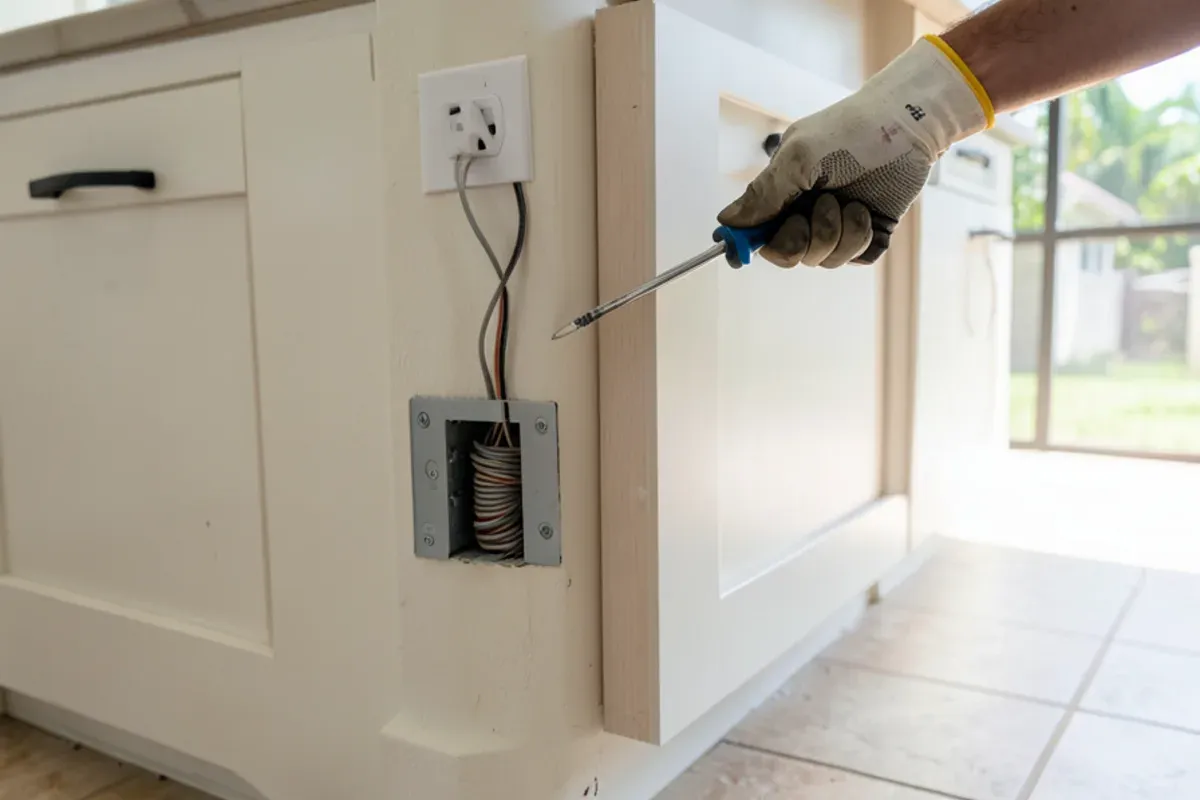
| Island outlets or new circuits | Yes | Electrical work by a licensed electrician |
| New gas line for a range | Yes | Gas piping is licensed, permitted work |
| Removing or altering a wall | Yes, sometimes with plan review | Structural and building permit work |
Tile backsplash, paint and new hardware sit in the no-permit column too. Once a project reaches inside the wall, assume a permit is involved and ask.
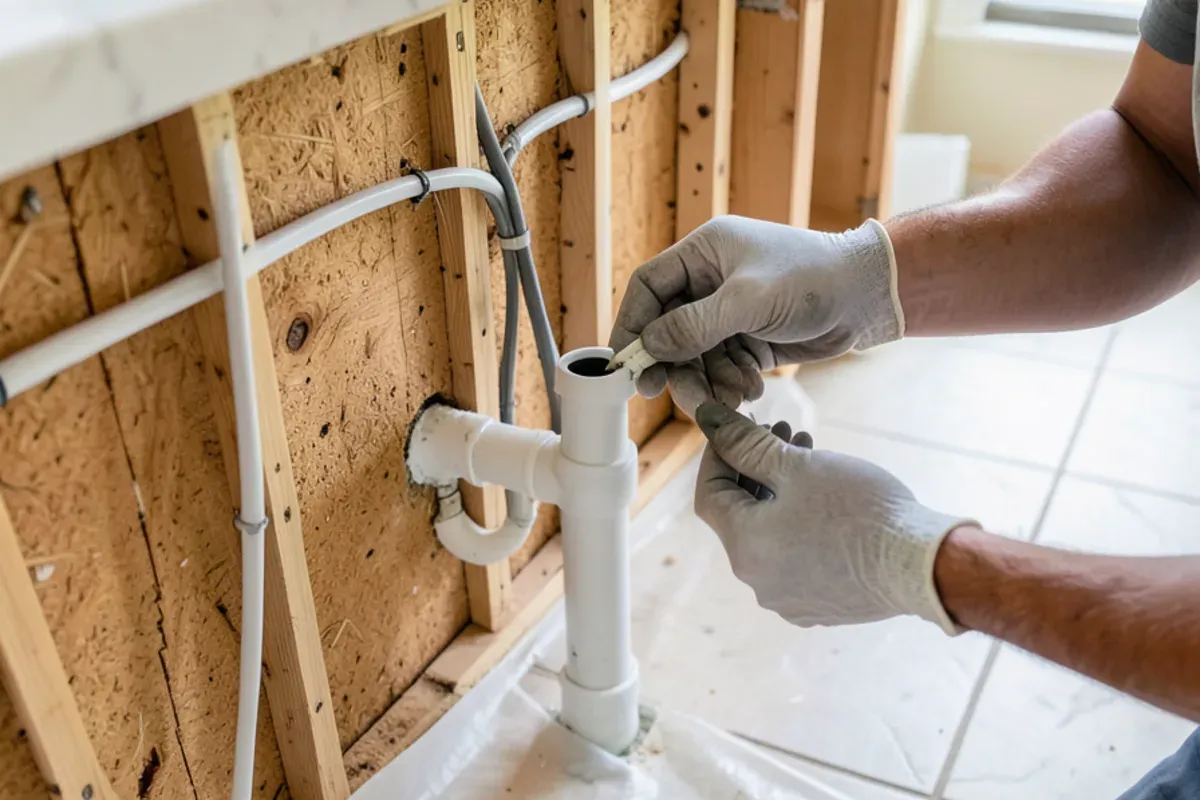
Want a straight answer for your kitchen? Call the shop.
Free in-home estimates · Mon–Fri 7:00–4:30 · weekend estimates by appointment
City, County or Port St. Lucie: Which Building Department Is Yours?
A Fort Pierce mailing address does not put you inside the City of Fort Pierce. Large parts of the area, including White City, Lakewood Park, Fort Pierce South, Fort Pierce North and the oceanfront condos of Hutchinson Island South, are unincorporated, so their permits come from St. Lucie County's Building & Code Regulation Division. Our St. Lucie County page lists the communities we serve on both sides of that line.
- City of Fort Pierce: runs its own building department apart from the county's, and alongside any building permit it also demands distinct permits for electrical, plumbing and mechanical work (City of Fort Pierce).
- City of Port St. Lucie: issues permits for addresses inside its city limits through its own building department.
- Unincorporated St. Lucie County: handled by the county, which publishes the no-permit list cited above.
If you are not sure which side of the line your home sits on, your property tax bill or the county property appraiser's record shows the jurisdiction.
What Do Kitchen Remodel Permits Cost?
Fees are tied to the value of the work. In the City of Fort Pierce a building permit costs 0.5% of the valuation with a $100 minimum (Jaspector, 2026), so a $40,000 kitchen that includes a wall change would carry a $200 building permit before any trade permits are added. Out in the unincorporated county the floor is $75, and plan review, where required, tacks on roughly a quarter to 30% of the fee (Pineland Engineering).
For most kitchens the fees total a few hundred dollars at most. The larger cost of a permit is usually the calendar time and the licensed trade work that triggered it.
What Happens Between the Application and the Final Inspection?
A permitted kitchen follows a fixed order, and the order matters to the cabinet and countertop schedule because some inspections have to happen before anything covers the work.
- Confirm the jurisdiction. The property appraiser's record shows whether the parcel is in a city or the unincorporated county.
- The licensed contractor applies. The plumber, electrician or general contractor files for their own scope, with a layout or drawings when the office asks for them.
- Plan review, if the work needs it. Wall and structural changes are the usual reason; simple trade permits often skip this step.
- Permit issued, then demolition. Work starts only once the permit is in hand, and the permit stays available on site for inspectors.
- Rough inspection. New supply and drain lines, wiring and boxes are inspected while still exposed, before cabinets or drywall cover them.
- Cabinets, countertops and finish work. Boxes go in over the inspected lines; stone is templated and installed on them.
- Final inspection. Fixtures are connected and the inspector signs off, which closes the permit.
Step five is the one that catches owners out. New cabinets cannot be set over a relocated sink drain until the rough inspection passes, so a failed or rescheduled inspection pushes the template and install back with it.
How Long Does Permit Approval Take?
Simple trade permits, such as a plumbing permit to relocate a sink, typically approve in one to five business days. Projects that require plan review, like additions or new construction, take two to six weeks (FL Permit Help). A kitchen that removes a load-bearing wall can land in the longer group.
The code edition matters too. The Florida Building Code 8th Edition took effect on December 31, 2023, and the 9th Edition takes effect on December 31, 2026. If your application falls near that changeover, ask the department which edition it will be reviewed under, since drawings may need to reflect it.
Talk to the shop before you buy a slab.
Free in-home estimates · Mon–Fri 7:00–4:30 · weekend estimates by appointment
Who Pulls the Permit for a Kitchen Remodel?
Each permit is normally pulled by the licensed contractor whose work it covers: the plumber takes out the plumbing permit, the electrician the electrical permit, and a licensed general or building contractor handles structural changes. Under the CILB application, a Florida general contractor needs $300,000 of general liability coverage per occurrence plus $50,000 for property damage (Florida DBPR), one more reason to ask any contractor for a license number and certificate before work starts.
Our part of a kitchen is the cabinets, countertops, sink cutouts and backsplash, none of which require state licensure. When a plan also includes plumbing, electrical or wall changes, we explain at the estimate which permits it likely triggers and how that licensed portion gets handled. Our full kitchen remodel page shows how we coordinate the rest of the job around it.
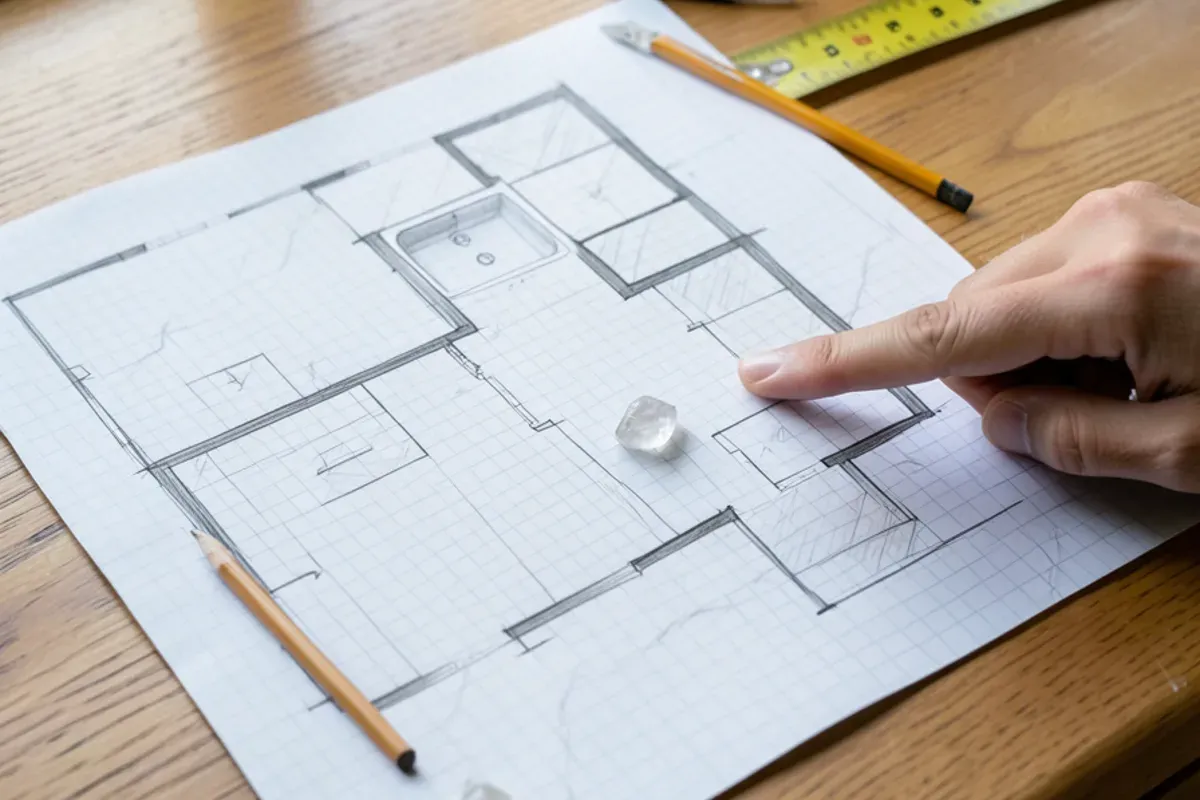
From Our Shop: Four Questions That Settle the Permit Issue
At the estimate we ask four things before anyone thinks about a building department. Is the sink staying exactly where it is? Is the dishwasher moving? Will the island or a new run need outlets? Is any wall, soffit or window changing?
If all four answers are no, most kitchens in unincorporated St. Lucie County fall under the no-permit list, and the project can be scheduled around the template and install alone. Each yes adds a licensed trade and usually a permit. Knowing that early lets you decide whether shifting the sink two feet is worth the added time and cost.
Each yes goes on the written estimate as its own line, named for the trade it brings in, so you can see which part of the price depends on permitted work. One honest caution: the county's exemption is written for a sink replaced in the same location, so even a short shift to center a new bowl under a window is worth asking the building department about before you count on skipping the permit.
Questions We Hear About This
Do I need a permit to replace kitchen cabinets in unincorporated St. Lucie County?
Not if the plumbing and electrical stay as they are. St. Lucie County's no-permit list covers kitchen cabinet replacement with no change to either configuration. Add an outlet, move the sink or reroute the dishwasher drain and the project needs the matching trade permit. Inside the City of Fort Pierce or Port St. Lucie, check with that city's building department instead.
Is a countertop replacement ever a permit job?
On its own, rarely. Swapping laminate or tile for stone on the same cabinets is not licensed work. It becomes part of a permitted project when the sink moves, the cooktop switches from electric to gas, or new outlets are added in a slab backsplash. We point out any of those triggers when we measure, so you know before the template.
What happens if required permit work is skipped?
It tends to surface later. Unpermitted plumbing or electrical work may need an after-the-fact permit and inspection, sometimes with finished surfaces opened up, and it can come up when the home is sold or insured. Paying for the permit at the start is almost always cheaper than sorting it out at closing.
Does Port St. Lucie use the county's no-permit list?
Not automatically. The list cited here is published by St. Lucie County for unincorporated areas, while Port St. Lucie, as an incorporated city, sets and enforces its own permit rules. For a kitchen in Port St. Lucie, confirm with the city which cabinet, sink and countertop work it exempts before tear-out, especially if anything inside the walls is changing.
The Bottom Line
The short version: surfaces and same-spot swaps usually go ahead without a permit in the county, and anything inside the walls usually needs one, from whichever office covers your address. Fees stay modest; the real effect is on the schedule.
For a free estimate at your home, give us a call: we will review what your plan changes, name the permits it likely involves, and price the cabinet and countertop work in writing.