
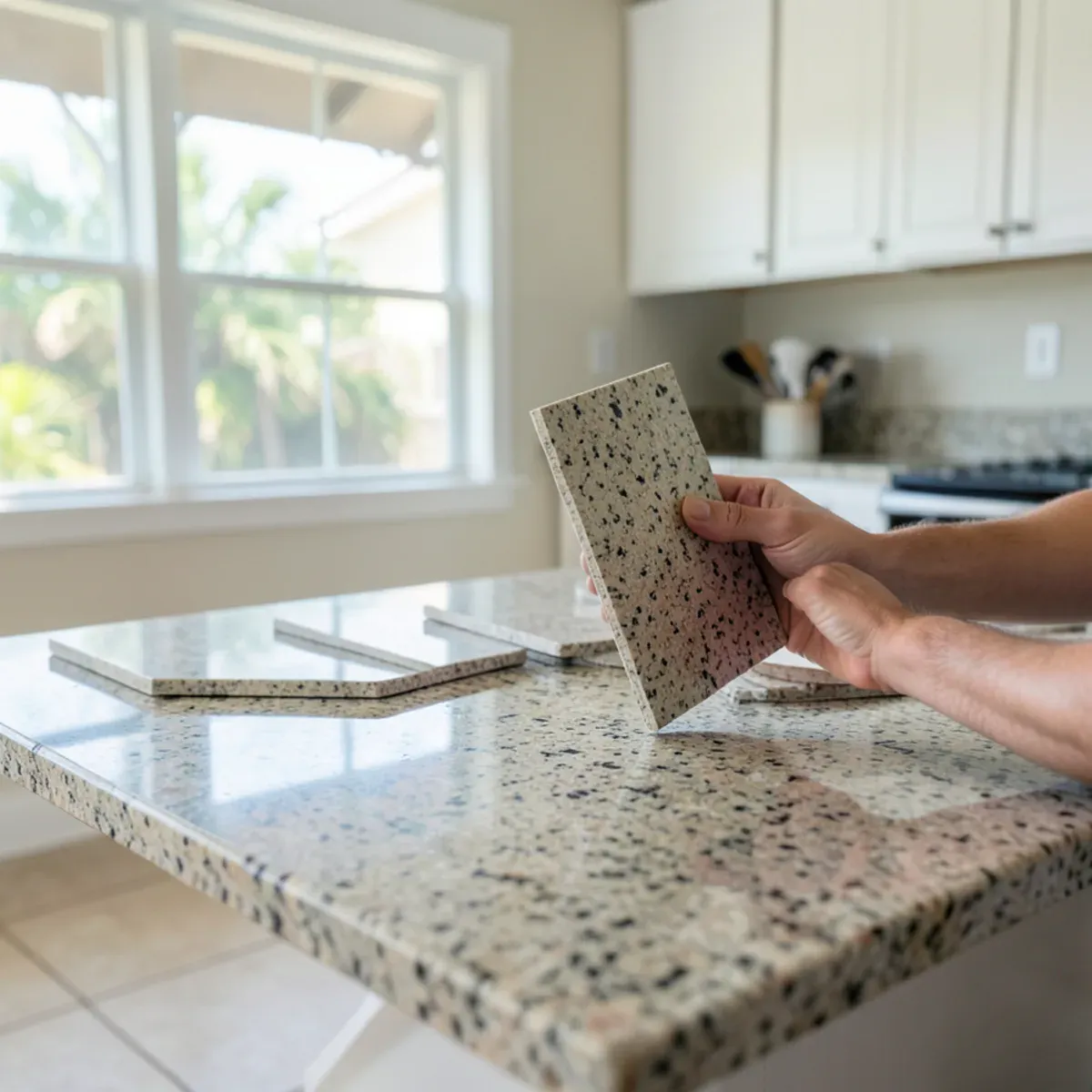
Buying from a local fabricator usually means you deal directly with the shop that measures, cuts and installs your countertops, can often choose the exact slab, and call the same people if anything needs adjusting later. A big-box retail program bundles the sale, payment options and scheduling through the store, while the templating and installation are typically done by a contracted fabricator.
Neither route is automatically better. Retail programs offer a familiar storefront, set processes and sometimes store financing. A local shop offers fewer handoffs and more say over the stone. What suits you depends on how much you care about slab choice, how quickly you want to talk to the person doing the work, and who you want to call in two years.
This comparison describes how the two models typically work. Details vary by store, by region and by fabricator, so treat it as a list of things to ask rather than a verdict.
Who Actually Measures and Installs Your Countertops?
In a typical retail program, you buy from the store, and the store hands the job to a fabrication and installation company it contracts with. That company sends someone to template, cuts the stone in its own facility and installs it. Questions often travel through a store project coordinator.
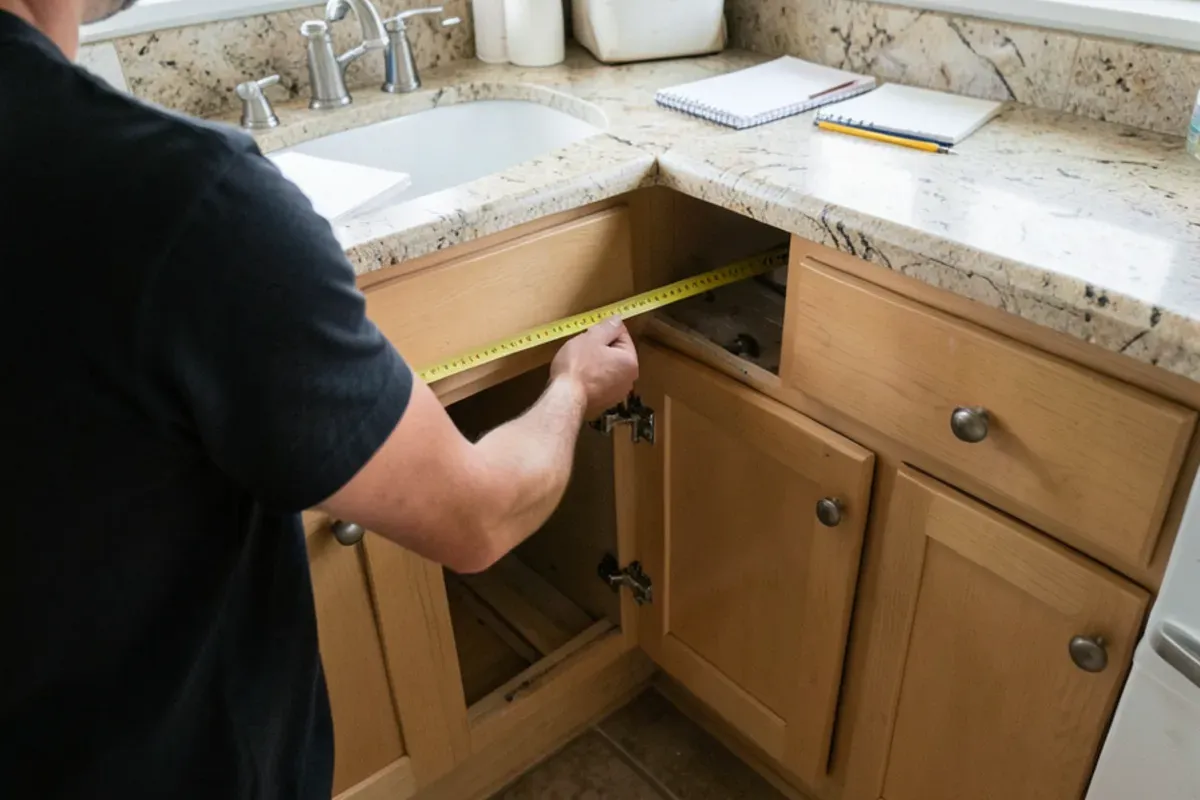
With a local fabricator, the same business usually does all of it. At our shop, Victor measures and advises at the estimate, the template comes back to our own shop for fabrication, and our crew installs. Fewer handoffs means fewer places for a faucet-hole count or an edge choice to get lost.
Want a straight answer for your kitchen? Call the shop.
Free in-home estimates · Mon–Fri 7:00–4:30 · weekend estimates by appointment
Local Fabricator vs Retail Program, Side by Side
| Question | Local fabricator | Big-box retail program |
|---|---|---|
| Who you buy from | The shop that cuts and installs | The store |
| Who templates | The shop's own people | Usually a contracted fabricator |
| Slab choice | Often the exact slab, viewed before cutting | Often a color chosen from samples; slab assigned |
| Scheduling | Directly with the shop | Through the store and its installer |
| Changes after template | One call to the shop | Routed through the store's process |
| Payment | Set by the shop; ours takes cash, check, Zelle, debit and credit | Store payment options, sometimes store financing |
| Who you call later | The shop that did the work | The store, which contacts the installer |
Can You Pick Your Own Slab?
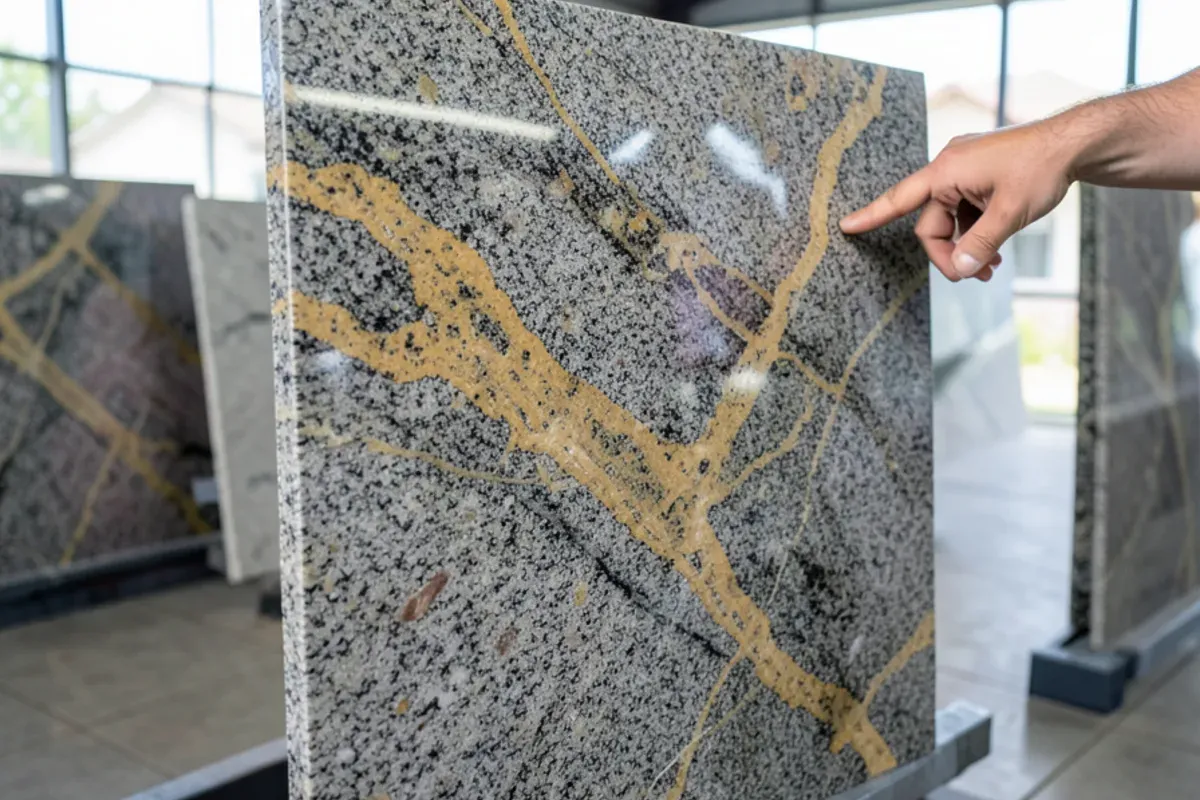
This matters most with natural stone. Two granite or quartzite slabs sold under the same name can differ noticeably in background color, movement and veining. Retail programs often sell by color name from a sample, and the slab is assigned later. Many local shops let you see the slab, or at least photos of it, before anything is cut.
With quartz, slab-to-slab variation is small, so this point carries less weight. If you are choosing a dramatic granite or a quartzite island, ask any seller directly whether you will see your slab before fabrication. Our countertop fabrication page shows how we position each piece on your slab so the veining lands where you want it.
How Do Scheduling and Communication Usually Differ?
A retail program runs on a set sequence: sale, measure appointment, order, fabrication, install appointment, each booked through the system. That predictability is a real plus for some buyers. The trade-off is that a change, or a question on install day, can take a few calls to reach the person who can answer it.
A local shop can usually move faster and flex more, because the person scheduling is also the person cutting. Our Google reviews include a homeowner whom Victor visited on a Saturday and whose job was finished that Wednesday; that is one example, not a promise. For a Vero Beach kitchen, our shop is about 30 minutes south, so the people who measure are the people who return for adjustments.
Questions to Ask Either Option Before You Sign
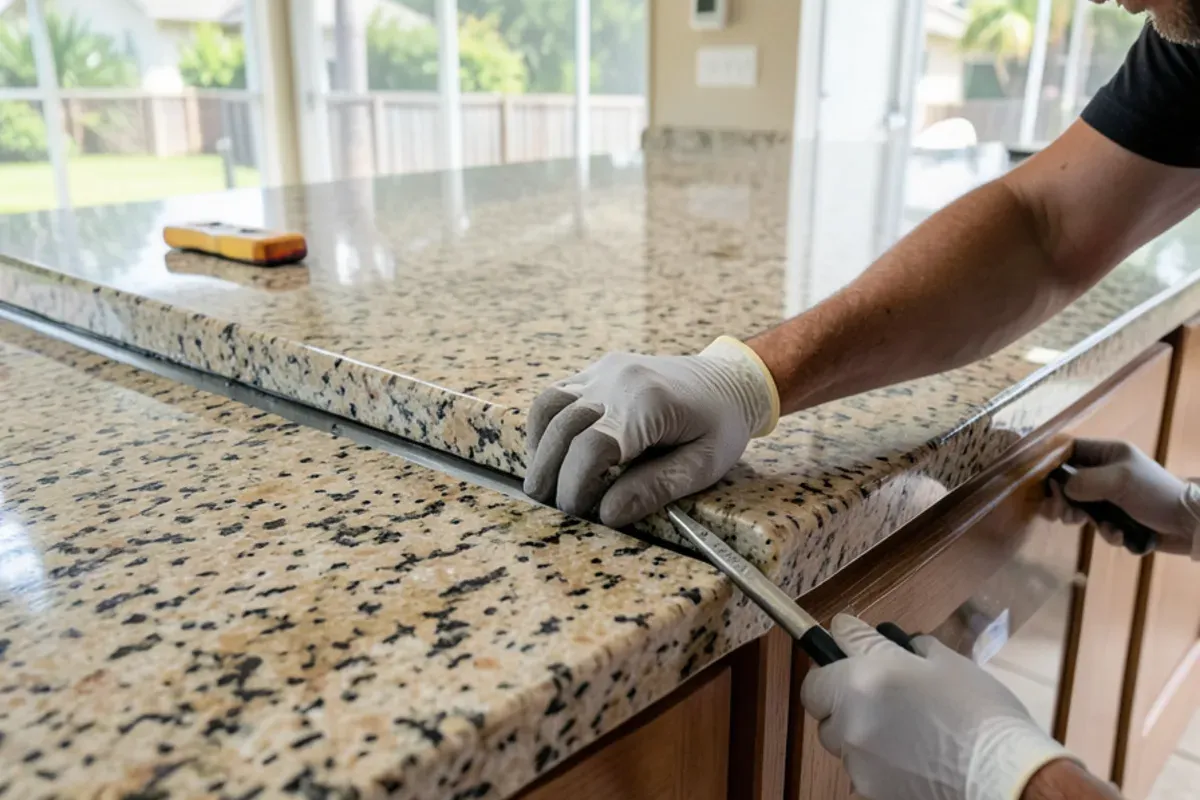
- Who exactly comes out to template, and who installs?
- Will I see my actual slab before it is cut?
- Where will the seams go, and do I approve them first?
- Does the price include removing old tops, the sink cutout, edges and backsplash?
- Who disconnects and reconnects plumbing? That work is licensed in Florida, though countertops themselves are not (Florida DBPR).
- What are the warranty terms, in writing, and who honors them: the seller or the installer?
- If a piece cracks during install, who replaces it and how fast?
How Do You Check Out a Local Countertop Shop?
A store's name is a known quantity; a small shop's is not, so the checking falls to you. Countertop fabrication itself needs no state license in Florida (Florida DBPR), which means a license lookup will not separate good shops from poor ones. These checks will:
- Reviews with detail: read the recent ones and look for specifics such as seams, cleanup, timing and follow-up, not just star counts
- A public complaint record: look the business up on the Better Business Bureau and read how any complaints were answered
- An itemized written estimate: square footage, slab and thickness, edge, every cutout, backsplash, tear-out and sealing on separate lines
- A named person at the template: you should know who measures and who to call with a question
- Warranty terms on paper: what is covered, for how long, and who comes out
- A clear plumbing answer: who disconnects and reconnects the sink, and, if it is another trade, that they hold the right license
Hold us to the same list. Our Google profile shows 4.9 stars from 31 reviews, our BBB profile carries an A+ rating, and every job starts with a free written estimate at your home. If a shop cannot answer these questions plainly, that tells you something too.
From Our Shop: Where Countertop Problems Usually Start
When something goes wrong on a countertop job, it is rarely the stone. It is usually a detail that got lost between the person who sold the job and the person who cut it: the wrong number of faucet holes, a seam nobody approved, an overhang that did not match what the homeowner pictured. The fewer handoffs, the fewer chances for that.
We also tell every customer to get the warranty terms in writing with the estimate, whoever they hire. One Google reviewer wrote that after full payment we came back for small adjustments and "kept their word and warranty." That kind of follow-through is what to ask about, from us or anyone else.
To be fair to the other side: a small shop has limits a national program does not. When several kitchens land in the same week, a local fabricator's calendar fills, and a small business may have no spare capacity to absorb the rush. A retail program may also suit you better if you want store financing or are buying cabinets, flooring and tops in one transaction. The honest test is whether the shop tells you its realistic install date at the estimate and then meets it.
Questions We Hear About This
Is a big-box store cheaper than a local fabricator?
Sometimes, sometimes not. Retail promotions and financing can make a store quote attractive, and local shops can be competitive on the same material, especially when you pick a mid-range stone. The only fair test is two written quotes listing the same square footage, edge, sink cutout, backsplash and tear-out. Compare line by line rather than on the total alone.
Who handles the warranty on store-sold countertops?
It depends on the program. Often the store sells the warranty or service promise and the contracted installer does the actual repair, so a claim may go through the store first. With a local fabricator, you call the shop that did the work. Either way, ask for the terms in writing and ask who will physically come out to fix a problem.
Can a local fabricator template a kitchen faster than a store?
Often, because there is no separate order step between the sale and the measure. A local shop can book the template when your cabinets and sink are ready rather than waiting for a slot in a larger system. Timing still depends on the shop's workload, so ask for a realistic date at the estimate and get it in writing.
Does a countertop installer need a Florida license?
Not for the countertop itself. Florida DBPR lists countertops among the trades that need no state license, alongside cabinets, paint and tile. The license question comes up around the stone: reconnecting the sink, moving a drain or adding an outlet is plumbing or electrical work that does need one. Ask any seller, store or shop, who performs that part and check their number on the DBPR lookup.
The Bottom Line
If a familiar storefront and store financing matter most, a retail program can work well. If you want to choose your slab, talk directly to the person who cuts it, and call the same shop later, a local fabricator is usually the better fit. Ask the same questions of both and compare the answers.
For a look at how one local shop runs a job end to end, read our countertop installation in Fort Pierce page. Homes in Fort Pierce are a short 3-mile drive from Metzger Rd; phone us and we'll come measure and quote for free.