
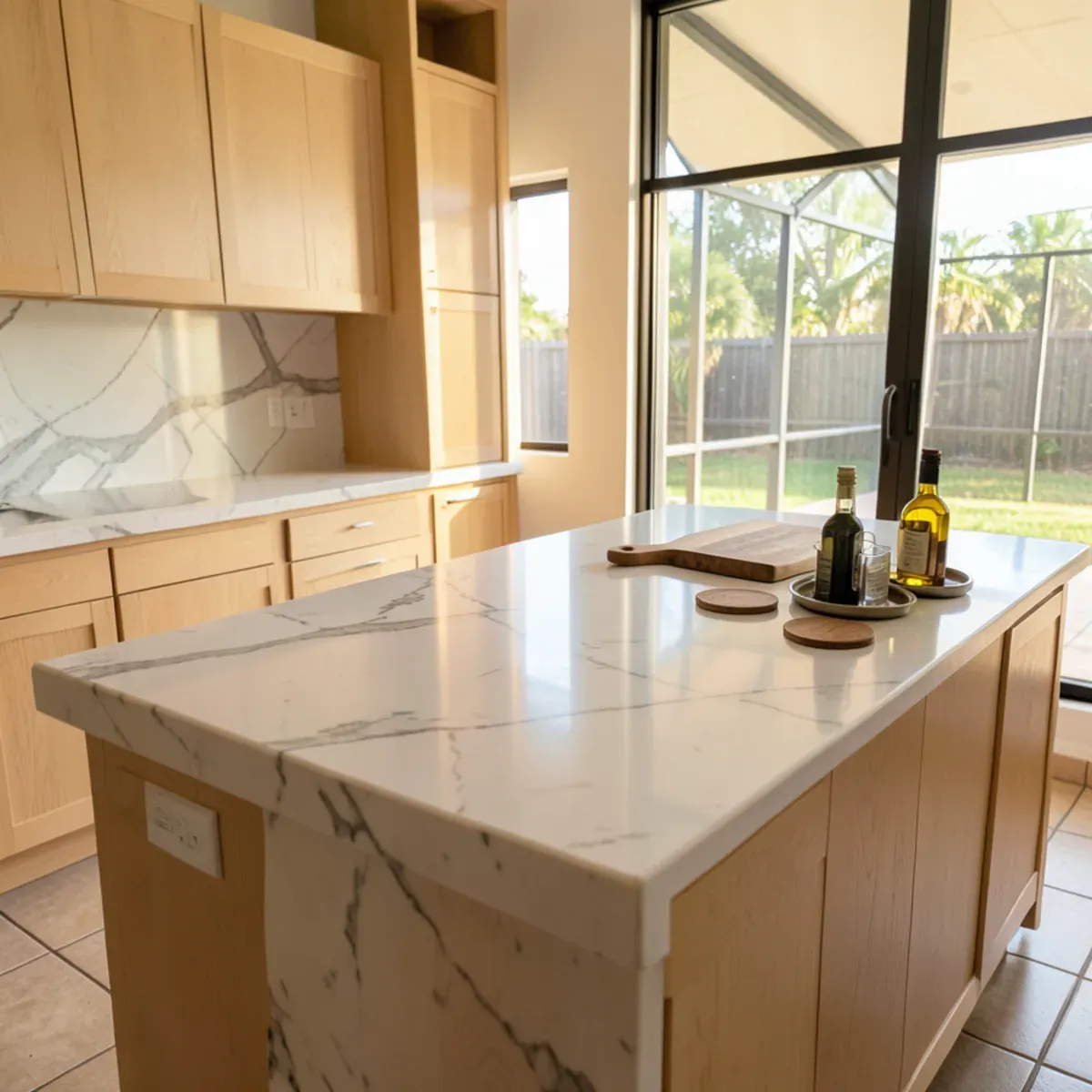
Marble care is a short routine: wipe spills right away, clean daily with a pH-neutral cleaner and a soft cloth, use coasters, trays and cutting boards, test the seal every few months, and plan on professional polishing when etching builds up. Kitchens need the routine more strictly than baths, because food acids cause most of the damage.
Marble does not need fussing, but it does need the right habits. Most of the marks owners regret come from a handful of things: a vinegar spray, a lemon left on the counter, an oil bottle with a drip on its base. Remove those and marble ages slowly and evenly.
Print this checklist or keep it on your phone. It is split into what to do every day, every month and every year, with the products to keep away from the stone.
Daily Marble Care in Two Minutes
- Blot spills as they happen; wipe acids such as citrus, wine, tomato and vinegar first
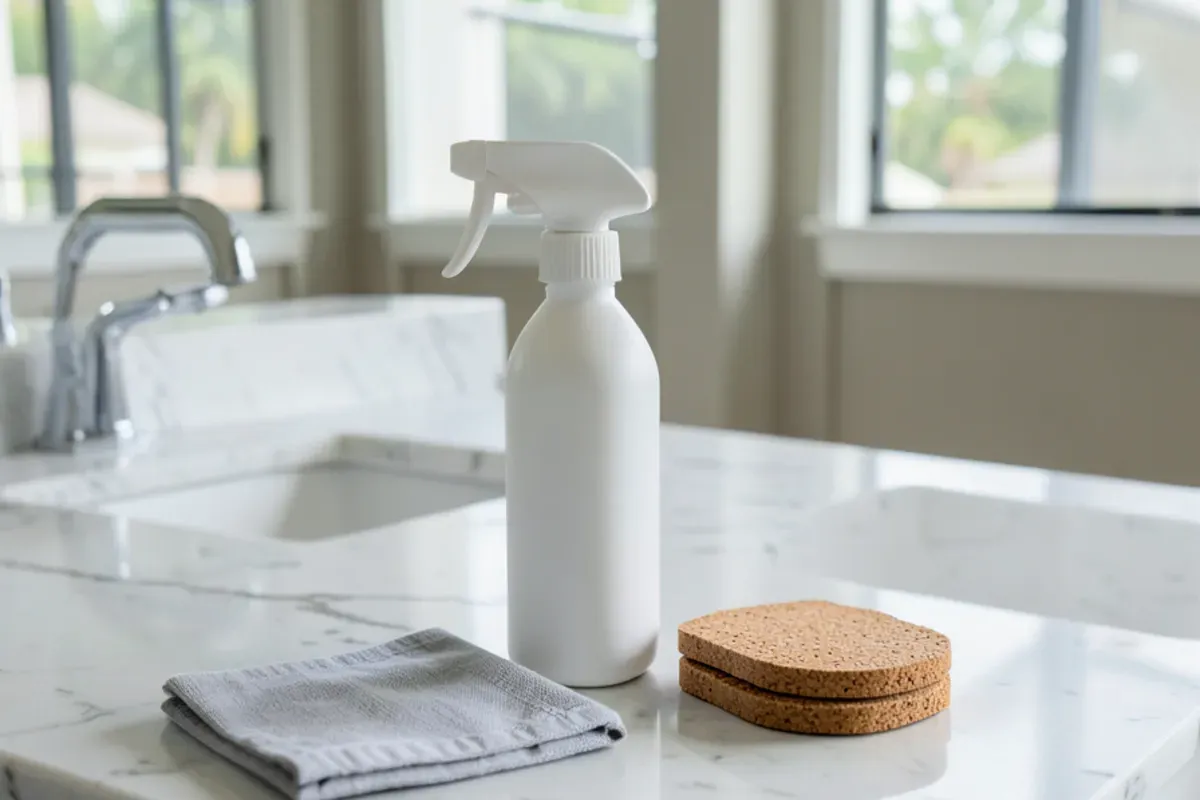
- Clean with warm water and a few drops of mild dish soap, or a cleaner labeled pH-neutral for stone
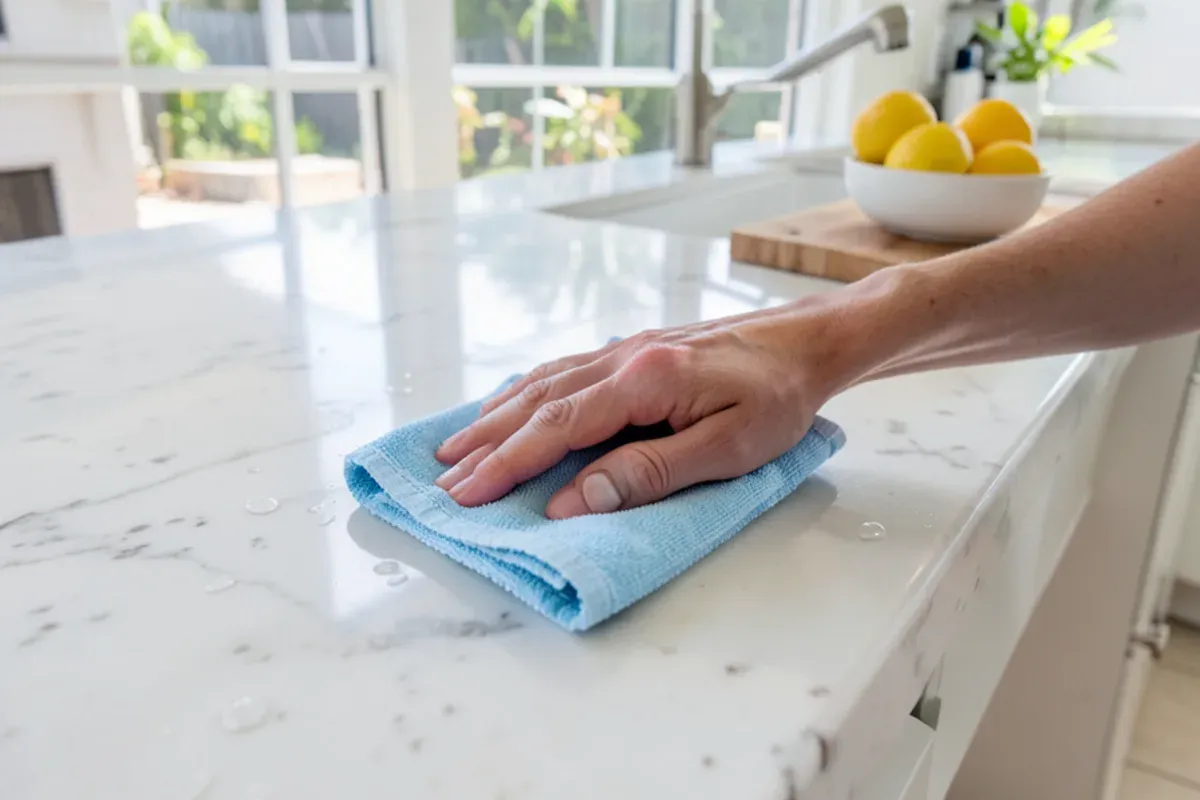
- Use a soft microfiber cloth or sponge, never a scouring pad
- Dry the counter around the sink and faucet so water does not sit and leave mineral rings
- Put a coaster under every glass, and a tray under oil bottles, soap dispensers and toiletries
- Cut on a board and set hot pans on a trivet; marble tolerates heat, but sudden heat and grit can mark it
Want a straight answer for your kitchen? Call the shop.
Free in-home estimates · Mon–Fri 7:00–4:30 · weekend estimates by appointment
Weekly and Monthly Checks
Once a week, give the whole surface a slightly more careful clean with a stone cleaner and dry it. Move the things that live on the counter, such as the coffee maker, fruit bowl and utensil crock, so grit and drips underneath do not etch or scratch in the same spot week after week.
- Each month, look across the counter with a light held low to spot new dull patches early.
- Check under trays and bottles for rings or oil marks.
- Every three months or so, drip a little water near the sink and the cooktop. If it soaks in and darkens the marble within a few minutes, the area is due for sealer.
- In a bathroom, check around the faucet base and where cosmetics sit.
Yearly Marble Maintenance by Room
| Task | Kitchen | Bathroom | Why it matters |
|---|---|---|---|
| Reseal with a penetrating stone sealer | Usually once a year, sooner if water darkens it | Every one to two years | Slows oil and pigment from soaking in |
| Treat light etches with marble polishing powder | As needed on polished marble | Rarely needed | Restores small dull spots before they spread |
| Professional honing or re-polishing | When etching covers working areas | Seldom | Removes accumulated etches and evens the finish |
| Check caulk at sink and backsplash | Yearly | Yearly | Keeps water out of seams and cabinet edges |
| Inspect seams and edges for chips | Yearly | Yearly | Small chips are easier to fill early |
Sealing marble that is still repelling water leaves a sticky film, so let the water test decide, not the date.
What Should Never Touch Marble?
- Vinegar, lemon juice, and any cleaner with citric, acetic or other acids
- Bleach sprays and bathroom tub-and-tile or toilet cleaners
- Ammonia and glass cleaners used regularly
- Abrasive powders, cream cleansers and scouring pads
- Multi-surface sprays unless the label names marble or natural stone
- Grit: sand from the beach or pool deck rubbed across polished marble acts like sandpaper
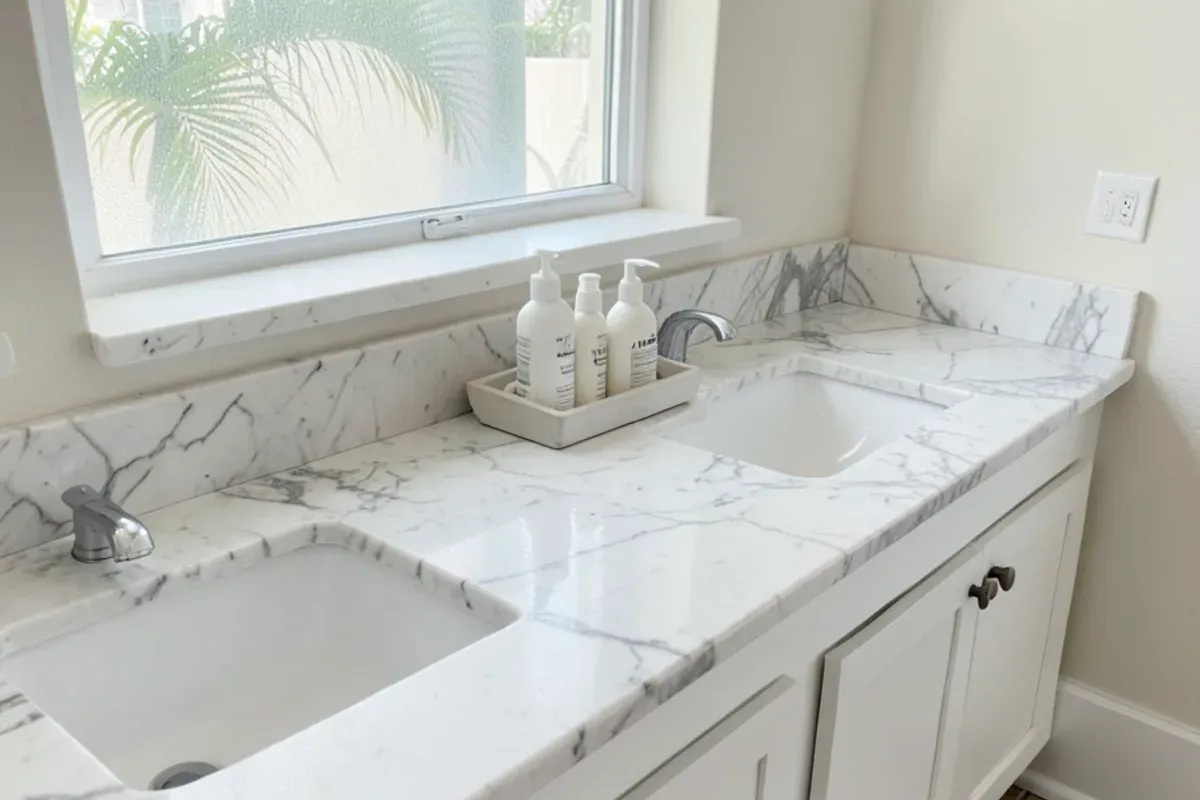
The same list applies to marble floors, vanities and shower benches. Our marble countertops page covers where marble suits a Florida home and where another stone may be easier.
Does Carrara Marble Need Different Care?
Not different products, but different expectations. Carrara is a softer, very popular white marble, and in a kitchen it will etch with use. Many owners choose a honed Carrara so the marks blend into a soft patina; polished Carrara shows each etch more. Our Carrara marble countertops page explains honed versus polished and how Carrara compares with Calacatta.
Owners of larger estate homes in Palm Beach and similar areas often have marble in several rooms. If a housekeeper or seasonal caretaker cleans the home, give them this list and a stone-safe cleaner so the wrong spray never reaches the counter.
How Do You Close Up a Seasonal Home With Marble?
Many Treasure Coast owners leave for the summer, and a counter left with the wrong things on it for months comes back marked. A short closing routine prevents that.
- Clear the counters completely: fruit bowls, oil and vinegar bottles, soap dispensers and anything metal that could rust in humid air.
- Clean with a pH-neutral cleaner and dry every surface, including the faucet bases.
- Run the water test near the sinks. If it darkens, reseal a few days before you leave so the sealer has time to cure.
- Leave the caretaker or cleaning service the list of products that must never touch the stone, with a bottle of the right cleaner.
- When you return, look across each counter with a low light before cooking, so any new marks are caught while they are small.
Marble Floors and Showers: What Changes?
The rules are the same as for counters; the threats are different. On floors, grit is the enemy. Sand from the beach and the pool deck acts like sandpaper under shoes and chair legs.
- Floors: mats at every outside door, a dry dust mop daily, and a damp mop with a pH-neutral stone cleaner; skip vinegar mop solutions and vacuums with hard wheels or a beater bar
- Furniture: felt pads under chair and table legs
- Showers: squeegee the walls and bench after use so soap and hard-water minerals do not build up
- Shower cleaners: avoid soap-scum and limescale removers, which are usually acidic; use a cleaner labeled safe for marble
- Toiletries: keep shampoo and razors on a caddy, off the stone
Floors that have lost their shine in the walkways can be honed and polished again; our marble flooring page explains what that work involves.
From Our Shop: Set Up the Room So Care Is Automatic
When we talk marble care with homeowners, we spend less time on products and more on setup. A small tray for oils and vinegars next to the range, a cutting board that lives by the sink, coasters in the bar area, and a stone cleaner stored where the old spray used to be. With those in place, the daily routine takes care of itself.
Marble is sealed when we install it, and we suggest doing your first water test a few months later around the sink. Kitchens that are cooked in daily usually show wear there first. Catching it early means a quick reseal instead of a stain removal.
We are also honest about what a routine cannot do. A marble kitchen that is cooked in will not look exactly as it did on install day a few years later; it softens into a patina, and the care routine keeps that change slow and even rather than stopping it. If that idea bothers you, read our comparison of real marble and marble-look quartz before you choose.
Questions We Hear About This
How often should marble countertops be sealed?
Most marble kitchen tops need sealing about once a year, and bathroom tops every one to two years, but the stone decides. Put a little water near the sink; if it darkens the marble within a few minutes, reseal that area. If it beads and leaves no mark, wait. Honed marble usually needs it more often than polished. Our installs are sealed on the day they go in.
Can I use dish soap on marble?
Yes, a few drops of mild dish soap in warm water is a safe everyday cleaner for marble. Avoid soaps with citrus or added degreasers, and do not let soapy water dry on the surface; rinse with a damp cloth and dry it. Over many months, heavy soap use can leave a slight film, which a pH-neutral stone cleaner removes. Never use a scouring sponge.
What do I do if I spill wine on marble?
Blot it immediately with a paper towel, do not wipe, so it does not spread. Then rinse the spot with plain water and blot again. Wine is both acidic and pigmented, so it can etch and stain. If a pink mark remains after drying, a poultice for organic stains will usually draw it out; if a dull ring remains, that is an etch, which polishing powder can treat.
Are disinfecting wipes safe on marble?
Many are not. Common household wipes often contain citric acid or bleach-type ingredients, and daily use can dull polished marble and wear down the sealer. Read the label: if it lists an acid or does not mention natural stone, keep it off the counter. To sanitize, use a cleaner labeled safe for marble, or wash with mild soap and warm water, then dry.
The Bottom Line
Daily: blot, clean with pH-neutral soap, dry, and use coasters and trays. Monthly: look across the counter in low light and test the busy spots. Yearly: reseal where water soaks in and polish out etches before they spread. That is the whole routine.
If your marble is already dull or stained beyond a home fix, or you are thinking of adding marble and want honest advice on where it fits, call us for a free in-home visit and a written estimate.