
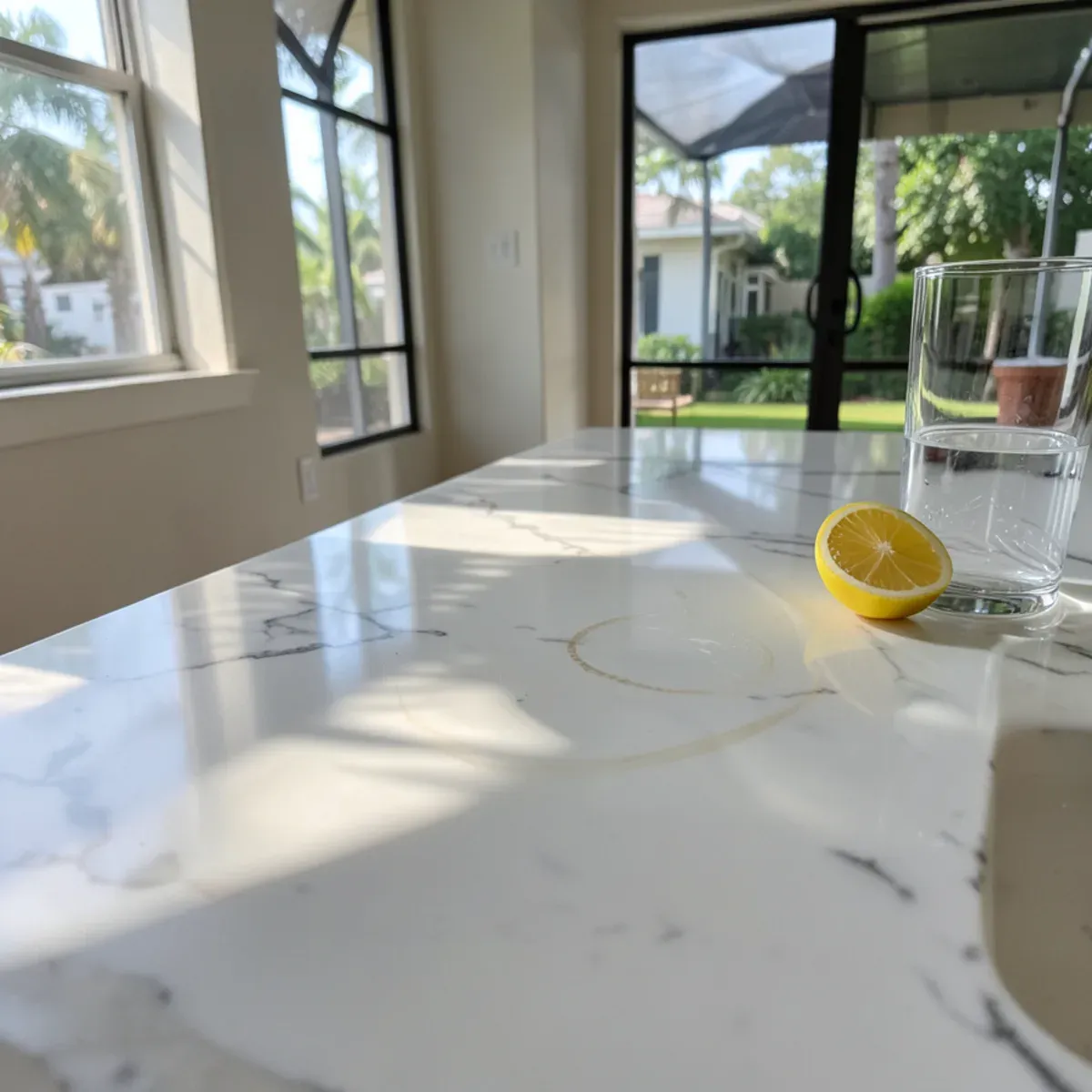
An etch is a dull, lighter or slightly rough spot where an acid has eaten into the marble's surface; a stain is a darker or colored spot where a liquid has soaked into the stone. Etches are fixed by polishing or honing the surface back, while stains are drawn out with a poultice, so naming the mark correctly decides the fix.
Most marks on a marble counter or vanity fall into one of two camps, and they look alike at a glance. Treating one as the other wastes time and can make things worse: scrubbing an etch with a stain remover does nothing, and polishing a stain only shines the surface above it.
Below are the quick checks to tell them apart at your own counter, the usual culprits in Florida kitchens and baths, and what each repair involves.
Why Does Marble Etch and Stain?
Marble is mostly calcite, a form of calcium carbonate. Acids react with calcite and dissolve a thin layer of the surface, which is what an etch is: physical damage to the finish, not something sitting in the stone. Marble is also porous, so liquids with color or oil can soak into the pores and leave a stain below the surface.
A penetrating sealer helps with only one of these. It slows how fast liquids soak in, buying time to wipe a spill before it stains. It does nothing to stop acid from reacting with the calcite, so a sealed marble top can still etch the first time lemon juice sits on it.
Want a straight answer for your kitchen? Call the shop.
Free in-home estimates · Mon–Fri 7:00–4:30 · weekend estimates by appointment
How Can You Tell an Etch From a Stain?
Use a flashlight or a phone light held low and to the side, and work through these checks.
| Check | Etch | Stain |
|---|---|---|
| Color compared with the stone | Same or lighter, whitish or cloudy | Darker, or a color: brown, orange, pink, yellow |
| Seen from straight above | Often hard to see | Clearly visible |
| Seen low against side light | Shows as a dull patch in the shine | Gloss is unchanged over the mark |
| Feel with a fingertip | May feel slightly rough or sunken | Feels the same as the rest |
| Typical shape | Drips, rings, the outline of a glass or lemon slice | A blot that spreads outward and can have soft edges |
| Typical cause | Acids: citrus, vinegar, wine, tomato, soda, some cleaners | Oils, coffee, tea, wine pigment, rust, cosmetics |
A mark can be both. Red wine, for instance, is acidic and pigmented, so it can leave a dull ring with a pink stain inside it. Fix the stain first, then the etch.
What Usually Causes Marks in Florida Kitchens and Baths?
- Kitchen etches: lemon and lime wedges, orange juice, vinegar dressings, tomato sauce, wine, sparkling water and soda cans
- Bathroom etches: some toilet bowl and tub-and-tile cleaners, perfume, mouthwash and acidic skin products
- Oil stains: cooking oil bottles, butter, sunscreen and body lotion, hair products
- Organic stains: coffee, tea, wine pigment, fruit juice, wet leaves from cut flowers
- Rust stains: metal cans, razors, bobby pins or hardware left on a damp surface
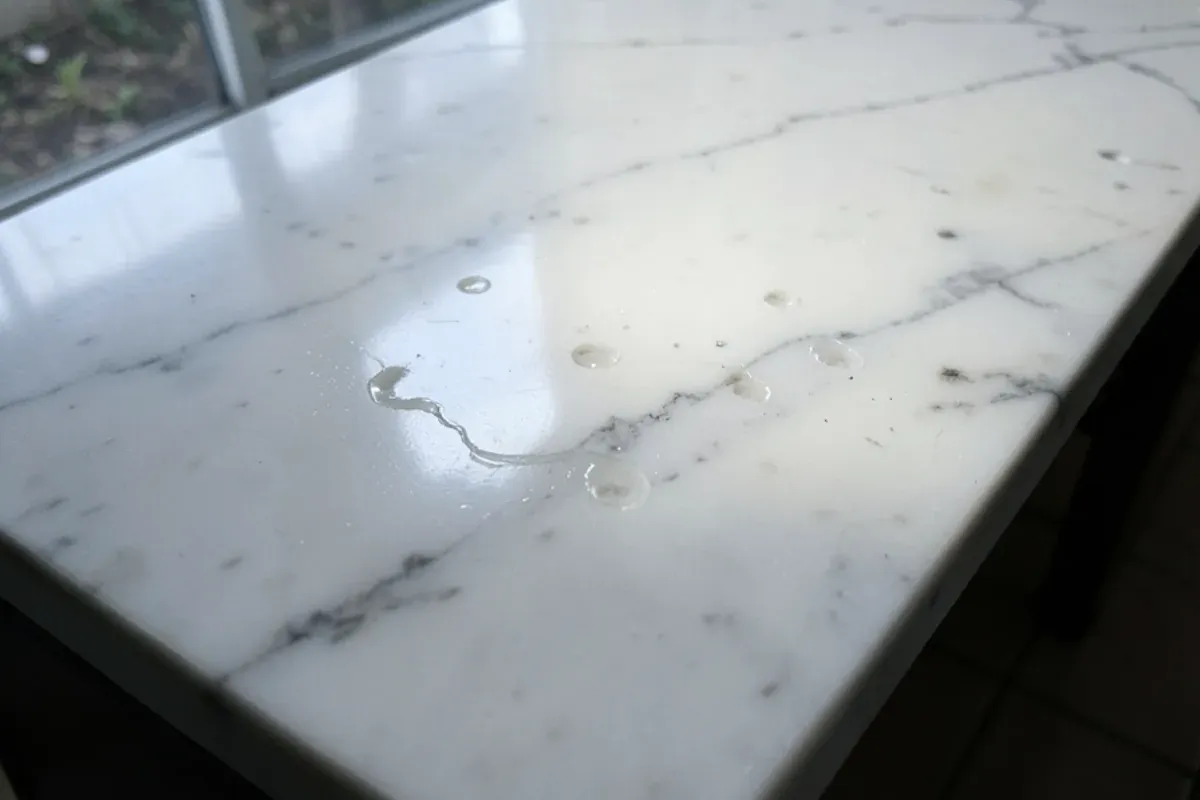
- Water rings: usually dried minerals sitting on top, though a ring that will not wipe off may be an etch
Citrus deserves the top spot on a coast known for it. Bathrooms, by contrast, collect more lotion and cleaner marks than food marks. If you are still deciding whether marble belongs in your kitchen at all, our marble countertops page lays out where it works in a Florida home, and large barrier-island kitchens in Vero Beach are a good example of where a honed finish earns its keep.
How Are Etch Marks Fixed?
It depends on depth and finish. On polished marble, a light etch can often be buffed out with a marble polishing powder made for the purpose, used with water and a soft pad and following the product directions. On honed marble, light etches blend in more and sometimes need nothing at all.
Deeper etches, or a counter covered in many small ones, need the surface honed down past the damage and then brought back to the original finish. That is a refinishing job; our marble polishing page explains how etch removal and re-polishing are done.
How Do You Remove a Stain From Marble?
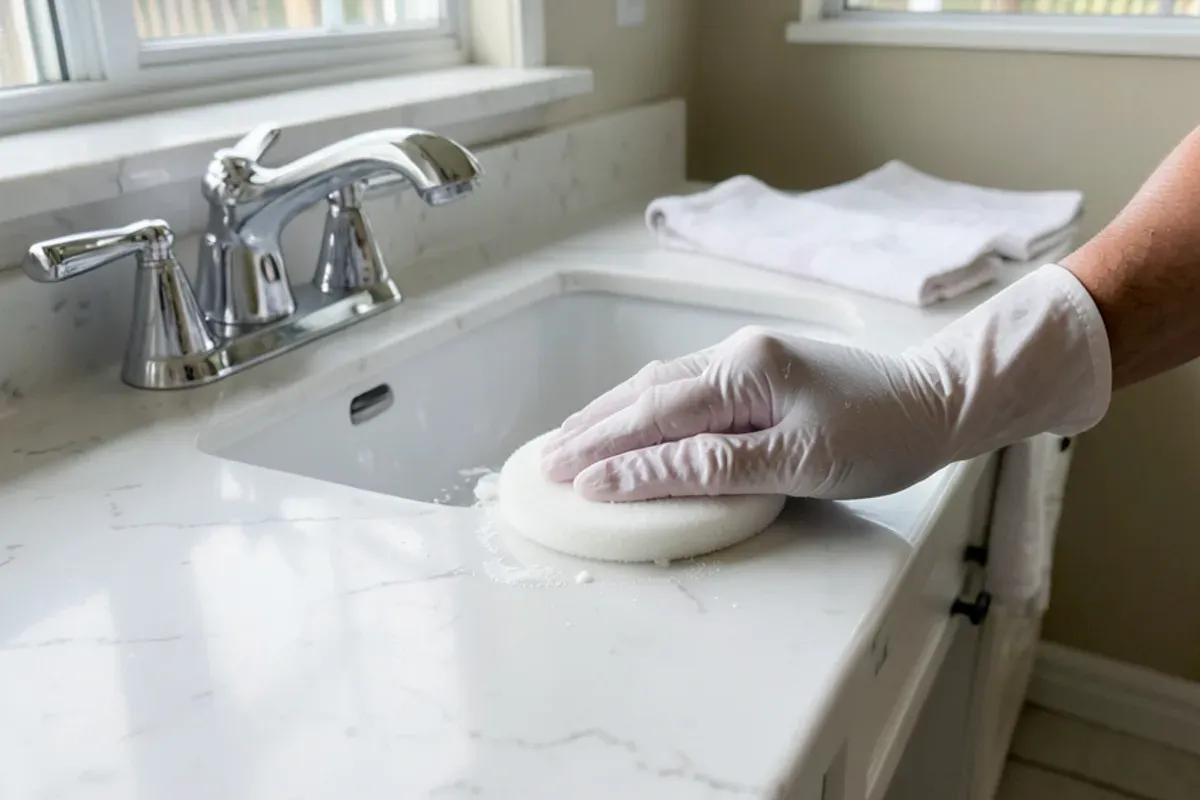
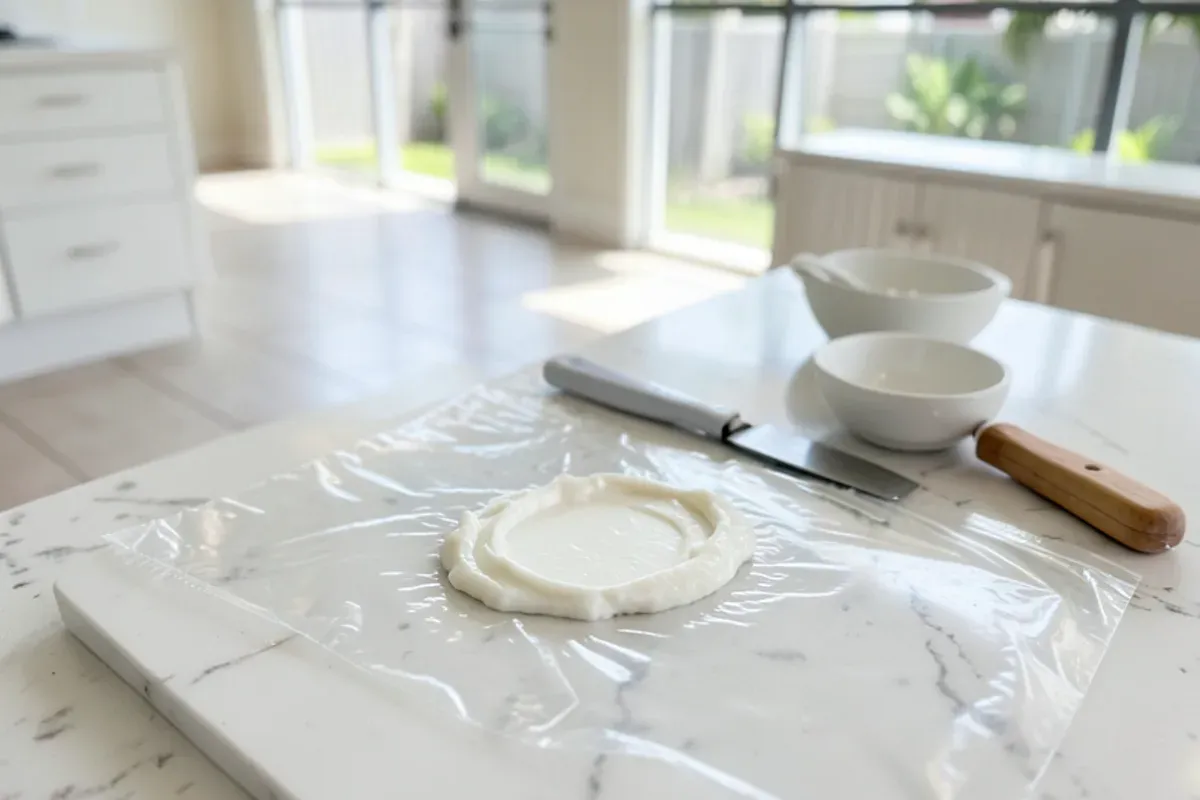
Stains are pulled out, not scrubbed out, with a poultice: a paste that draws the staining material back up out of the pores as it dries.
- Identify the stain type: oil, organic (coffee, tea, wine), or rust. Each needs a different poultice chemistry.
- Use a commercial marble poultice for that stain type, or a simple paste of baking soda and water for light oil marks.
- Test on a hidden area first, especially on dark or colored marble.
- Spread the paste about a quarter inch thick over the stain and slightly beyond, cover with plastic wrap, and tape the edges.
- Leave it to dry fully, usually a day or two, then remove it and rinse with water.
- Repeat if the stain has lightened but not gone; old stains often take several rounds.
Once a stain is out, reseal that area so the next spill sits on the surface longer. Rust stains and very old stains can be stubborn and are worth a professional look.
Which Marble Marks Can You Fix Yourself?
Many marks respond to a careful home fix. Some do not, and working on them longer only spreads the damage. Use this as a rough guide.
| Mark | Worth trying at home | Time for refinishing when… |
|---|---|---|
| Light etch ring on polished marble | Marble polishing powder, used as the label directs | The shine comes back patchy or the etches cover a wide area |
| Etch you can feel with a fingernail | Little that works well | Almost always; the surface needs honing past the damage |
| Fresh oil mark | Baking soda poultice, repeated if it lightens | It keeps returning after several rounds |
| Coffee, tea or wine stain | Poultice made for organic stains | It is old, large or on a colored marble |
| Rust spot | A rust remover labeled safe for marble, tested in a hidden spot | It spreads or turns darker; rust is the most stubborn stain |
| Dull haze across the whole top | Stop the current cleaner and switch to a pH-neutral one | The haze stays; the old cleaner likely etched the surface evenly |
White crust around a vanity faucet
Hard tap water or well water leaves mineral scale where drips dry around the faucet base. It sits on top of the stone, so it is neither an etch nor a stain, but the usual limescale removers are acidic and will etch the marble around it. Soften the crust with a damp cloth and a stone cleaner, ease it off with a plastic scraper, and dry the faucet area after use so it does not return.
From Our Shop: Use a Low Light Before Anything Else
When someone describes a mark over the phone, our first suggestion is to hold a light flat to the counter and look across it. If the shine breaks around the mark, it is an etch. If the shine runs right over a darker shape, it is a stain. That one check settles most of these questions before anyone buys a product.
We also suggest thinking about the finish before the next mark arrives. For a kitchen that sees a lot of citrus and wine, honed marble hides etching far better than polished. Polished marble suits a bath or a bar that rarely sees lemons; a busy prep counter is usually happier honed.
A spot repair has limits too. Polishing one etch on a honed top leaves a shiny patch, and honing one area of a polished top leaves a matte one, so any fix has to match the finish around it. When a working area is covered in marks, refinishing the whole run usually looks more even than chasing each spot, and that is what we will recommend if it is the honest answer.
Questions We Hear About This
Will sealing stop marble from etching?
No. Sealer slows the absorption of liquids, which helps prevent stains, but etching is a chemical reaction between acid and the calcite in the stone, and sealer does not block it. The only defenses against etching are wiping acids up quickly, using coasters and boards, and choosing a honed finish that hides marks. Seal for stains; manage habits for etches.
Is honed marble better at hiding etches?
Yes. An etch is a dull patch, and on a matte honed surface the contrast between dull and not-dull is small, so etches blend in. On polished marble the same mark breaks the gloss and catches the eye. Honed marble can be a little more prone to staining because the surface is more open, so keep it sealed and test it a few times a year.
Can a water ring on marble be an etch?
Sometimes. Most rings are dried minerals from tap water sitting on top, and they wipe off with a damp cloth and a pH-neutral cleaner. If the ring will not wipe off and looks dull in low light, the glass held something acidic, such as soda, juice or sparkling water, and it etched. Light rings like that often respond to marble polishing powder.
Does an etch get worse if you leave it?
Not on its own. An etch is a finished reaction, so it does not creep outward the way a stain can wick. Two things make it look worse over time: more acid landing on the same spot, which deepens it, and grime settling into the roughened surface, which darkens the outline. Keep the area clean with a pH-neutral cleaner and treat it when convenient, not urgently.
The Bottom Line
Dull and lighter means an etch, darker means a stain. Polish or hone an etch; poultice a stain; and never reach for vinegar or bleach on either. A low flashlight and a fingertip will tell you which one you have in under a minute.
If the marks have built up beyond a home fix, call us. We'll look at the stone, tell you honestly whether it needs polishing, a poultice or just a better routine, and price any work in writing.