
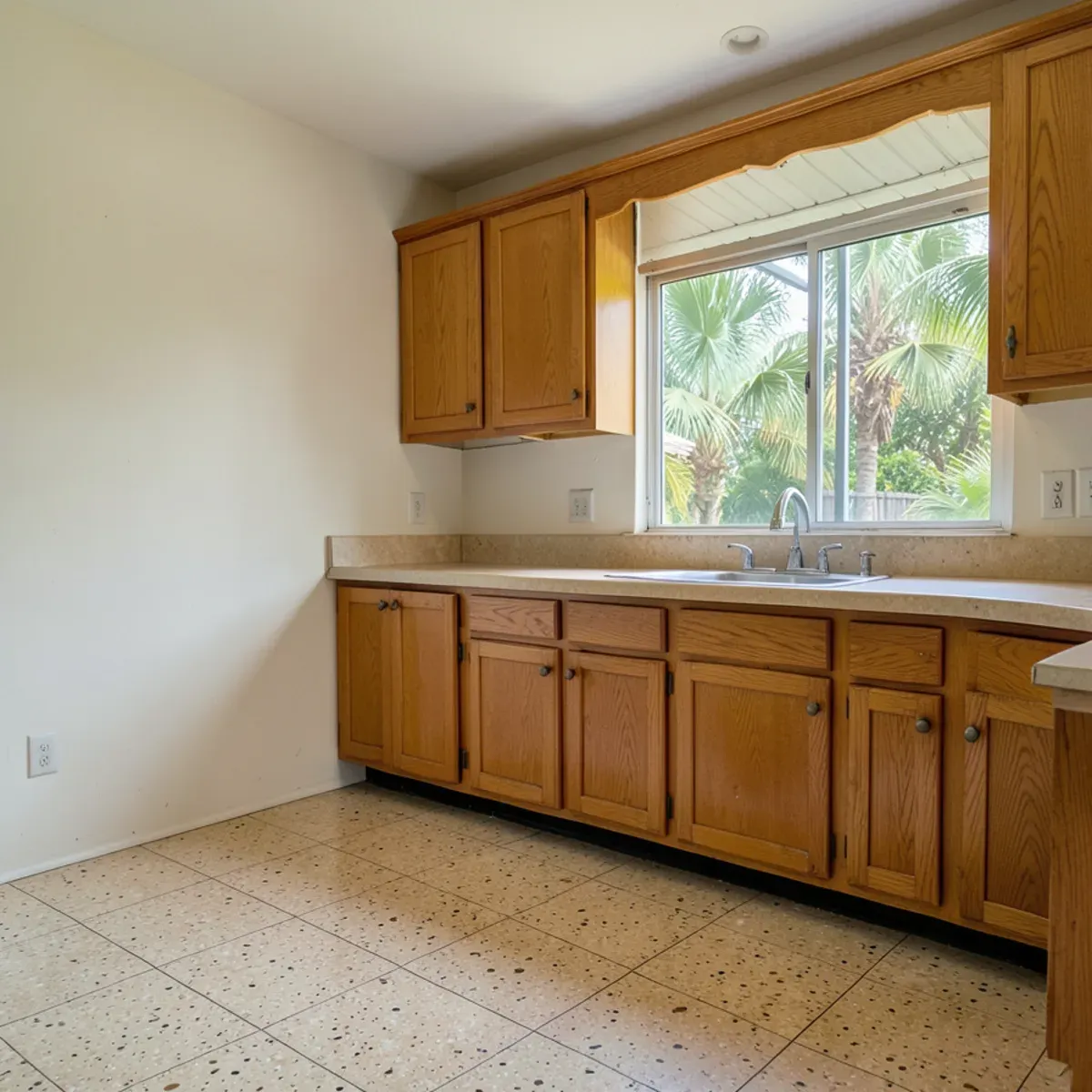
Often, yes. Cabinet boxes that are solid, dry and level can carry a new granite or quartz top without being replaced. Before recommending that you keep them, we check level across every run, the condition of the sink base, how the old tops are attached and whether the layout still works.
Swollen particleboard, a run that shims cannot level, or a layout change already on the way are the usual reasons to replace instead. Reusing cabinets is the biggest single saving in a kitchen update, so it pays to know what makes old boxes suitable for stone. This guide walks through the checks we make, the fixes that come up most, and the point where new kitchen cabinets in Fort Pierce make more sense than repairing old ones.
Can Old Cabinets Hold the Weight of Granite or Quartz?
In most cases weight is not the problem. A stone top bears on the cabinet side panels, and those panels carry the load straight down to the floor. Cabinets built with plywood boxes or solid face frames handle that well, even decades on. What fails is a box that has lost strength: a side panel swollen from a leak, a base pulled away from the wall, or a corner cabinet with no real support at the back.
Stone also does not bend. Laminate and tile tops ride over small dips and humps, but a 3 cm slab bridges them, and an unsupported spot under heavy stone becomes a stress point. Flat and level matters far more than age.
Want a straight answer for your kitchen? Call the shop.
Free in-home estimates · Mon–Fri 7:00–4:30 · weekend estimates by appointment
What Do We Check Before Keeping Your Cabinets?
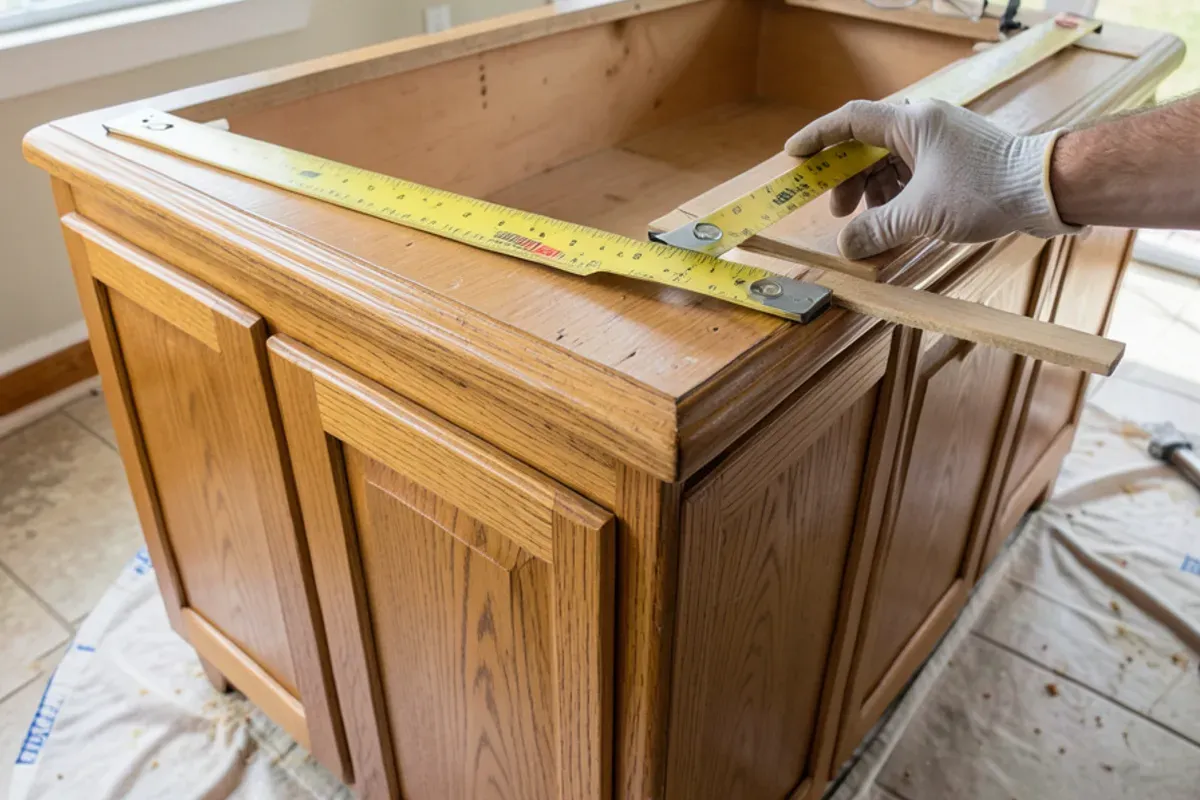
- Level and flat along each run and front to back, using a long level rather than a short one.
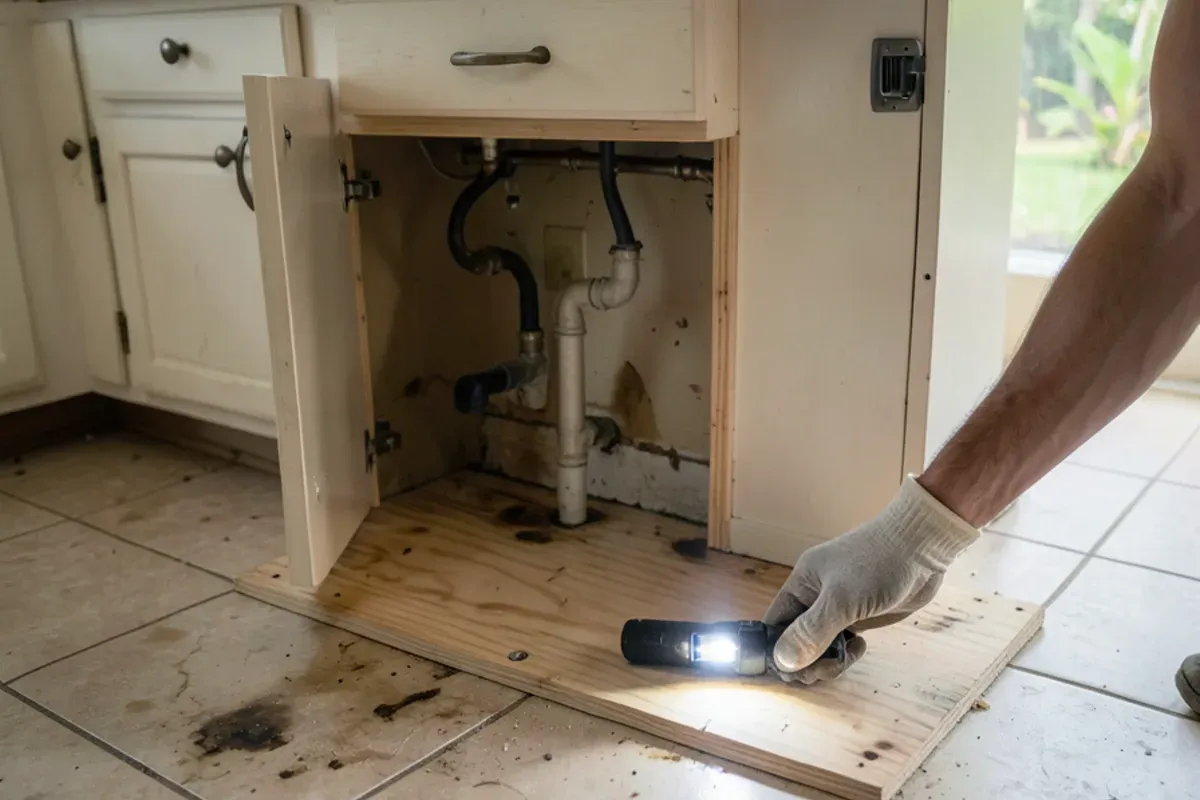
- The sink base floor and sides, looking for soft spots, staining or delamination from past leaks.
- Side panels and face frames at the ends of runs, where the top's load lands.
- How the old top comes off. Tile set in mortar or glued laminate can pull the cabinet top rails with it.
- Dishwasher and appliance openings, since dishwasher brackets cannot screw into stone and need side mounting.
- Wall condition, because out-of-square walls get scribed into the template.
- Corner and island cabinets, which often need added support for overhangs or long spans.
Most of this is visible at a measuring visit. The sink base gets the hardest look, because that is where hidden water damage lives.
A quick self-check before you call
- Empty the sink base and press the floor and the lower side panels with your thumb; firm is good, spongy or flaking is not.
- Open and close every door; a door that no longer meets its frame squarely can mean a racked or sagging box.
- Lay a straight level, or a phone level app, along the counter front and back on each run.
- Look at the toe kicks along the floor for swelling, staining or rust on metal legs.
- Note any cabinet that moves when you push on it; boxes should be fastened to the wall and to each other.
None of that replaces the visit, but it tells you before we arrive whether the conversation is likely to be about keeping the boxes or replacing some of them.
Which Fixes Are Common Before New Stone Goes On?
Small problems are routine and cost little compared with replacing a kitchen:
- Shimming and re-fastening cabinets to bring each run into level
- Adding support strips or a plywood sub-top where a cabinet top is weak or a 2 cm slab is used
- Replacing a damaged sink base floor, or swapping out the sink base cabinet alone
- Adding brackets or corbels for an overhang beyond what the stone can carry unsupported
- Re-securing island bases to the floor so they cannot shift
Common practice lets a 3 cm stone top overhang roughly 10 to 12 inches on its own; past that, add brackets. Our cabinet installation page covers how we level and secure boxes, whether they are brand new or staying in place.
When Is Replacing the Cabinets the Smarter Call?
| What we find | Keep and fix | Replace |
|---|---|---|
| Sound boxes with small level issues | Yes; shim and secure | Not needed |
| One damaged sink base | Often; replace that one base | Only if the rest is failing too |
| Swollen particleboard in several boxes | No | Yes |
| Sink, range or island moving | Rarely | Usually |
| Boxes and doors you already dislike | Possible, but stone ends up on boxes you will replace later | Better to replace before stone |
Age matters mostly as a clue. Fort Pierce's median home was built in 1982, and 18.8% of its housing dates from the 1970s (Point2 Homes), so many kitchens here sit on original or second-generation cabinets. In older riverside areas such as River Park, built largely in the 1960s and 70s, sink bases deserve an especially close look.
If the cabinets do go, St. Lucie County's no-permit list includes swapping kitchen cabinets as long as wiring and plumbing stay configured as before (St. Lucie County Government), so a like-for-like swap is usually straightforward on paperwork.
Will Removing the Old Countertops Damage the Cabinets?
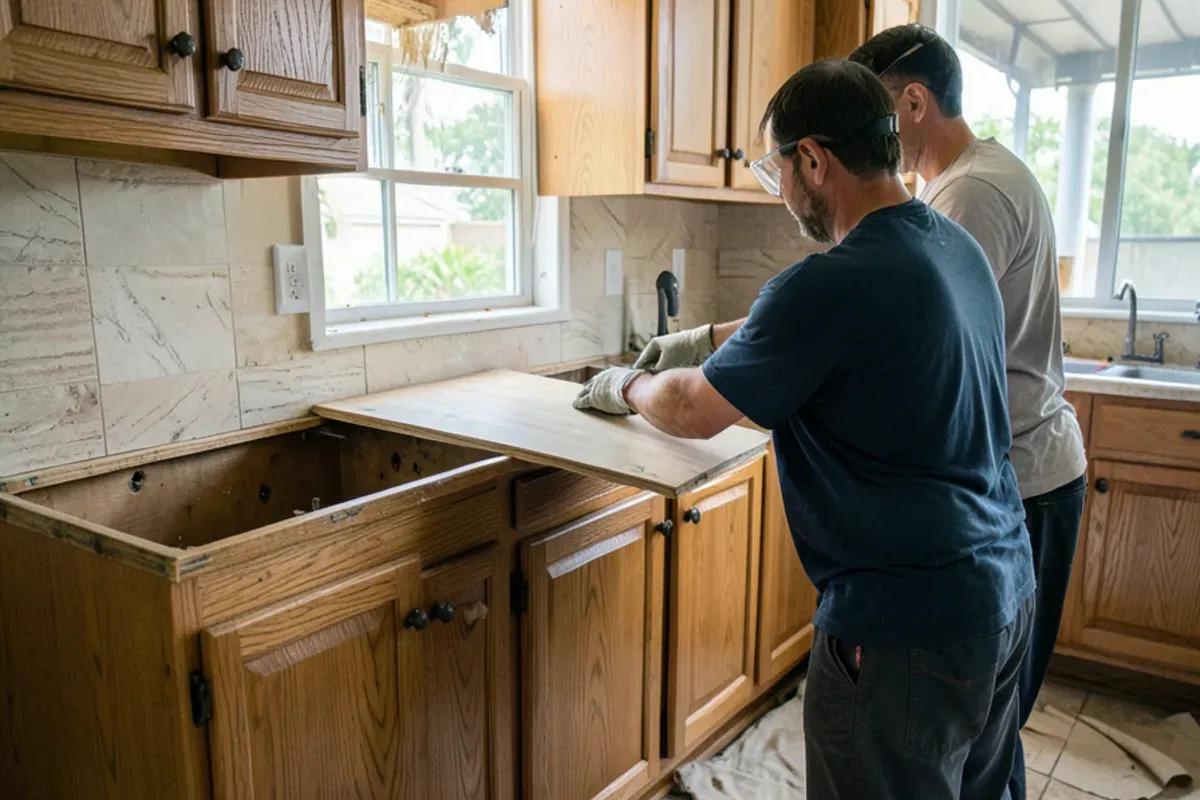
It can, depending on what is coming off. Laminate tops are screwed or glued from below and usually lift away cleanly. Tile tops carry more risk: plenty of them sit on a thick mortar bed laid over plywood, and breaking them out can crack face frames or loosen the cabinet top rails. At the estimate you will hear whether your tops are likely to lift off without trouble, and tear-out itself is covered on our countertop replacement page.
What Else Changes When Stone Replaces the Old Tops?
Keeping the cabinets keeps the footprint, but a new stone top still changes a few details around them. These are the ones we measure for so nothing surprises you on install day:
- Counter height. A 3 cm slab is about 1¼ inches thick. Tile set on a mortar bed is often thicker than that, so pulling it can lower the finished counter slightly; laminate usually comes out close to even.
- Dishwasher fit. The dishwasher has to slide under the new top and be fastened to the cabinet sides, since its brackets cannot screw into stone.
- Freestanding ranges. The range's cooktop edge should sit close to the new counter height, so we check it against the finished stone rather than the old top.
- The wall line. A different backsplash height can leave paint lines, old tile adhesive or anchor holes showing; plan for paint or a patch above the new splash.
- Outlets. Receptacles set low for an old tall backsplash may land inside a new stone splash and need a cutout or a licensed electrician to adjust.
Each of these is a few minutes with a tape measure at the template, and much harder to fix once the stone is cut.
From Our Shop: The Level Tells Us More Than the Finish
Owners often judge cabinets by their doors: worn paint, a dated style, loose hinges. When we evaluate cabinets for stone, the doors barely matter. We lay a long level on the tops, open the sink base and press on its floor, and look hard at the end panels. Cabinets that look tired but test solid are good candidates; cabinets that look fine but rock or flex are not.
If you plan to change the doors or the finish later, tell us. Stone should go on boxes you intend to keep for the life of the countertop, and the overhang can be set to suit whatever door style comes next.
The other place we always look is the toe kick. In block homes on a concrete slab, the bottom rail of each base cabinet sits right at floor level, where years of mopping, a dishwasher leak or moisture in the slab all end up. A box can look solid from the counter down and still be soft along that bottom edge. If it is, the cabinet may carry stone for now, but you are trusting the weakest part of the box with the heaviest thing in the kitchen, and we will tell you so.
Questions We Hear About This
Do old cabinets need plywood under a granite top?
For a 3 cm slab on sound cabinets, usually not; the stone rests directly on the box tops and end panels. A 2 cm slab, or cabinets with weak or missing top rails, may need a plywood sub-top or support strips. We decide that at the measuring visit and list any sub-top as its own line in the written estimate.
What if the sink base has water damage?
If the damage is limited to the floor of the sink base, it can often be replaced or reinforced. If the sides are soft or the particleboard has swollen, the sink base cabinet should be replaced before stone goes on. Either way, find and fix the leak first; a new top over an active drip only hides the problem.
Can new countertops go on cabinets that will be painted later?
Yes. Painting after the stone is in is common, as long as the painter masks and protects the countertop edges. Changing door styles later works too. The one future plan to avoid is replacing the boxes themselves, because the stone would have to come off with them and may not survive the move.
Should we remove the old countertops ourselves to save money?
Usually not. Breaking out a tile top set in mortar is the step most likely to crack a face frame or loosen the cabinet top rails, which are exactly the parts you are trying to keep. Removal and disposal go on our estimate as their own line, so you can see what doing it yourself would actually save before deciding.
The Bottom Line
Old cabinets are not a reason to replace a kitchen. Boxes that are dry, level and solid can carry new stone for years; the ones to replace have water damage, structural weakness or a layout you plan to change.
Call to book a free estimate at your house. Victor will check your cabinets, tell you plainly whether they can carry stone, and price both paths in writing when the answer is close.