
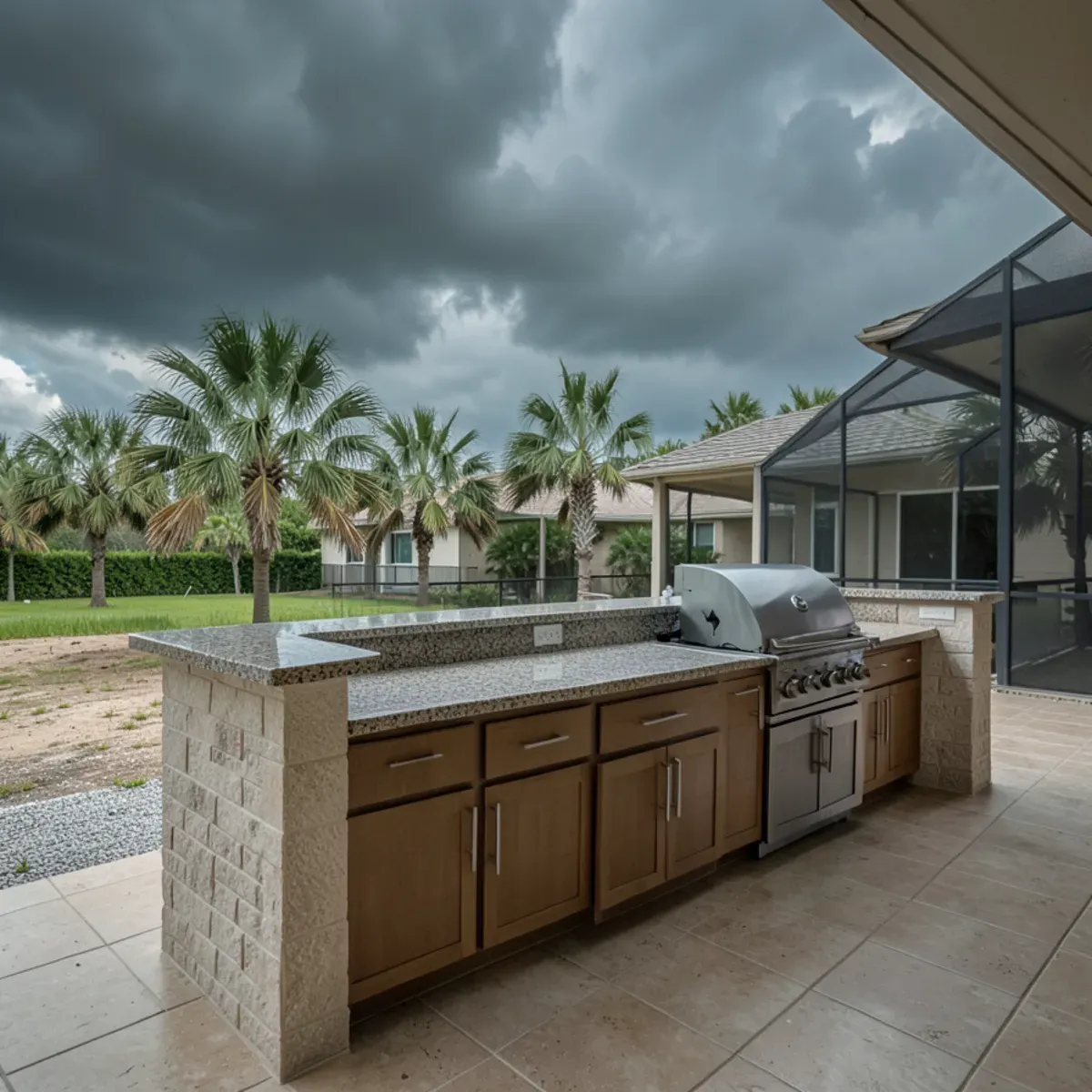
To prepare an outdoor kitchen for a hurricane, shut off the gas as your grill maker and gas supplier direct, cut power to outdoor circuits, bring covers, cushions and anything loose inside, and leave the stone countertops where they are; a properly supported top is among the heaviest, most stable things on the patio. Afterward, check seams, overhangs and the base before anyone leans on the bar.
Atlantic hurricane season runs from June 1 through November 30 (National Hurricane Center), and the Treasure Coast has seen direct hits. In September 2004, Frances and then Jeanne made landfall near Stuart, and in November 2022 Nicole struck land on North Hutchinson Island (National Hurricane Center).
An outdoor kitchen sits in the open through all of that. A little planning at the start of the season and a short checklist before a storm keep it from becoming a source of flying debris or a repair bill.
When Should You Start Outdoor Kitchen Storm Prep?
Do the slow part early, in May or the first weeks of June, while there's no storm on the map:
- Test granite and quartzite with a few drops of water; if it soaks in and darkens the stone, reseal before the rainy months
- Look over seams and the joint where the top meets the base for gaps or loose adhesive
- Check any bar overhang for sag and confirm its brackets are tight
- Find the gas shutoff and the outdoor breaker, and make sure everyone in the house knows where they are
- Photograph the whole outdoor kitchen for your records
That list takes an afternoon and leaves only the quick, last-minute steps for when a watch is issued.
Want a straight answer for your kitchen? Call the shop.
Free in-home estimates · Mon–Fri 7:00–4:30 · weekend estimates by appointment
Pre-Storm Checklist for Grills, Bars and Countertops
- Shut off the gas following your grill maker's and gas supplier's instructions; for propane, follow local emergency guidance on where the tank should go
- Switch off outdoor kitchen circuits at the breaker
- Remove grill covers, cushions, umbrellas, bar tools, planters and anything else that can blow away
- Take removable grill parts such as grates and drip trays inside if you can
- Empty and unplug the outdoor refrigerator, propping the door so it doesn't trap moisture
- Clear the countertops completely; nothing should be left sitting on the stone
Grill covers are worth singling out. Fabric covers catch wind like a sail and can tear loose, so they're better stored than strapped down.
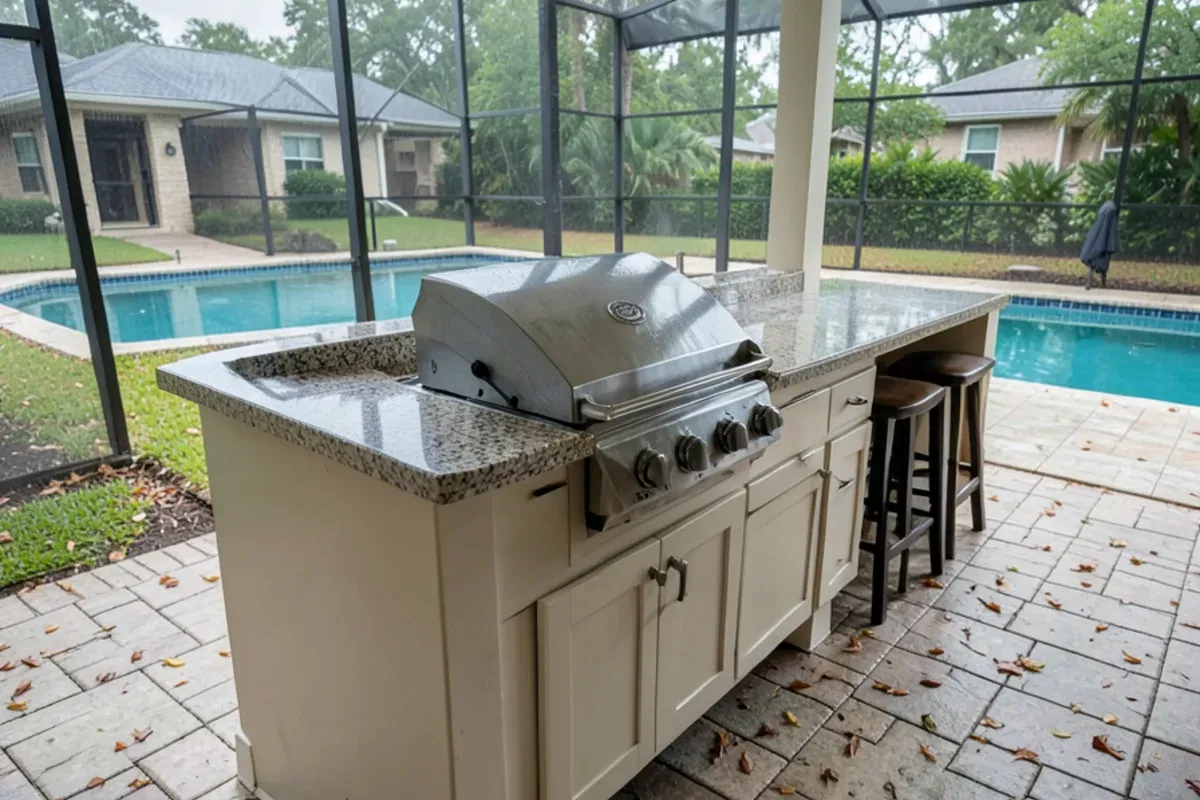
Do Stone Countertops Need Protection From Wind?
Generally not from wind itself. A 3 cm granite or quartzite top is bonded to its base and is heavy enough that wind rarely moves it. The real risks are impact and structure: debris striking an exposed edge or corner, and an overhang or a frame that wasn't built for the load.
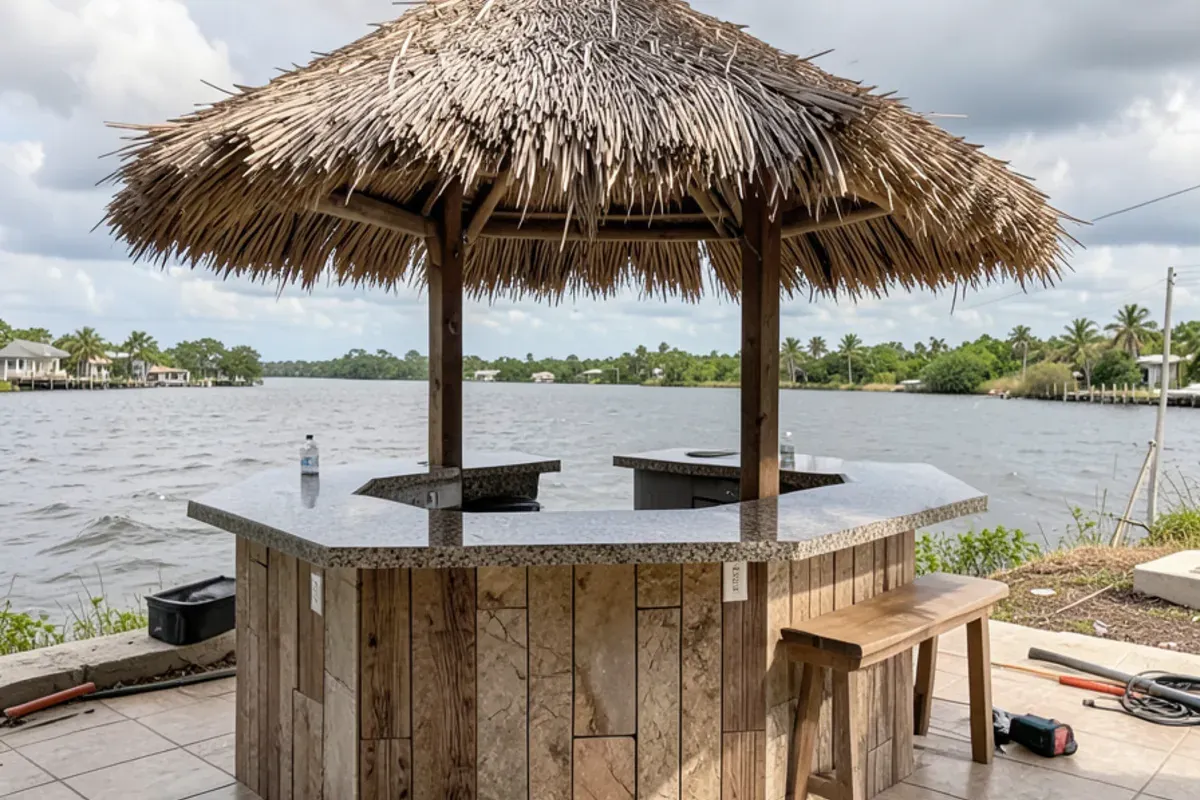
Bars deserve the closest look. A tiki bar's wood frame or a deep, lightly supported bar ledge is more exposed than a block island. Our outdoor bar countertops page explains how overhang and base construction affect that, and the outdoor kitchen countertops page covers how materials compare in Florida weather.
How Do You Build an Outdoor Kitchen With Storm Season in Mind?
The cheapest storm prep happens before the island is built. If you're planning a new outdoor kitchen, these choices make every June-to-November season easier:
- A base on a proper footing or slab, so it can't settle unevenly once heavy rain soaks the ground
- 3 cm natural stone or fully supported porcelain, with no unsupported spans
- Overhangs within the typical 10 to 12 inches, or steel brackets and a support wall for anything deeper
- Eased or rounded edges on exposed corners, which shrug off blown debris better than a crisp square corner
- Seams away from the grill and sink, where heat and water already work on a joint
- Indoor storage for covers and cushions, so storm-day prep takes minutes instead of an afternoon
None of this makes an outdoor kitchen storm-proof. It does make the stone the least of your worries when a watch goes up.
What Should You Check After the Storm Passes?
Once it's safe to go outside, walk the outdoor kitchen before using any of it:
- Chips or cracks along exposed edges and around grill and sink openings
- Seams that have opened or shifted
- Bar overhangs that sag or brackets that have loosened
- Cracks in the block base, or a base that has settled at one end
- Standing water or debris inside the island cavity and around the grill
Have the gas checked before relighting the grill, and if outdoor outlets or the island were under water, let an electrician inspect them before restoring power. On a barrier island such as Hutchinson Island South, where salt spray and surge are bigger concerns, rinse every surface with fresh water as soon as you can.
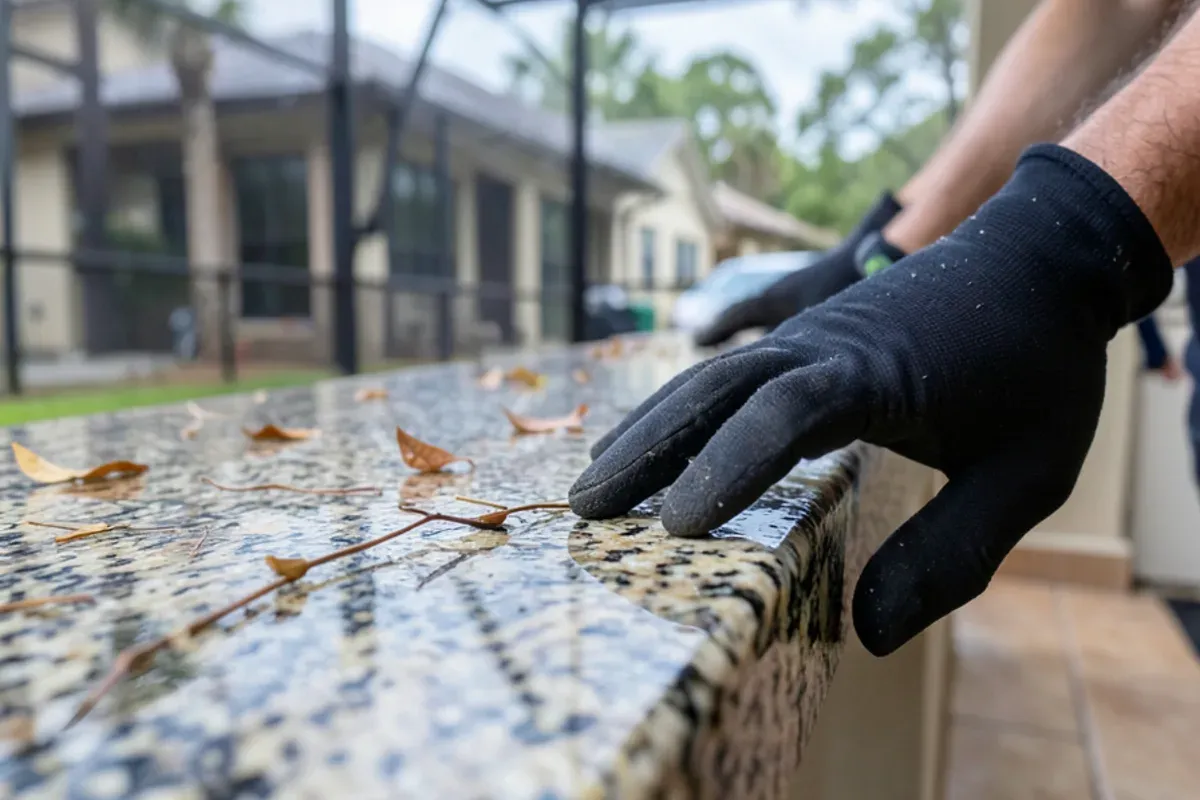
Who Should You Call First After Storm Damage?
When something is damaged, the order of the calls matters as much as the repairs themselves:
- Your insurer, with the photos taken at the start of the season and again after the storm
- The gas contractor or supplier, to check lines and connections before the grill is relit
- An electrician, if outlets, lights or the island cavity sat under water
- The mason or base builder, for cracked block, settling or loose overhang supports
- A countertop shop, once the base is sound, to measure and quote a replacement top
We're glad to come out early and take a look, but we'll quote new stone only after the base has been checked and passed.
Cleaning Salt, Sand and Debris Off the Stone
Storm residue is mostly salt, sand and plant matter. Rinse first with plain water so you're not grinding sand into a polished surface, then wash with a mild dish soap and dry with a soft cloth. Avoid bleach and acidic cleaners on natural stone, and keep a pressure washer away from seams and the joint at the base. When everything is dry, repeat the water-drop test; heavy rain and salt can shorten the life of a sealer.
From Our Shop: Look at the Base Before the Top
When people call after a storm worried about a countertop, the stone is usually fine. What we look at first is what's underneath it: whether the block has cracked, whether the island has settled, and whether an overhang's supports have shifted. A sound base keeps a stone top safe; a moving base will eventually crack it.
If a top did crack or a corner broke off, we can measure and quote a replacement once the base is sound again. Fix the structure first, though; new stone on an island that's still moving will crack the same way.
For new builds, we also talk about where the island sits. A grill station tucked against the house wall or under a sturdy lanai roof sees less flying debris than one standing alone at the edge of the yard, though it brings its own venting questions for the grill installer.
Questions We Hear About This
Should I remove my granite bar top before a hurricane?
No. A bonded stone top is heavy and stable, and trying to lift it off would risk breaking it and injuring someone. Clear everything from the surface, check the overhang supports early in the season, and leave the stone in place. The things that become dangerous in a storm are the light objects around it, not the top itself.
Should I strap down the grill cover?
It's safer to remove it and bring it inside. A strapped cover acts like a sail in high wind, can rip loose and adds stress to the grill. Built-in grill heads are secured by their opening in the stone, so with the cover stored and the lid closed, a properly installed built-in grill is generally left where it is.
Does salt water from storm surge damage granite?
Brief contact usually doesn't harm the stone itself, but salt left to dry on the surface and in the pores can dull the polish and wear down the sealer. Rinse with plenty of fresh water as soon as it's safe, wash with mild soap, dry the top, and run the water-drop test a few days later. If water soaks in quickly, reseal before the next rain.
Can storm debris chip a stone countertop?
Yes. Wind-blown branches, roof tiles and patio furniture can chip an exposed edge or corner, especially on thinner porcelain. A rounded edge profile resists chipping better than a sharp square one. Clearing loose furniture and planters from around the outdoor kitchen before the storm removes most of what could hit it.
The Bottom Line
A stone countertop is one of the toughest parts of an outdoor kitchen. Protect what surrounds it, keep the base and overhangs sound, and do the slow checks before the season starts so the storm-day list stays short.
If you're planning a new outdoor kitchen or bar top and want it built with storm season in mind, phone us; the estimate is free and done at your home. We work from Fort Pierce North down to Jensen Beach and the barrier islands.