
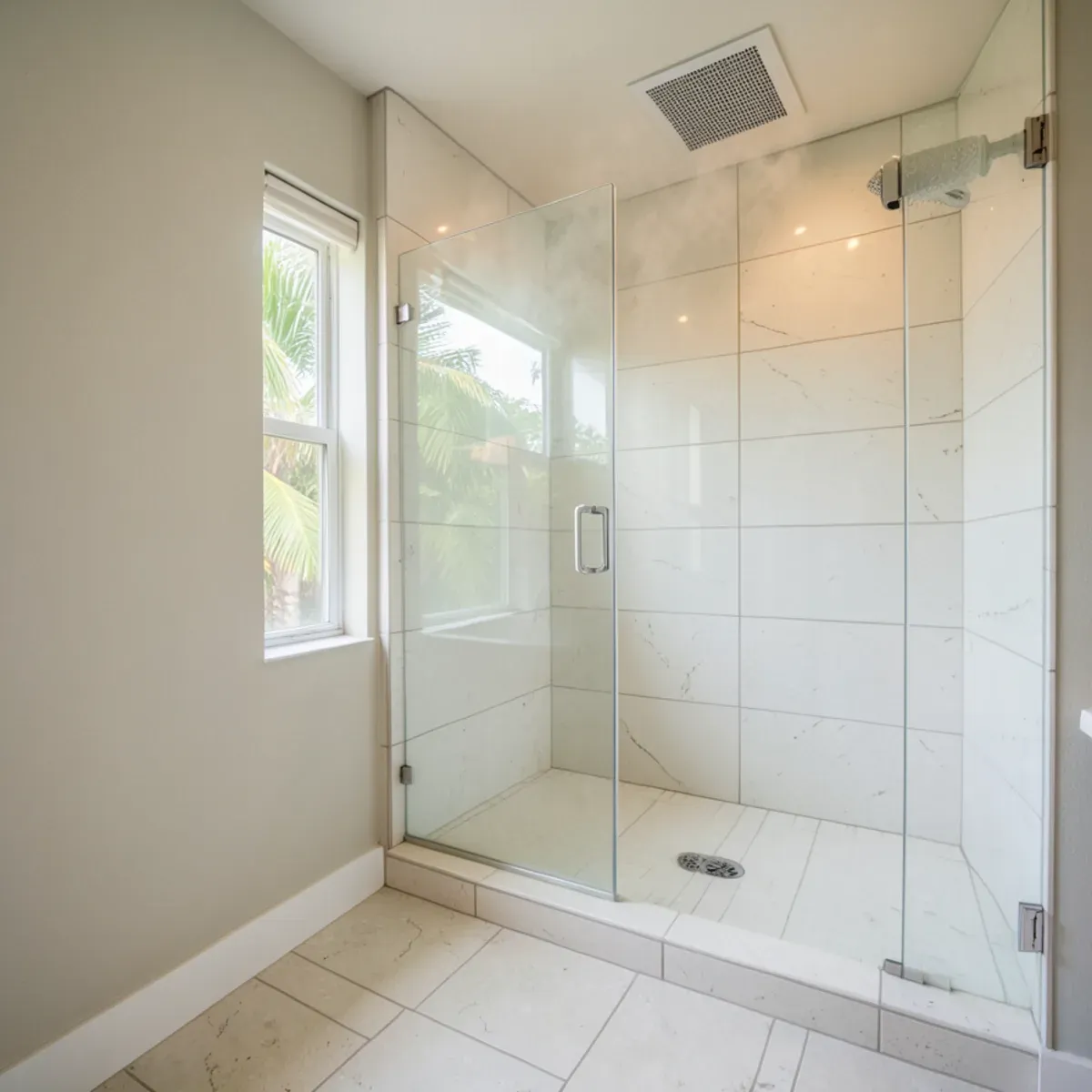
Mold grows in shower grout and caulk seams when water and soap residue stay long enough to feed it, and humid Treasure Coast air slows drying. Run the exhaust fan during and after every shower, squeegee the walls, keep grout sealed and replace failed caulk. If the shower is due for a remodel, slab walls cut the grout lines down to a few sealed joints.
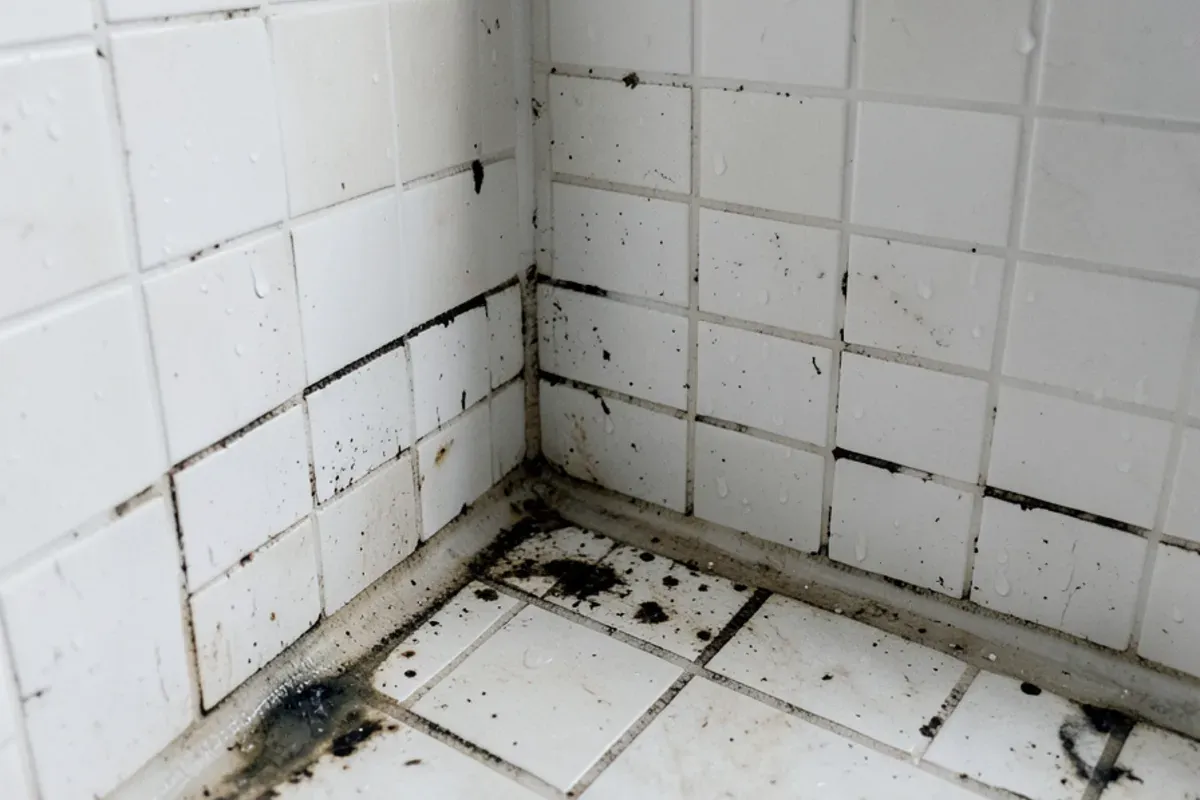
Black spots in grout are one of the most common bathroom complaints we hear, and the cause is rarely dirt alone. It is moisture that never leaves. Bestplaces records 54.7 inches of rain a year for ZIP 34945, against a U.S. average of 38, and the damp air that comes with it keeps shower walls wet longer.
The good news is that most grout mold responds to better drying and simple upkeep. When it doesn't, it is often a sign of something behind the tile.
Why Does Shower Grout Mold So Fast in Florida?
Standard cement grout is porous. It holds water like a sponge, and soap scum and body oils give mold something to live on. In a dry climate the grout dries out between showers. Here, with humid air and a closed bathroom door, it may still be damp when the next shower starts.
Corners and the joint where wall meets tub or shower floor are the worst spots. Those joints are usually caulked, not grouted, and caulk that has pulled away lets water in behind it, where it shows up as dark streaks inside the bead.
Want a straight answer for your kitchen? Call the shop.
Free in-home estimates · Mon–Fri 7:00–4:30 · weekend estimates by appointment
What Daily and Weekly Habits Keep Mold Out of Grout?
- Run the exhaust fan during the shower and leave it on until the mirror is clear and then some
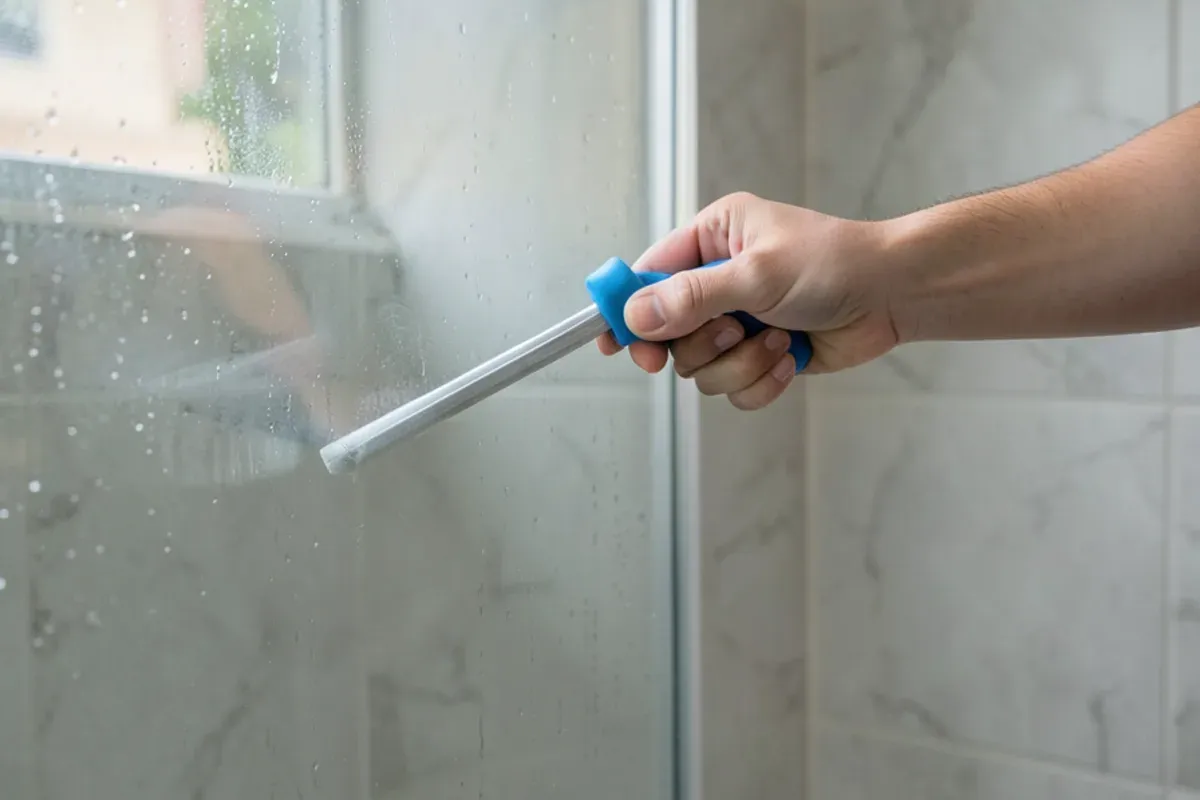
- Squeegee the walls and glass after each shower; it takes under a minute
- Leave the shower door or curtain open so air reaches the walls
- Keep bottles off the shower floor and ledges, where they trap water underneath
- Clean weekly with a cleaner suited to your surface, using a neutral cleaner on natural stone
- Wash bath mats and towels often so they don't hold moisture in the room
If the fan is weak, noisy or vents into the attic instead of outdoors, it may not be moving enough air. Replacing or re-ducting a fan is licensed electrical and mechanical work. In Fort Pierce, the city issues electrical, plumbing and mechanical permits apart from the building permit itself (City of Fort Pierce).
Sealing, Caulking and Regrouting: What Each One Fixes
| What you see | Likely cause | Usual fix |
|---|---|---|
| Surface spots on grout that clean off | Slow drying, soap residue | Better ventilation and a sealed grout surface |
| Dark streaks inside a caulk line | Water behind failed caulk | Cut out the old caulk, dry, and recaulk |
| Crumbling or cracked grout | Age, movement or water | Regrout the affected joints |
| Spots that return within days | Persistent moisture | Check the fan, then look behind the tile |
| Loose or hollow-sounding tile | Failed adhesive or water damage | Inspect the wall; often a remodel |
How Do You Clean Mold Out of Grout Without Damaging It?
Surface mold on sound grout comes off with patience rather than force. Work in this order:
- Open the door and run the fan, and wear gloves; never mix cleaning products, especially bleach with ammonia or acids
- Spray a cleaner suited to the surface, which means a stone-safe neutral cleaner on marble or granite walls, and let it sit as the label directs
- Scrub along the joints with a soft nylon grout brush; wire brushes and scouring pads cut into grout and scratch stone
- Rinse with clean water so no residue is left to feed new growth
- Dry the walls fully, then give cement grout at least a day with the fan running before any sealer goes on
- Seal the dry grout with a penetrating sealer to slow the next round of absorption
Mold inside a caulk bead is a different case. It lives under the surface of the silicone, so scrubbing will not reach it. The bead has to be cut out, the joint cleaned and dried, and a fresh mildew-resistant silicone run in its place.
Is the Bathroom Fan Doing Its Job?
Most mold problems trace back to air that never leaves the room. A quick check: with the fan running, hold a single tissue sheet up to the grille. If the fan cannot hold it in place, it is moving very little air.
Where the fan exhausts matters as much as how strong it is. A duct that ends in the attic only moves the damp air somewhere it can cause other trouble; it should run to the outside. Central air conditioning also pulls moisture out of the house, so leaving the bathroom door open once you are dressed lets the A/C help dry the room. Swapping in a stronger fan, a timer switch or a humidity-sensing fan is electrical work for a licensed electrician.
Do Slab Shower Walls Really Reduce Mold?
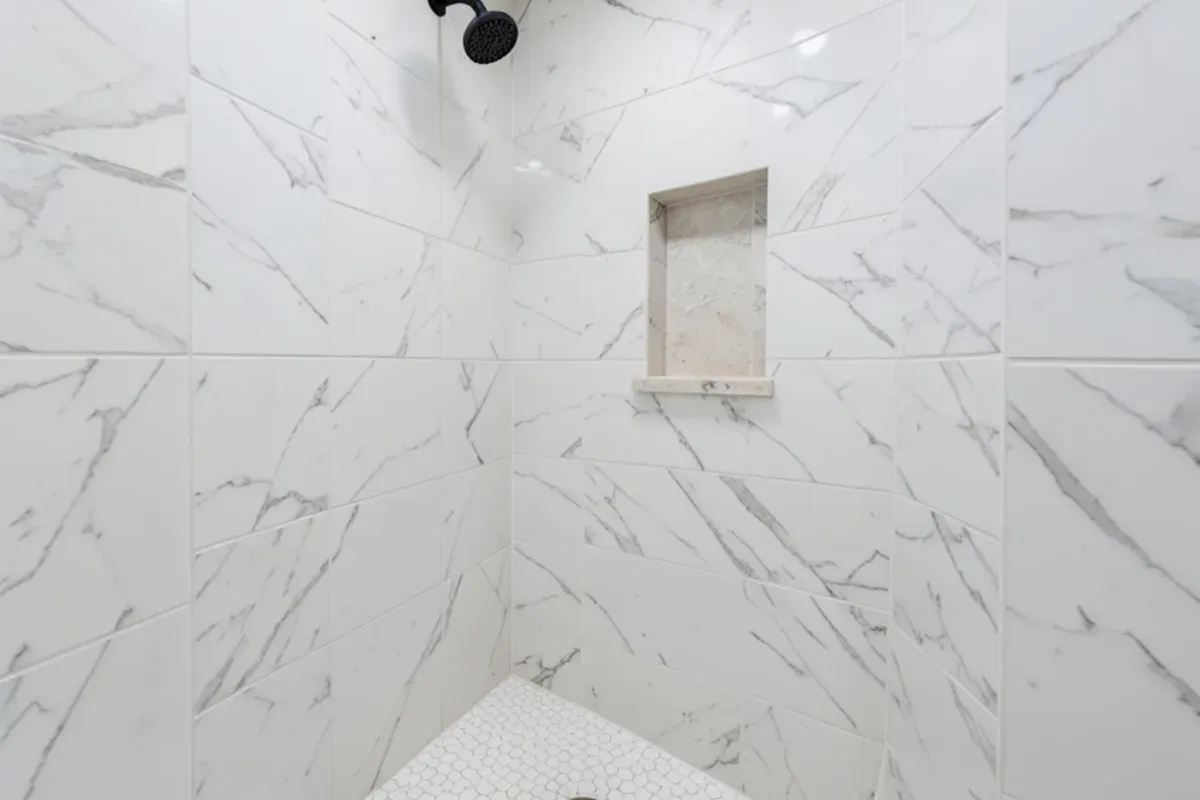
Yes, for a simple reason: fewer joints. A tiled shower can have hundreds of feet of grout line. A shower lined with large stone, quartz or porcelain panels has a handful of vertical and corner joints, sealed with silicone, and broad smooth surfaces that a squeegee clears in seconds. Our stone shower walls page compares the panel materials.
- Quartz panels: non-porous and need no sealing; keep them out of direct sun from a skylight
- Marble panels: classic look; sealed, and damaged by acidic cleaners
- Porcelain panels: non-porous and thin; edges need careful handling
Panels go over proper waterproofing, not instead of it. Our shower remodeling page covers what goes behind the walls.
When Is Mold a Sign of a Bigger Shower Problem?
- The wall feels soft or flexes when pressed
- Tiles are loose, cracked or sound hollow when tapped
- Grout cracks again soon after regrouting
- Paint or drywall on the far side of the shower wall is stained or bubbling
- A musty smell remains even after thorough cleaning
Any of these suggests water is getting past the surface into the wall. Cleaning won't fix that; opening the wall and rebuilding the waterproofing will. In Stuart, where historic downtown homes sit near waterfront condos, older showers often date from before modern waterproofing membranes, which makes this check worth doing early. For whole-room plans, see our bathroom remodeling in Fort Pierce page.
Talk to the shop before you buy a slab.
Free in-home estimates · Mon–Fri 7:00–4:30 · weekend estimates by appointment
What We See When an Old Shower Comes Apart
When an old tiled shower is opened up, the worst damage is usually where the mold was most stubborn: the bottom corners and around the valve. Grout that kept going dark was often a symptom of wet backer board behind it, not a cleaning failure.
That is why we look at the whole wall before suggesting a fix. If the tile is tight and the wall is solid, regrouting and recaulking with better ventilation may be enough. If it isn't, new waterproofing and slab or tile walls are the lasting answer.
We are also straight with people about slab walls: they cut cleaning, but they are not maintenance-free. The few joints they have are silicone, and silicone in a wet room eventually needs to be cut out and renewed. We place those joints in the corners and along the shower floor where they are easy to reach and see, rather than in the middle of a wall, so the renewal is a small job when its time comes.
Questions We Hear About This
Is bleach safe to use on shower grout and stone?
Bleach can lighten mold stains on plain cement grout, but it can discolor colored grout and damage natural stone such as marble. On stone walls, use a neutral cleaner labeled for stone. Whatever you use, rinse well and dry the walls afterward. If spots return within days, the issue is moisture, not the cleaner.
Should new grout be sealed?
Standard cement grout usually benefits from a penetrating sealer once it has fully cured, and from resealing over time. Sealer slows water absorption so the grout dries faster. Epoxy grout and silicone joints do not need sealing. Ask whoever installs your shower which grout they used and what upkeep it needs.
Is epoxy grout more resistant to mold?
Epoxy grout is non-porous, so it does not soak up water or soap residue the way cement grout does, and it resists staining well. Mold can still grow on residue left on its surface, but it cleans off easily. It is more demanding to install, which tends to show up in the labor cost.
Is vinegar a good grout cleaner?
Not as a regular habit. Vinegar is acidic, so it etches marble and other calcium-based stone on contact, and used again and again it can wear away unsealed cement grout. On glazed ceramic or porcelain tile with sealed grout, an occasional diluted wipe for soap film is less of a risk. For routine cleaning, a neutral cleaner and a dry squeegee do the job without that trade-off.
The Bottom Line
Shower mold is a moisture problem first. Dry the walls, move the air and keep joints sealed, and most grout stays clean. When it won't, look behind the tile.
If your shower in Fort Pierce, Stuart or a nearby town needs more than cleaning, give us a call. We will look at the walls, explain what we find and quote the fix in writing.