
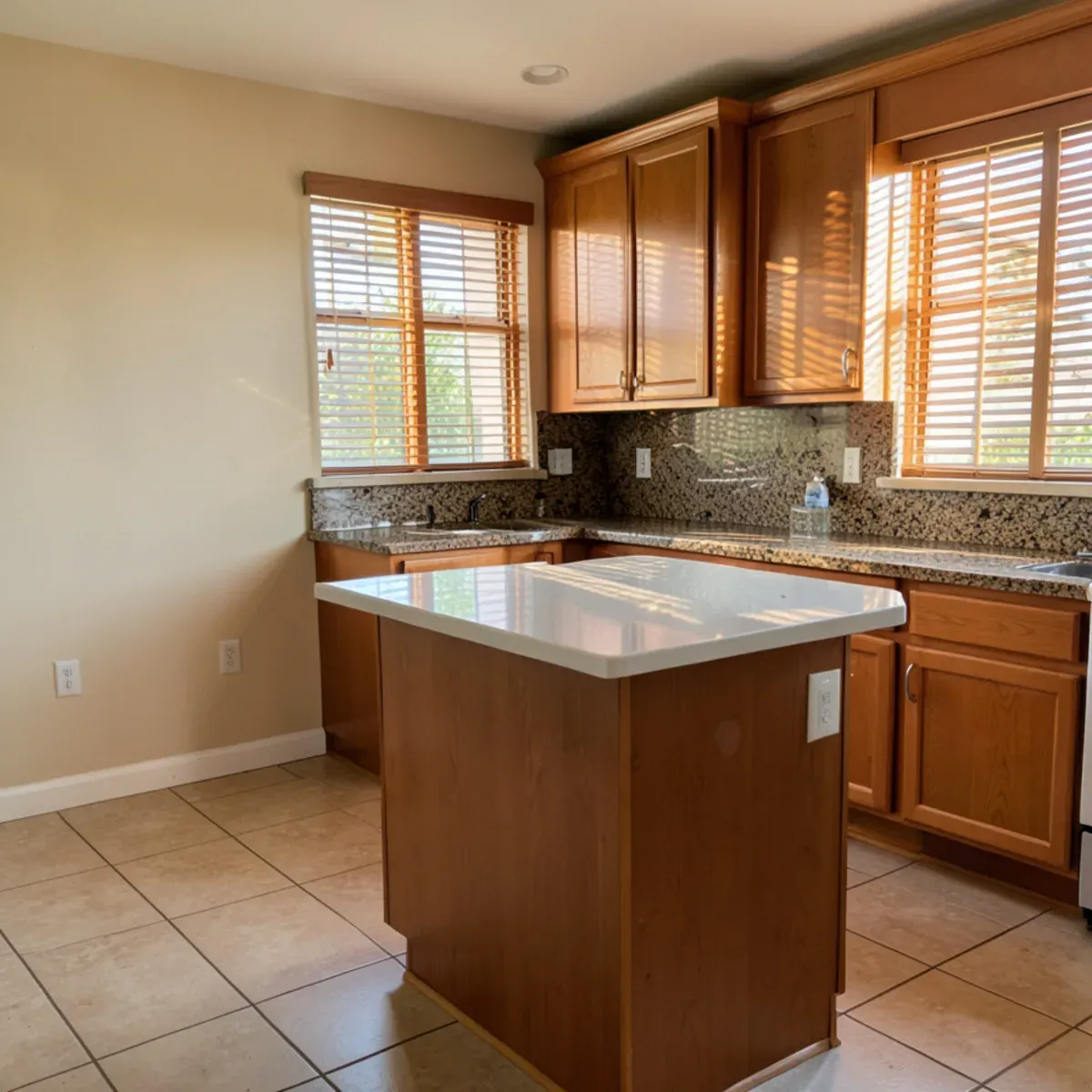
For most Treasure Coast kitchens, quartz suits owners who want even color and no sealing, while granite suits cooks who want heat tolerance, color that won't shift in strong sun and the one-of-a-kind look of natural stone. Neither is the wrong pick. The deciding factors are how you cook, how much light reaches the counters and whether an occasional sealing routine bothers you.
Florida adds a few twists to this comparison. We have strong sun pouring through sliders, lanai-facing kitchens and plenty of humidity: Bestplaces puts ZIP 34945 at 54.7 inches of annual rainfall, well above the U.S. figure of 38 inches. Humidity matters less than most people expect; light and cooking habits matter more.
Below is a straight comparison from a shop that cuts both materials every week, followed by the questions we ask before recommending either.
Quartz vs Granite at a Glance
| Factor | Quartz | Granite |
|---|---|---|
| What it is | Engineered: crushed stone bound with resin | Natural stone quarried in solid blocks |
| Hot pans | Resin can scorch; use trivets | Tolerates hot cookware well |
| Stains | Non-porous; spills wipe off | Porous; sealer slows oil and wine absorption |
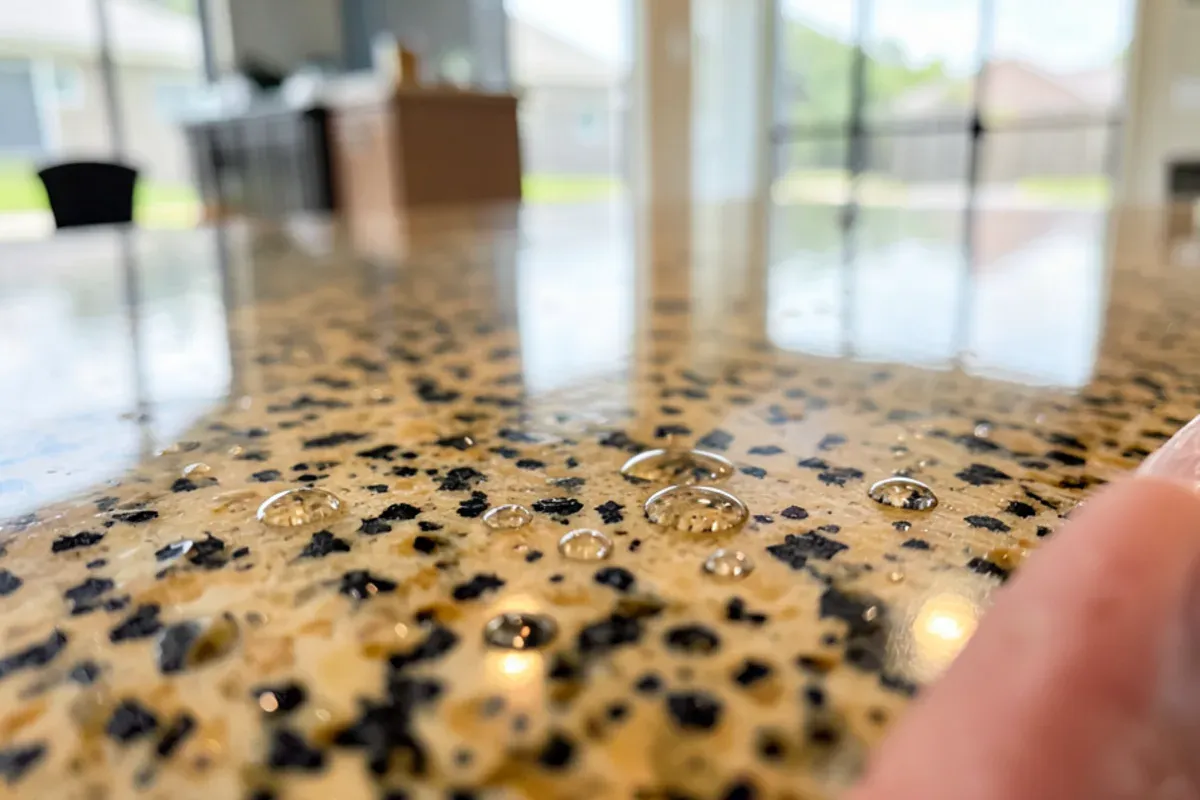
| Sealing | Never | Periodically, based on a water-drop test |
| Strong sun | Some colors can yellow over years | Holds its color |
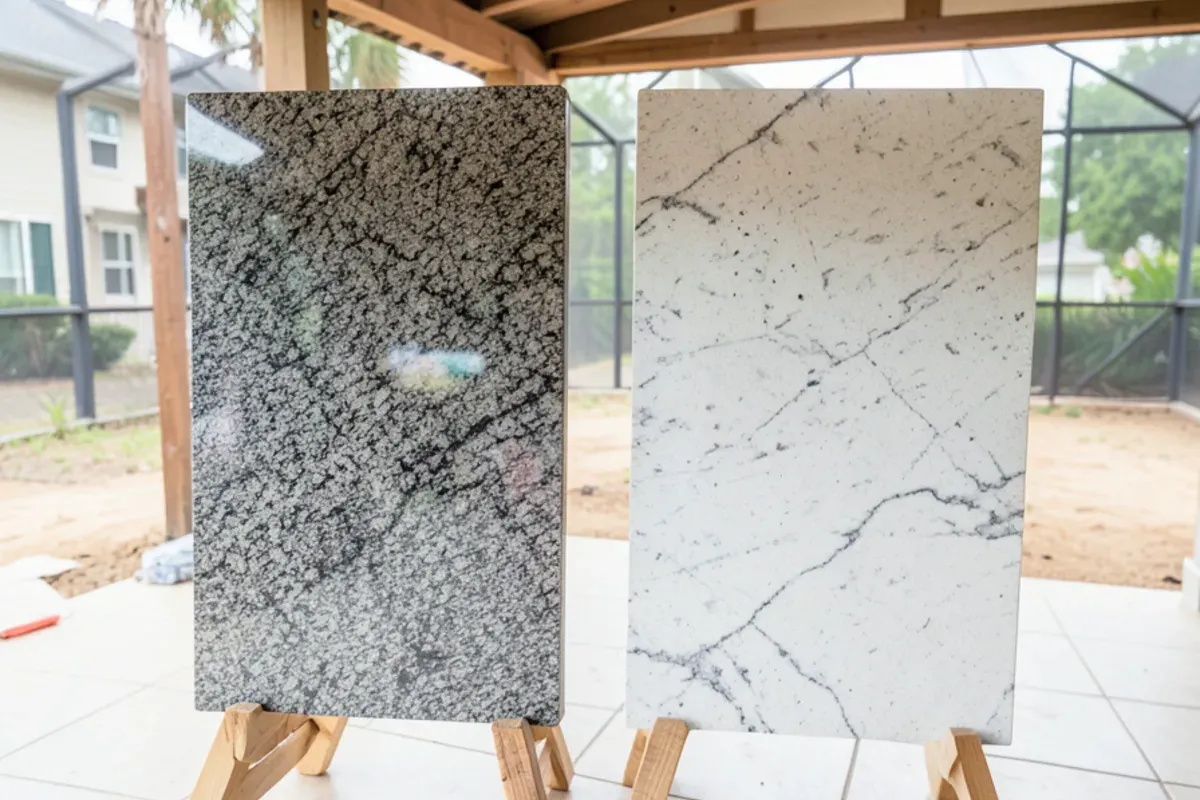
| Pattern | Consistent; what you see in the sample is what you get | Every slab differs; you choose the actual slab |
| Price spread | Set by design tier and veining | Set by color rarity and slab origin |
Want a straight answer for your kitchen? Call the shop.
Free in-home estimates · Mon–Fri 7:00–4:30 · weekend estimates by appointment
Which Holds Up Better to Florida Sun and Humidity?
Sun is where granite has a clear edge. Quartz resin can slowly yellow under long UV exposure, which is why most quartz makers exclude outdoor use. Indoors, that matters mainly for counters in direct afternoon light from a west-facing slider or a bay window. Granite doesn't care.
Humidity is mostly a myth in this debate. Moist air does not stain granite or loosen quartz. What sealing protects against is liquid sitting on the surface: cooking oil, wine, coffee. A Florida kitchen needs no more sealing than one in Ohio; a kitchen where someone fries every night needs more than one where nobody cooks.
Salt air on the barrier islands is similar. Neither material corrodes. Wipe salt residue off with plain water and both stay clean.
Which Is Easier to Live With Day to Day?
Quartz wins on routine. Soap and water, no sealer, no test. The tradeoff is that you must remember trivets and keep harsh cleaners away from the resin.
Granite asks a little more upfront and less in the moment. Most granites are sealed at install and resealed when water stops beading on the surface. Some dense, dark granites barely absorb anything; some light ones drink oil quickly. Our granite countertops page explains how the sealing schedule depends on the slab you pick.
- Choose quartz if you want the lowest daily effort and a uniform color
- Choose granite if you cook hot, set pans down without thinking, or want a counter by a sunny window
- Choose either if you are mainly worried about scratches; both resist knives far better than laminate
How Do Seams and Patterns Compare?
A solid or fine-grain quartz hides seams well because the color is consistent from one piece to the next. Veined quartz is harder: the veins have to be lined up across the joint, which takes layout time and sometimes more slab.
Granite has natural movement, and two slabs from the same lot can differ. That is part of the appeal and part of the planning. We want you to see the actual slab and approve where each piece will be cut from before fabrication, so the island and the perimeter look like they belong together.
Chips, Scorches and Stains: Which Damage Is Harder to Live With?
Both stones are hard to hurt in normal use, so the useful question is what the rare accident looks like and whether it can be lived with.
- Heat: a scorch on quartz is a change in the resin and does not wash out; granite shrugs off the same pan
- Chips: a heavy pot knocked against a sink edge or dishwasher corner can chip either one; on speckled granite a small filled chip often disappears into the pattern
- Stains: unsealed or worn-sealed granite can darken under cooking oil; quartz gives oil nowhere to go
- Harsh cleaners: bleach and oven cleaner can dull quartz resin, while granite mainly loses its sealer to them
- Scratches: both resist kitchen knives; grit dragged under a heavy appliance can mark either polish
For a kitchen where someone cooks hard every night, the granite list is easier to forgive. For a household that rarely fries but spills coffee and juice, the quartz list is shorter.
Does the Answer Change for a Vanity, Laundry Room or Lanai?
Yes, because the risks change with the room. In a bathroom, quartz is often the easier pick: makeup, toothpaste and hair products wipe off without any sealing routine, and the only real hazard is a hot styling tool set straight on the top. Granite works there too, but cosmetic oils can find a worn seal.
Laundry rooms favor whichever you have left over from the kitchen, since detergent drips and folding are gentle on both. Outdoors the choice is clear. Most quartz makers exclude outdoor use because UV can yellow the resin, so a covered lanai bar or summer kitchen in full Treasure Coast sun is a job for granite or another UV-stable surface.
Does Quartz or Granite Cost More?
Their price ranges overlap heavily. An entry-level granite and a solid-color quartz often land close together; an exotic granite and a heavily veined quartz both sit near the top. Layout, edges, cutouts and tear-out move the total as much as the material does.
In Fort Pierce, where the median home was built in 1982 (Point2 Homes), the cabinets under the old tops matter too. Either stone needs a flat, solid base, and older boxes sometimes need shimming first. That cost is the same whichever material you choose.
Talk to the shop before you buy a slab.
Free in-home estimates · Mon–Fri 7:00–4:30 · weekend estimates by appointment
From Our Shop: Two Questions Before We Recommend Either
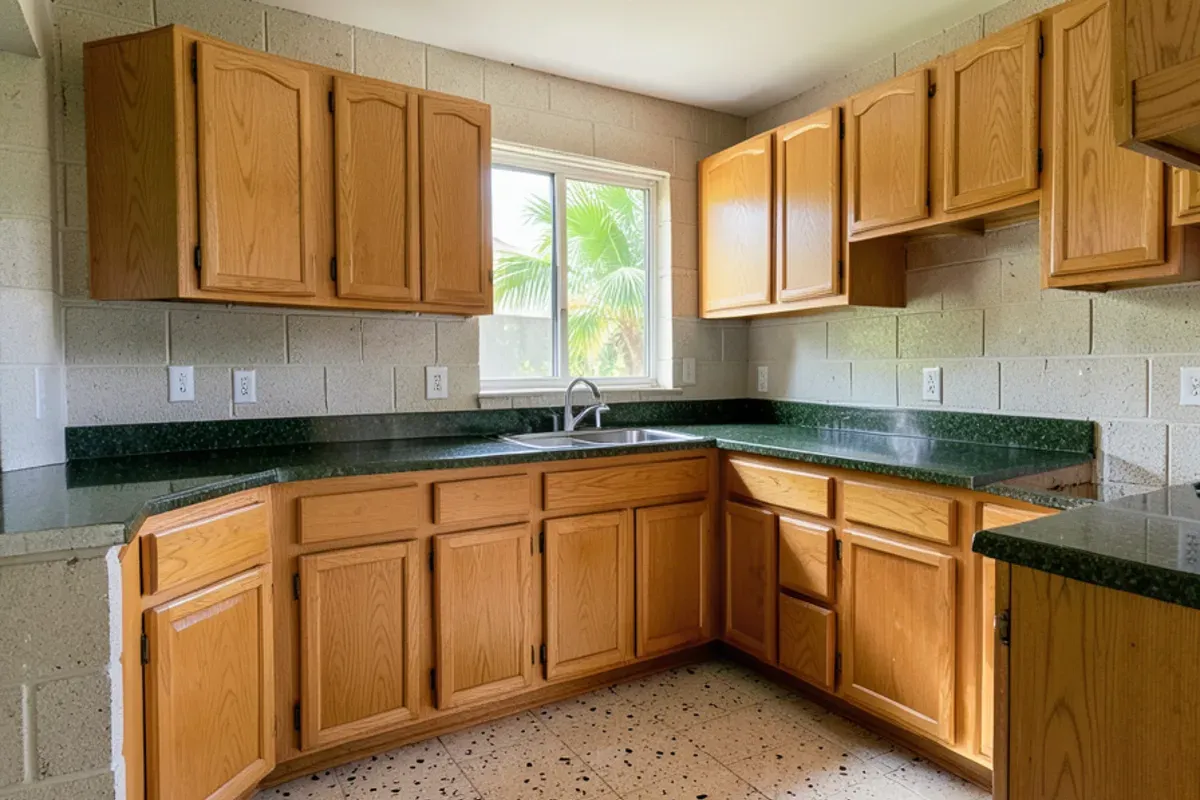
When Victor measures a kitchen, two questions usually settle this debate faster than any spec sheet. Where does the hot pan go when it comes off the burner? And where does the sun hit the counters at four in the afternoon? If the answers are "anywhere" and "right across the island," granite is the more forgiving choice.
If the household wants a bright, even look and is happy to keep trivets out, quartz is hard to beat for low upkeep. Plenty of kitchens split the difference, with granite on the range wall and quartz on the island. Our quartz countertops in Fort Pierce page shows which colors suit that kind of pairing.
One honest difference shows up on cutting day. A quartz slab is uniform, so it cuts predictably and what you approved in the sample is what arrives. Granite can carry natural fissures, pits or a softer band of mineral. Fissures are normal in natural stone and are not cracks, but we point each one out on the slab and plan the layout so none of them lands at a sink corner or a narrow strip beside the range.
Questions We Hear About This
Is granite more durable than quartz?
They are durable in different ways. Granite handles heat and sun better; quartz resists stains without sealing and is slightly more flexible, so it is less prone to chipping at thin points. Both resist scratches well. For a Treasure Coast kitchen with a sunny slider and a busy cook, granite usually holds up with less worry.
Can we mix quartz and granite in one kitchen?
Yes, and it often works well. A common pairing is a granite perimeter near the range and a quartz island, or the reverse when the island gets the most sun. The trick is choosing colors that share an undertone. We bring samples of both to the estimate so you can compare them in your own light.
Which adds more value when we sell?
Buyers on the Treasure Coast generally respond to both as stone countertops, so the material matters less than condition and style. A clean, current color and tight seams count more than the label. If you plan to sell soon, a neutral quartz or a classic granite with broad appeal is the safer choice than a bold pattern.
Which hides water spots and crumbs better, quartz or granite?
Pattern matters more than material here. Mid-tone speckled granite and speckled quartz both hide crumbs, drips and fingerprints well. Solid black or very dark polished surfaces of either kind show water spots, especially in homes on private wells with hard water, and solid bright white shows every coffee ring until it is wiped. If you hate wiping, choose movement over a flat color.
The Bottom Line
Quartz and granite are both strong choices for a Florida kitchen. Quartz trades a little heat and sun tolerance for easy care; granite trades a sealing routine for toughness and natural character.
Still deciding for a kitchen in Fort Pierce, Port St. Lucie or nearby? Call and we will bring samples of both to your home, look at your light and your cooking, and price each option in writing at no charge.