
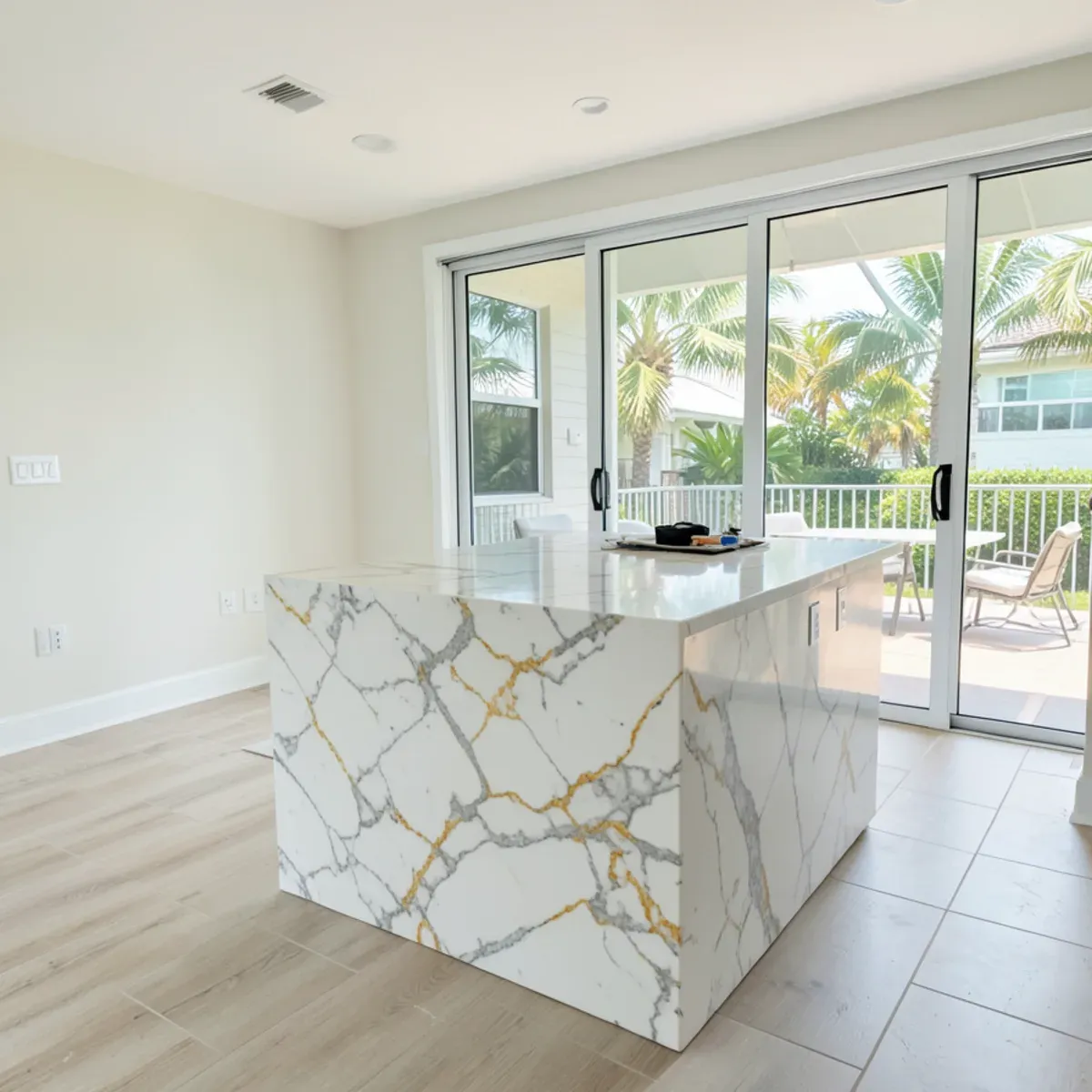
Quartzite is a natural metamorphic stone quarried in slabs; it is harder than granite, tolerates heat and holds its color in sun, but it needs sealing. Quartz is engineered from crushed quartz bound with resin; it needs no sealing and looks uniform, but the resin can scorch under hot pans and yellow in strong UV. Quartzite usually costs more to buy and to fabricate.
The names are a marketing accident. Both contain the mineral quartz, but one is formed by the earth over millions of years and the other is pressed in a factory. That difference shows up in how they behave near a range, under a sunny slider and on the saw in our shop.
Below is how each is made, a side-by-side comparison, how to avoid buying a softer stone sold as quartzite, and how the choice plays out in Treasure Coast homes.
How Are Quartzite and Quartz Made?
Quartzite starts as sandstone. Heat and pressure fuse its quartz grains into a dense, crystalline rock, which is then quarried in blocks and sawn into slabs. Every slab is different, with veining and color that cannot be repeated.
Engineered quartz is mostly ground quartz mixed with resin binders and pigments, pressed into slabs and cured. Because it is made, the pattern can be controlled: a solid white, a soft speckle or a marble-look vein that repeats from slab to slab.
Want a straight answer for your kitchen? Call the shop.
Free in-home estimates · Mon–Fri 7:00–4:30 · weekend estimates by appointment
Quartzite vs Quartz Compared Side by Side
| Feature | Quartzite | Quartz |
|---|---|---|
| Origin | Natural metamorphic stone | Engineered: crushed quartz plus resin |
| Scratch resistance | Very high; harder than granite | High, though resin is softer than the stone |
| Heat near the range | Tolerates hot pans | Resin can scorch or discolor |
| Direct sun | Holds its color | Some colors yellow over years of UV |
| Sealing | Yes, periodically | No |
| Pattern | Unique to each slab | Uniform and repeatable |
| Fabrication | Slow and hard on tooling | Predictable to cut and polish |
| Typical price | Usually higher | Wide range by brand tier and pattern |
How Does Daily Care Differ Between the Two?
Neither surface is fussy, but the routines are not the same. Quartzite is vulnerable to things that soak in; quartz is vulnerable to things that heat the resin or strip its finish.
| Care task | Quartzite | Quartz |
|---|---|---|
| Everyday cleaning | Warm water and a pH-neutral stone soap | Warm water and a mild dish soap |
| Cleaners to skip | Vinegar, citrus and bleach sprays, which wear the sealer away | Oven cleaner, strong degreasers and scouring pads, which can dull the resin |
| Hot pans | A brief set-down is tolerated; trivets are still wise | A trivet or board every time |
| Spills to catch quickly | Cooking oil, turmeric and red wine on light slabs | Dried-on food, lifted with a plastic scraper rather than an abrasive |
| Periodic upkeep | Water-drop test, and reseal when the water darkens the stone | Nothing beyond cleaning |
If you know you will never remember to reseal, the last row may settle it. If you cook at high heat and slide pans straight off the burner, the hot-pan row will. Most households can live with either; the point is to choose the routine you will actually keep.
Is That Slab Really Quartzite?
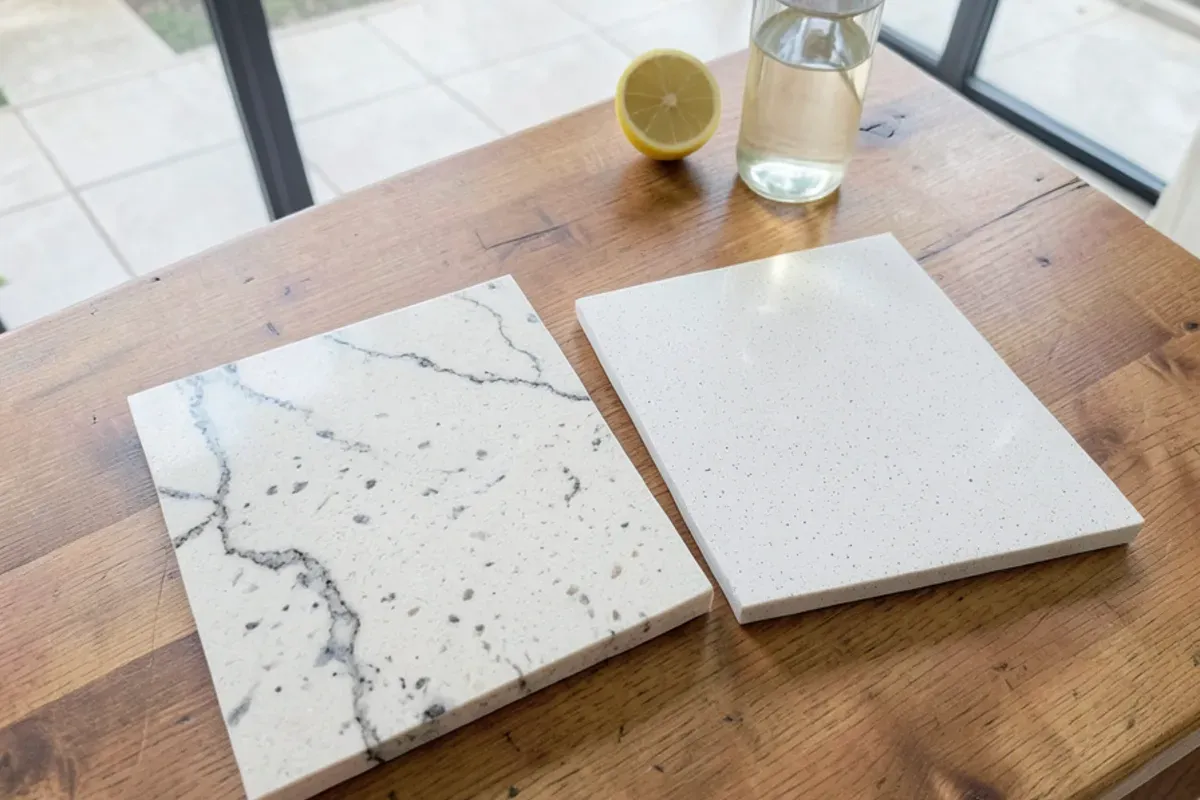
Not every slab sold as quartzite is true quartzite. Some are dolomitic marble or a softer stone with a similar look, and they etch and scratch like marble. Ask for a sample and run two simple checks at home:
- Scratch test: drag the corner of a glass bottle across a raw edge; true quartzite scratches the glass rather than the other way around
- Acid test: leave a few drops of lemon juice on the sample for several minutes; a dull spot when wiped suggests marble content
- Ask the supplier directly how the stone is classified and whether it etches
Our quartzite countertops page goes further into sealing, common colors such as Taj Mahal and white quartzites, and why fabrication takes longer.
Which One Suits a Vero Beach or Palm City Kitchen?
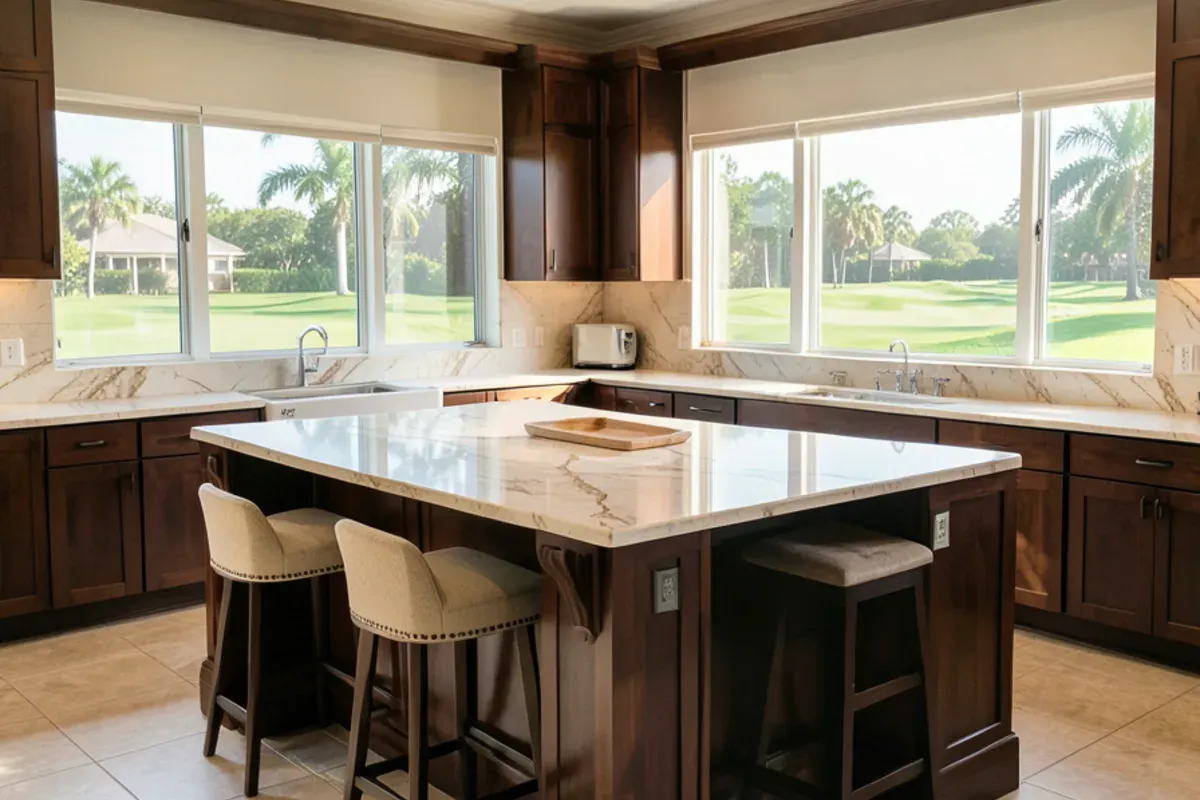
Sun exposure and how you cook decide most of it. Barrier-island homes in Vero Beach often have counters bathed in light from wide sliders and windows facing the water. Quartzite is the safer bet there because it does not rely on resin that can yellow. The same goes for a counter that runs out onto a covered lanai.
In the larger custom kitchens common in the gated golf and equestrian communities of Palm City, across the St. Lucie River from Stuart, the question is often about the island. A quartzite island gives one-of-a-kind veining; a quartz island gives a clean, consistent field that matches the perimeter exactly. If you want that uniform look with no sealing, our quartz countertops page compares colors and finishes.
Why Does Quartzite Cost More to Fabricate?
The same hardness that makes quartzite tough in your kitchen makes it slow in the shop. Cutting, shaping edges and polishing take more passes, and the tooling wears faster. Natural fissures need careful handling so a slab does not crack during cutouts. Quartz, by contrast, cuts predictably and its edges polish quickly.
What moves each price
- Quartzite: how rare the color and figure are, whether matching slabs from the same block are available for bookmatching, and how much of each slab is lost to fissures during layout
- Quartz: the maker's product tier, whether the pattern is a solid, a speckle or a long marble-style vein, the slab size and the 2 cm or 3 cm thickness
- Both: total length of finished edge, the profile, sink and cooktop openings, and removal of the old tops
Because quartz spans such a wide price range, a premium veined quartz can land close to an entry-level quartzite on the same kitchen. Compare two written quotes on an identical layout, edge and cutout list before deciding that one material is out of reach.
Shop Talk: What Quartzite Is Like on the Cutting Table
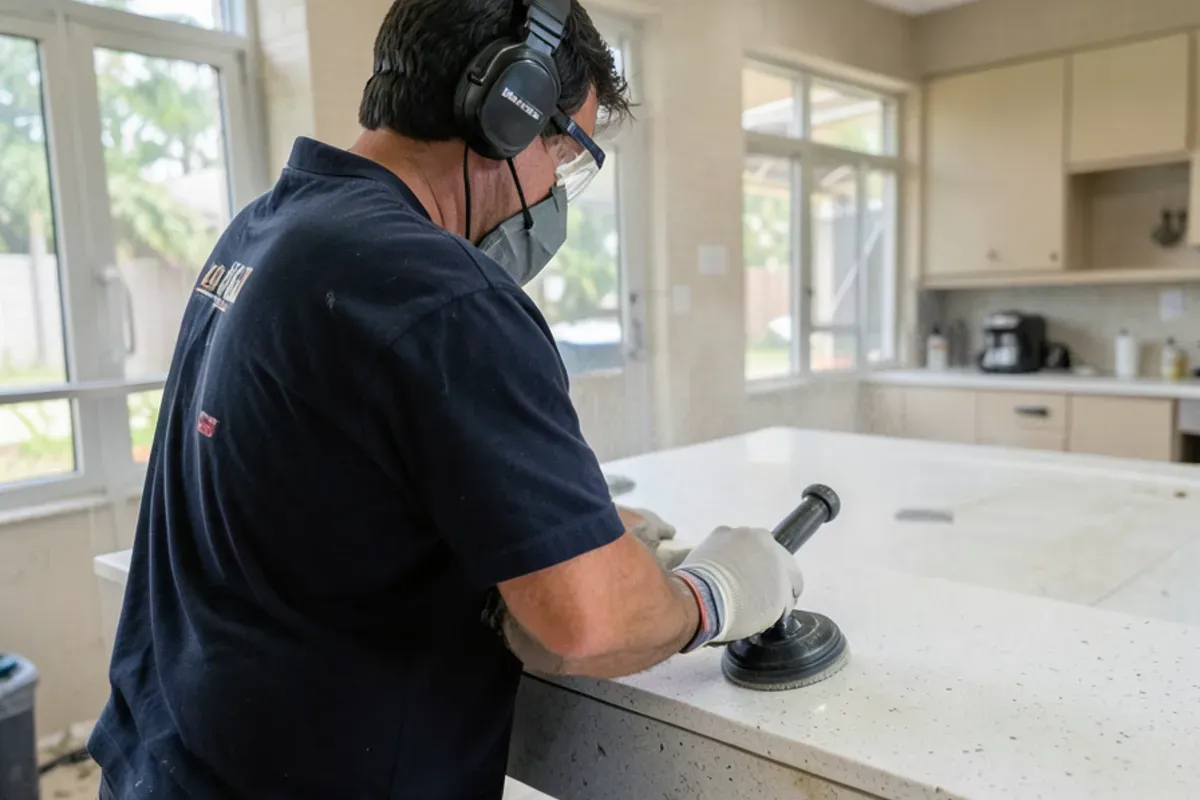
When we cut quartzite, we slow everything down: feed rates, edge work, polishing. We also study each slab for natural fissures before laying out the template, because a fissure running through a sink cutout is a weak point we would rather move than cut through.
Quartz is the opposite experience. It behaves the same from one slab to the next, so the layout is mostly about seams and veining direction. Neither is better; they are different jobs, and the difference is part of what you pay for.
One thing we show every quartzite buyer: many natural slabs leave the processor with small pits and hairline fissures filled with resin, then polished. That is normal practice and not a defect, but it means a few spots on the surface are not pure stone. Tilt a flashlight low across the slab before you approve it and those filled areas show up. If one sits where the cooktop or the sink cutout will go, we can usually shift the layout to keep it away from heat and water.
Questions We Hear About This
Does quartzite need sealing like granite does?
Yes. Quartzite is dense but still porous enough that oils and colored liquids can soak in if it is left unsealed, and lighter colors show stains most. A periodic sealing, checked with a simple water-drop test, keeps it protected. Quartz needs no sealing at all, which is one of the main reasons owners who dislike upkeep choose it.
Is quartzite or quartz safer next to a range?
Quartzite. As a natural stone it tolerates a hot pan set down briefly, while the resin in quartz can scorch or discolor from direct heat. Even with quartzite, trivets are a good habit because sudden, intense heat on any stone is a risk. With quartz, keep a trivet or board beside the cooktop and use it every time.
Can we use quartzite and quartz in the same kitchen?
Yes, and it is a sensible split. A quartzite island gives the room a natural centerpiece, while quartz on the perimeter keeps the working counters low-maintenance and consistent. The trick is choosing colors that sit well together, so bring samples of both into your own light. We can lay both on your cabinets at the estimate.
Will quartzite or quartz look better in ten years?
Quartzite tends to look the same, because it has no resin to yellow and it resists scratches; a reseal now and then keeps stains out. Quartz stays clean and uniform indoors, but counters in strong sun from a slider or skylight can drift in color over the years. If your kitchen gets heavy afternoon light, that difference is worth weighing.
Is quartzite worth paying more than quartz?
It is when heat, sun or a one-of-a-kind slab matter to you. A counter beside a range you use hard, or an island under a bright west-facing slider, gets real value from a stone with no resin. If your priority is a uniform color with no sealing, the premium buys you little. Price both on the same layout before choosing, because the gap varies by slab.
The Bottom Line
Pick quartzite if you want a natural stone that shrugs off heat and sun and you do not mind sealing it. Pick quartz if you want uniform color and zero sealing and can live with trivets and some care near bright windows.
Whichever way you lean, our page on installing countertops in Fort Pierce covers the process. Phone us for an estimate visit; we carry quartzite and quartz samples so you can judge both under your own lights.