
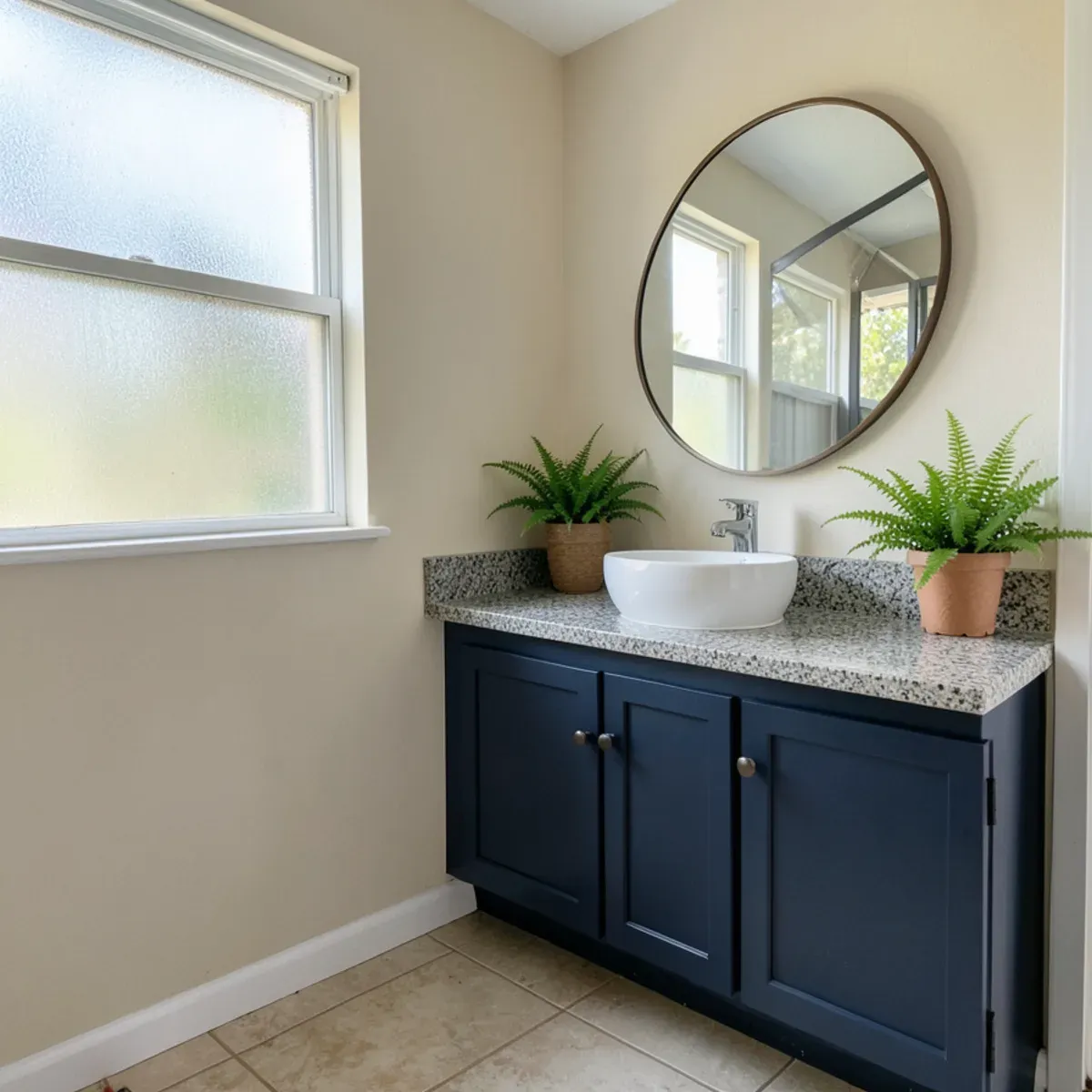
A remnant is the leftover section of a granite, quartz or marble slab after a larger job is cut, and it is often big enough for a single bathroom vanity, a powder-room top or a small built-in. Remnants cost less than buying a full slab, but what is on hand changes constantly, so you choose from what is available rather than from a catalog.
Remnant shopping suits people who are flexible on color and want stone in a bathroom without paying for a whole slab. It suits them even more when the vanity is a standard single size, which most are.
Below is how remnants come about, which projects they fit, how to make one look like it belongs in your home and where their limits are.
Where Do Remnants Come From?
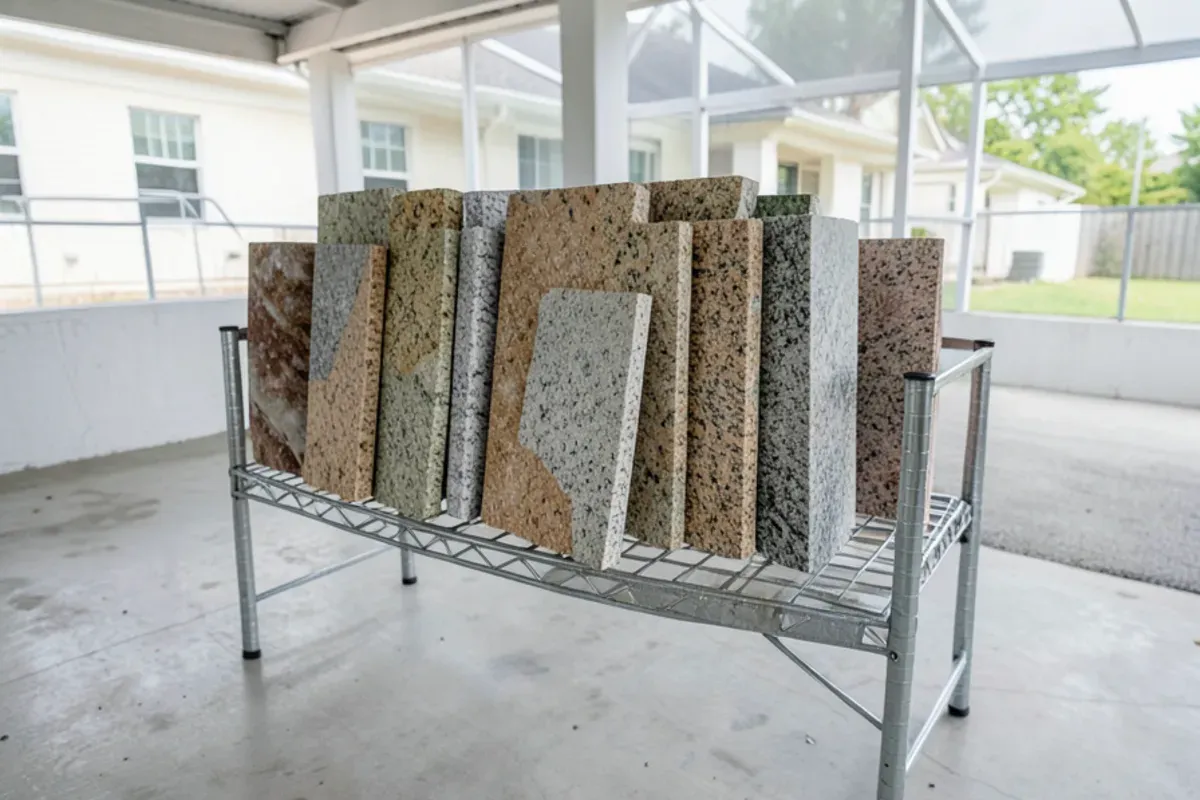
Kitchen layouts rarely use a slab edge to edge. An L-shaped run, an island or a peninsula leaves rectangles and odd shapes behind once the pieces are cut. The smallest offcuts become sink cutout discs and scrap; the larger ones are kept as remnants.
That means remnants come in whatever colors recent kitchens used, in granite, quartz and sometimes marble. A popular white quartz may turn up often; a rare granite may appear once. Our granite remnants page explains how we keep and price them.
Want a straight answer for your kitchen? Call the shop.
Free in-home estimates · Mon–Fri 7:00–4:30 · weekend estimates by appointment
What Remnant Sizes Are Usually Available?
Sizes vary with every kitchen, so there is no fixed list. What we can say is how common bathroom projects line up with typical leftover pieces:
| Project | Typical cabinet width | Remnant fit |
|---|---|---|
| Powder room vanity | About 24 to 30 inches | Very often |
| Single bath vanity | About 30 to 48 inches | Often |
| Double vanity | About 60 to 72 inches | Sometimes; needs a long piece |
| Backsplash and side splash strips | Matches the vanity | Only if enough of the same remnant is left |
| Shower niche shelf, bench top or window sill | Small pieces | Very often |
Standard vanity cabinets are around 21 inches deep, so most tops are cut a little deeper to overhang the doors. Bring your measurements, or let us measure, before you fall for a remnant.
How Do You Match a Remnant to the Rest of the House?
- Doing the kitchen too? Ask whether the offcut from your own kitchen slab can become the vanity top; the colors then match exactly
- Look at it in daylight: a remnant viewed under shop lights can read warmer or cooler at home
- Bring a sample of the floor tile or cabinet finish so you compare against the real surfaces
- Consider the faucet finish: warm granites tend to suit brass and bronze; cool grays and whites suit chrome and nickel
- Think about the splash: if the remnant is too small for a matching backsplash, plan a tile splash that ties the two together
In Lakewood Park, with its neighboring 55+ communities, many owners update a guest bath and a primary bath at once. Two remnants in coordinating colors often work better than forcing one stone into both rooms.
What Are the Limits of a Remnant Vanity Top?
- Selection changes week to week, and a piece you like may be used by someone else before you decide
- There may not be enough left for a matching backsplash and side splash
- Bold veining may not land where you would choose on a small piece
- Long double vanities often need a full slab or a seam, which most people avoid on a vanity
- Natural stone remnants still need sealing, just like the slab they came from
How Big Does the Remnant Need to Be? Measure Before You Shop
A remnant has to be larger than the finished top, because every exposed edge is trimmed back to fresh stone and polished. Take these measurements before you fall for a color:
- Measure the cabinet width and depth across the top of the box, not the doors
- Add the front overhang, plus any overhang on a side that is not against a wall
- List each splash piece you want: back, left side, right side, and their heights
- Note the sink's outside dimensions and whether the bowl is centered or offset
- Note the faucet type, since a widespread faucet needs more depth behind the bowl
- Check the corners of the room with a square; an out-of-square wall needs extra stone to scribe
That last step matters in Fort Pierce, where the median home dates from 1982 (Point2 Homes) and bathroom walls in block houses of that age are rarely true. Bring the list, or let us measure, and we can tell at a glance which pieces on hand will work.
Undermount or Vessel Sink on a Remnant?
The sink type changes which remnants are usable. An undermount bowl needs a large cutout with a polished inside edge, and the stone around it has to be sound on all four sides, so a piece with a fissure near the middle may not qualify. A bowl that sits on top asks for just two small openings, one for the drain and one for the faucet, which leaves most of the remnant's face intact and lets a piece with bold figure near its center still work.
Vessel bowls raise the rim height, so they suit a shorter cabinet; check the finished rim height before choosing one. Either way, buy the sink before the template so the openings are cut to the real fixture.
How Does a Remnant Vanity Project Run?
- We measure the vanity, check the cabinet and note the sink and faucet you plan to use
- You look at the remnants on hand and choose a piece
- We template with the sink on site and confirm where the bowl sits on the stone
- The top is cut, the cutout polished and the edge profiled
- We set the top, mount the sink and seal natural stone
- The faucet and drain are reconnected; any change to their location is licensed plumbing work
A remnant vanity is often the first step in a larger plan. If the shower or floor is also due, bathroom remodeling in Fort Pierce explains what comes next.
Talk to the shop before you buy a slab.
Free in-home estimates · Mon–Fri 7:00–4:30 · weekend estimates by appointment
Shop Talk: How We Size Up a Remnant
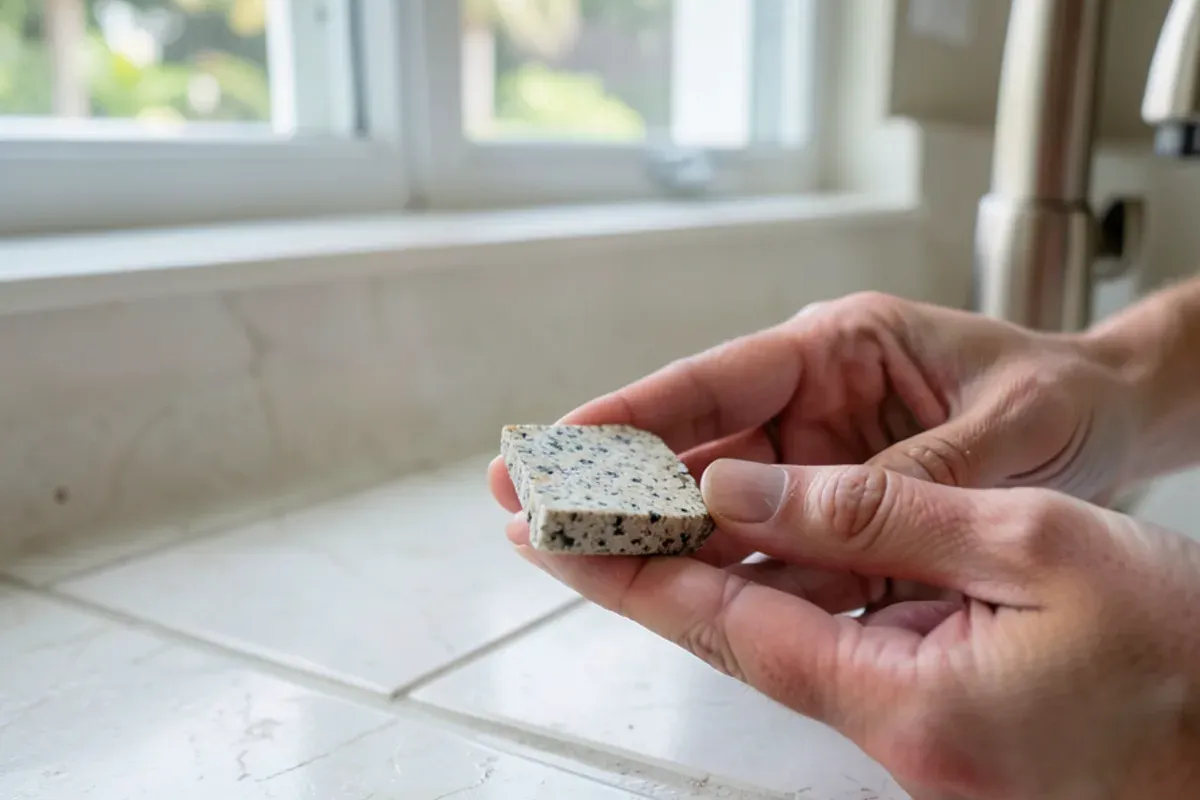
Before we offer a remnant for a vanity, we look at both faces and every edge. Natural stone can have fissures or pits that were harmless in the middle of a kitchen run but would land right at a sink cutout on a small top. We plan the cut so the weakest part of the piece ends up in the scrap, not around the bowl.
We also check which edges were factory edges and which were saw cuts from the earlier job, because the visible front edge of your vanity needs to be profiled and polished fresh. On a granite remnant, we seal at install, the same as any full-slab top.
Matching an older kitchen is where we slow people down. A remnant with the same color name as counters installed years ago may come from a different production run or a different quarry block, and the tone can shift more than the name suggests. If the goal is a match, bring a loose piece of the old stone or a clear daylight photo of it to compare. Often a coordinating remnant looks more deliberate than a near-miss match.
Questions We Hear About This
Are remnant countertops lower quality than full slabs?
No. A remnant is cut from the same slab as the kitchen it came from, so the stone is identical in quality. The only differences are size and selection. We inspect each piece before offering it and plan the cut so any natural flaw stays out of the finished top. Price is lower because the slab was already purchased.
Can we hold a remnant while we decide?
For a short time, often yes, but remnants are first come, first served. Once you are sure, a deposit and a template date are what reserve a piece. If you are still choosing a sink or faucet, settle that first so the remnant you pick can be templated right away.
Can a remnant work for something other than a vanity?
Yes. Remnants make good tops for laundry folding counters, small bar tops, shower bench seats, niche shelves and window sills. Indoor uses are simplest; for outdoor projects, granite remnants are the safer choice because quartz resin can discolor in direct sun.
Does a remnant vanity top take less time than a full-slab top?
Usually the wait is shorter, because the stone is already here and nothing has to be ordered. The schedule then depends mostly on two things you control: having the sink and faucet on site for the template, and a cabinet that is sound and level. Once those are set, we give you the template and install dates in writing with the estimate.
The Bottom Line
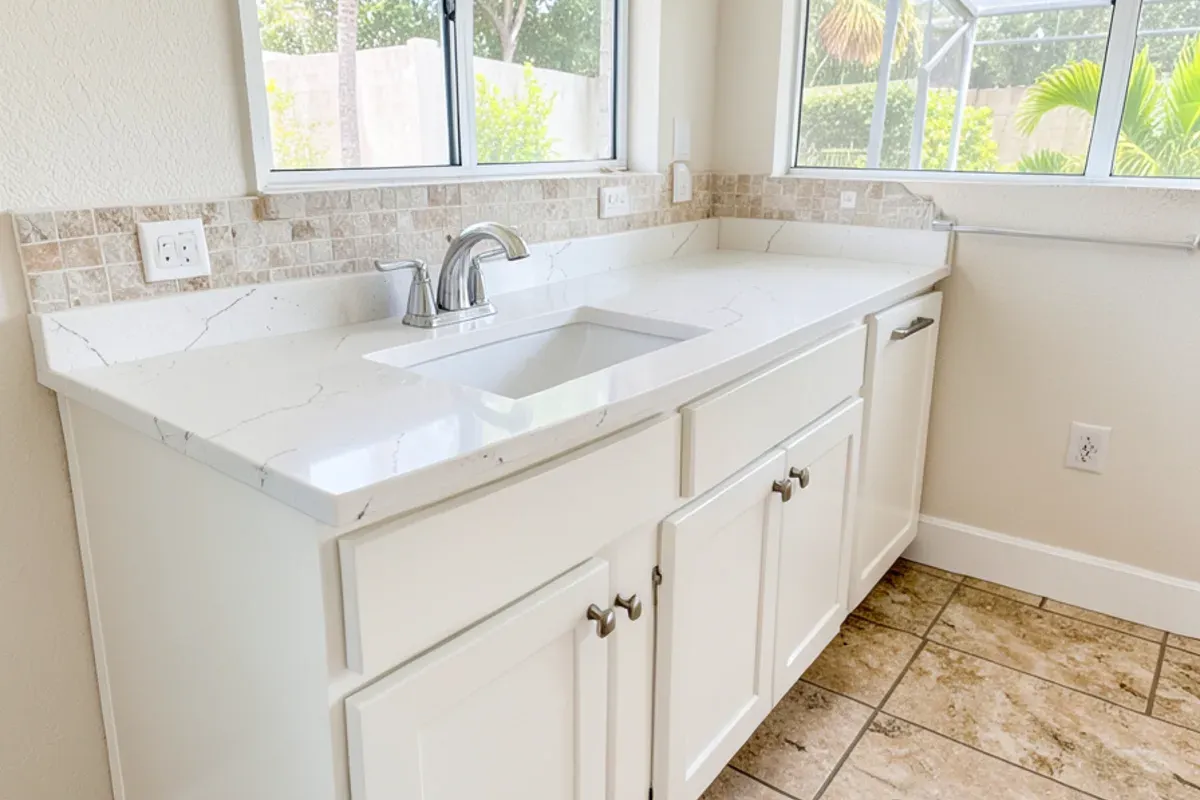
A remnant can put real stone on your vanity for less than a full slab, as long as you stay flexible on color and measure first.
Homeowners in Fort Pierce, Lakewood Park and the surrounding communities can call our Fort Pierce North shop for a free visit. We will measure the vanity and show you which remnants fit it.