
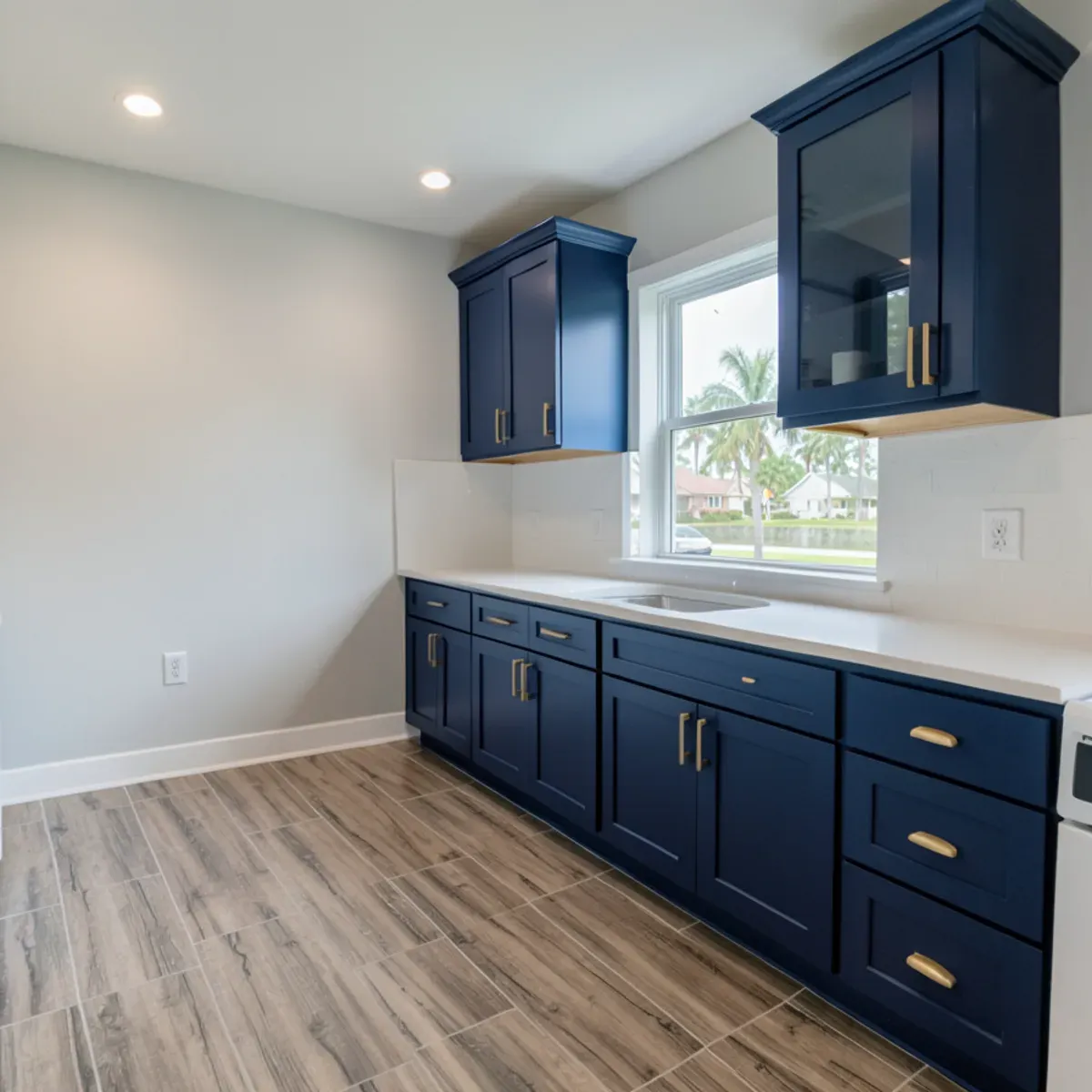
Refacing keeps your existing cabinet boxes and covers them with new veneer, doors and drawer fronts, so it usually costs less and disrupts the kitchen less than replacement, but it only suits sound boxes in a layout you like. Replacement wins when boxes are water-damaged, the layout is changing, or you want different sizes, drawers or an island.
If new stone countertops are part of the plan, the order of work matters either way. Refacing and replacement solve different problems: refacing changes how cabinets look, while replacement changes how they work. To be clear about our role, we supply and install new cabinets and stone countertops, and we do not reface cabinets ourselves. This guide lays out both options fairly so you can decide which one your kitchen needs before the countertops are planned. For the cabinet work we do offer, see kitchen cabinets in Fort Pierce.
What Is the Difference Between Refacing and Replacing Cabinets?
| Refacing | Replacement | |
|---|---|---|
| What stays | Existing boxes and layout | Nothing; the old cabinets come out |
| What changes | Veneer on face frames and end panels, plus new doors, drawer fronts and hardware | Boxes, doors, drawers, interiors and often the layout |
| Layout or sizes | Stay the same | Can change: new island, drawer banks, taller uppers |
| Fixes damaged boxes? | No | Yes |
| Countertops | Can often stay, or be replaced | Removed with the cabinets; new tops templated on the new boxes |
| Kitchen downtime | Usually shorter | Longer, especially with plumbing or layout changes |
Want a straight answer for your kitchen? Call the shop.
Free in-home estimates · Mon–Fri 7:00–4:30 · weekend estimates by appointment
When Does Refacing Save Real Money?
Refacing makes sense when the kitchen's bones are good and only the surface is tired. Check these conditions honestly:
- The boxes are plywood or solid wood and show no water damage, especially at the sink base.
- The cabinets are level, or close enough to correct with shims.
- You are happy with the layout, the cabinet sizes and the amount of storage.
- The existing countertops are staying, or you are fine templating new ones on the refaced boxes.
- The appliances fit their openings and are not changing size.
If all five hold, refacing can deliver a new look for less than replacement, with fewer days of disruption. If any one fails, the savings shrink fast, because you end up paying to cover cabinets that still carry the original problem.
When Do the Cabinet Boxes Have to Go?
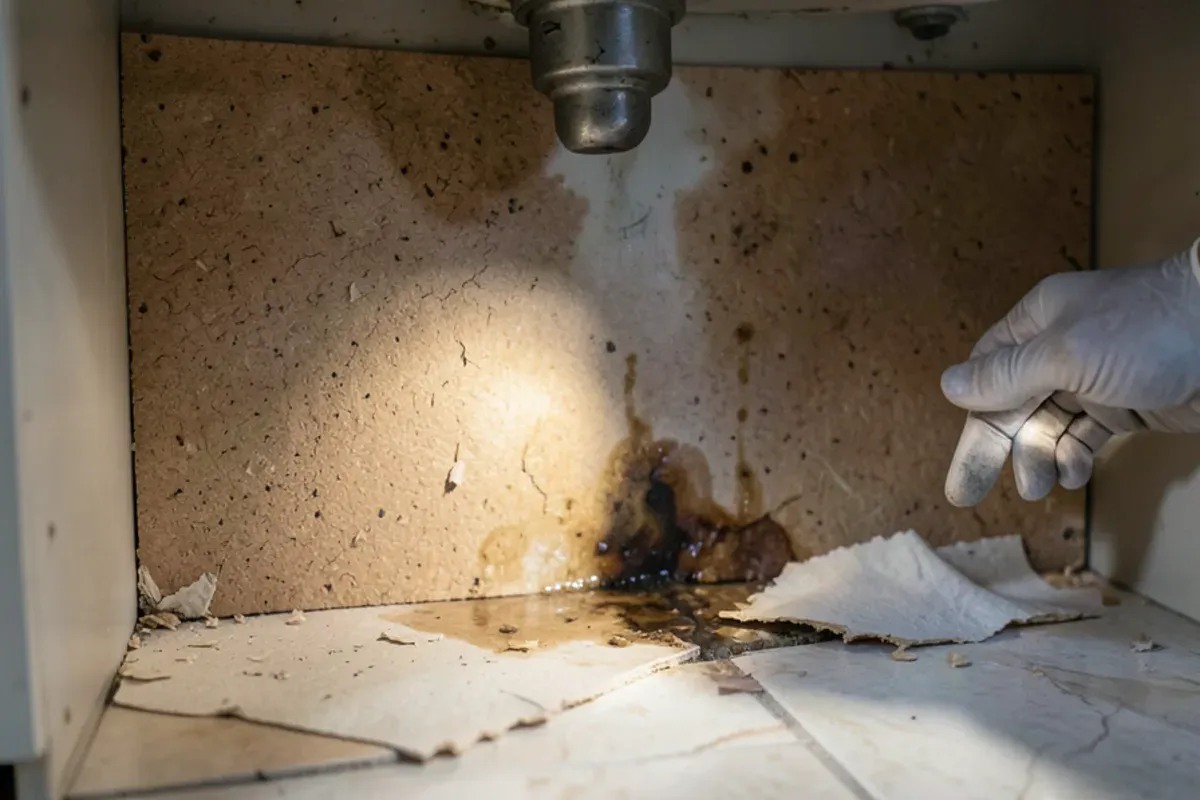
- Particleboard swollen from leaks at the sink or dishwasher
- Runs that have settled and cannot be brought back to level
- A layout change: the sink, range or refrigerator moving, or an island being added
- Storage that does not work, such as deep shelf bases where you want drawers
- Soffits or short uppers you want replaced with cabinets that reach the ceiling
Older housing makes these more likely. In historic downtown homes in Stuart and on the 1960s-era lots of eastern Port St. Lucie, kitchens may be on their second or third set of cabinets, sometimes installed over uneven floors. Replacement also opens the door to custom cabinets sized to the room rather than to a builder's standard widths.
How Does Each Choice Fit With New Stone Countertops?
Sequence is where the two paths really differ.
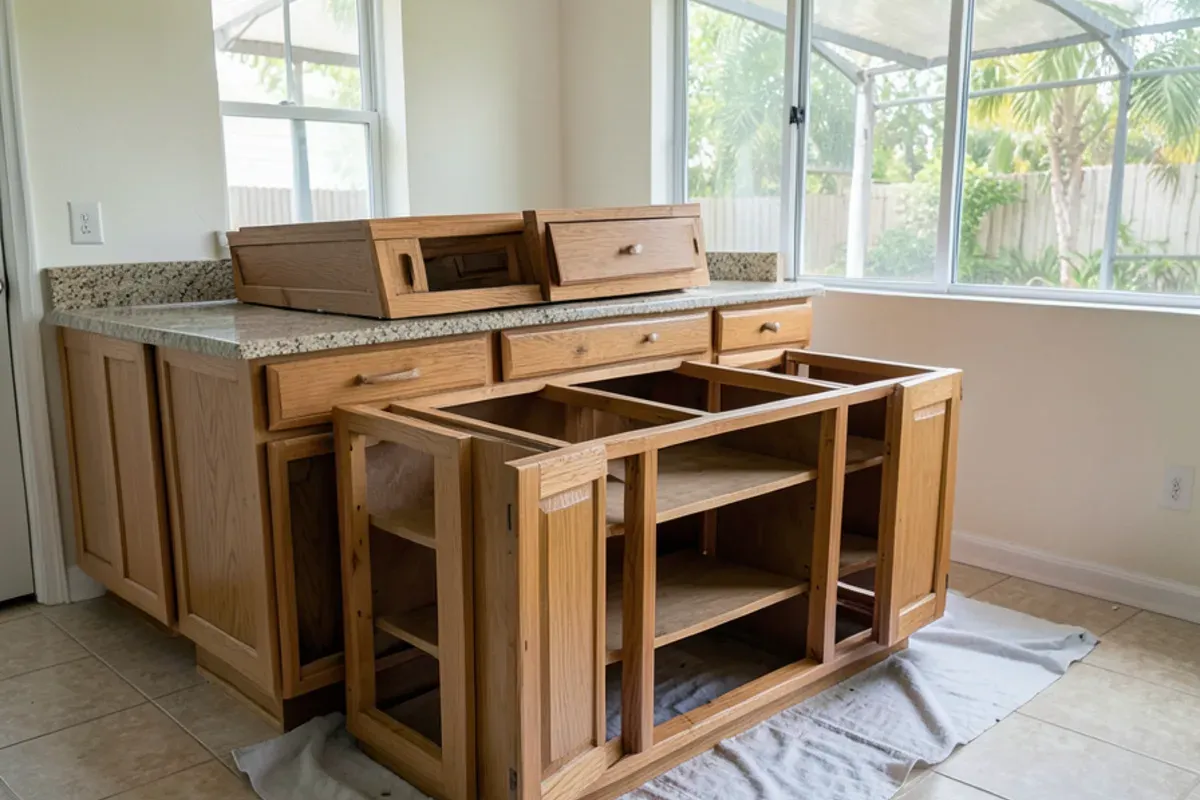
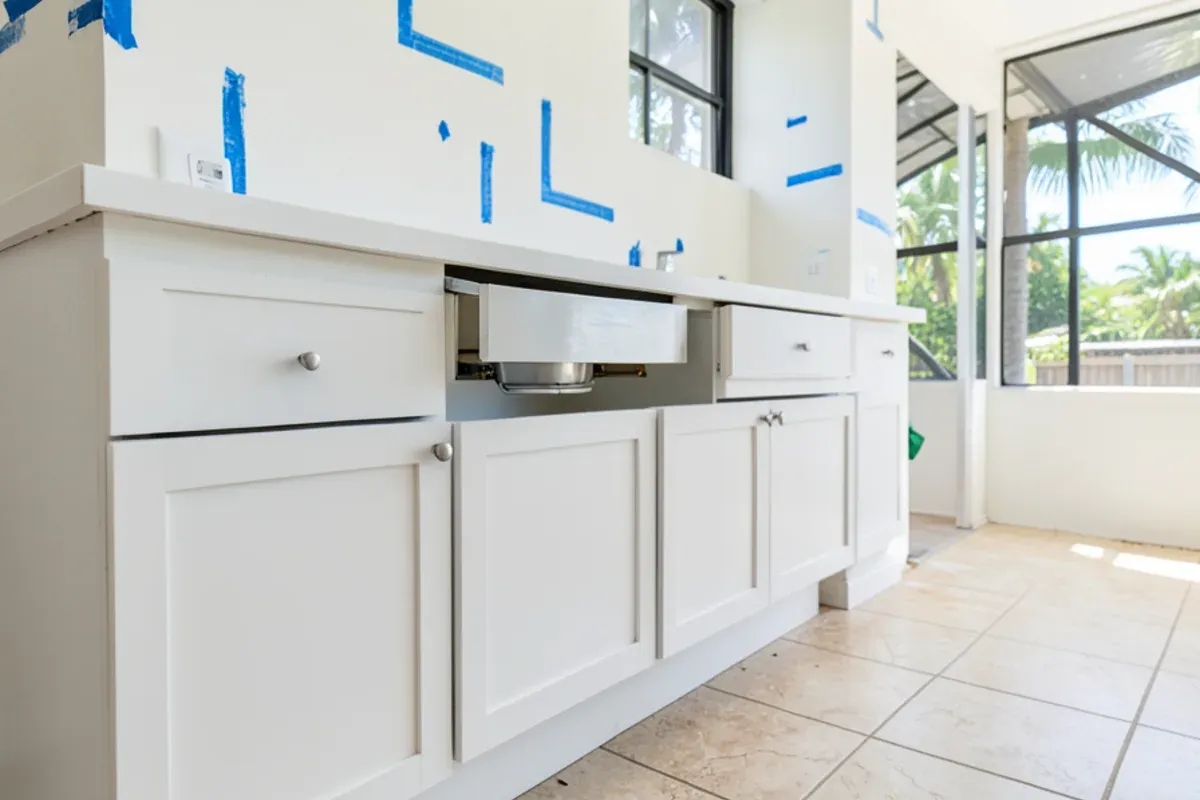
With refacing, decide first whether the countertops are staying. If they are coming off, remove them before the refacing work so the new veneer is not scuffed during tear-out, then template the stone once the refaced boxes are finished and checked for level. If the old tops stay, the refacing company works around them, and the counters keep their current height and overhang.
With replacement, the order is simpler: old cabinets and tops come out together, new cabinets are set, leveled and fastened, and the template is taken on the finished boxes with the sink on site. Planning cabinets and stone as one job means the overhangs, sink base and appliance gaps line up from the start.
Either way, stone needs a flat, solid base. Refacing does not change what is underneath, so a box that is out of level stays that way until someone corrects it.
How Do You Compare a Refacing Quote With a Replacement Quote?
The two quotes describe different jobs, so the totals only mean something once you know what each one covers. Line them up against this list:
| Item | On a refacing quote | On a replacement quote |
|---|---|---|
| Surface material | Wood veneer or thermofoil on frames and end panels | Box material, especially at the sink base |
| Doors and drawer fronts | Style, material and finish | Style, material and finish |
| Hinges and drawer slides | Whether they are replaced or reused | Included with the new boxes; ask what type |
| Box repairs or swaps | Any sink base or drawer unit replaced, priced separately | Not needed; every box is new |
| Countertops | Kept in place, or removed and replaced by someone else | Removed; new tops templated on the new boxes |
| Tear-out and disposal | Old doors and fronts only | Old cabinets and tops |
| Trim, crown and filler | Matched to the new veneer | Supplied with the new cabinets |
Two details deserve a direct question. Thermofoil fronts can lift near a self-cleaning oven or a dishwasher that vents steam, so ask how the refacing material handles heat beside those appliances. And in humid Treasure Coast kitchens, ask what the new box or veneer is made of at the sink, because that is where both options are tested first. In newer Port St. Lucie homes, where builder boxes are usually sound but plain, the comparison deserves a careful look, because sound boxes are exactly what refacing needs.
Permits, Licensing and Disruption
In unincorporated St. Lucie County, neither option usually needs a permit by itself: the county's no-permit list includes replacing cabinets if the electrical and plumbing layouts stay unchanged (St. Lucie County Government). Florida also does not require state licensure for cabinet work (Florida DBPR). Permits come into play when a plan moves plumbing, adds circuits or alters walls, which happens far more often with replacement than with refacing.
On disruption, refacing typically leaves the kitchen usable for much of the job. Replacement takes it out of service from tear-out until the countertops are installed and the sink is reconnected.
From Our Shop: Open the Sink Base Before You Choose
When owners ask whether their cabinets are worth refacing, we start in the same place every time: the sink base. Empty it, look at the floor and the lower edges of the side panels, and press on them. Staining, softness or flaking particleboard there means the boxes have a problem that new doors will not fix.
Then check level along the runs. If new granite or quartz is in the plan, a refaced cabinet that is out of level will need correcting before the stone goes on anyway, and that work is easier when the boxes are being replaced. If the sink base is dry and the runs are level, refacing is a reasonable option to price against new cabinets.
One detail gets missed when existing countertops stay on refaced cabinets: the overhang. New doors and drawer fronts are often thicker than the originals, and the veneer adds a little to the face frame. If the old top overhangs only slightly, the new fronts can end up flush with the countertop edge or even past it, which looks odd and catches hips and hands. Measure the overhang against the new door thickness before you order, or plan to replace the tops at the same time.
Questions We Hear About This
Do you reface cabinets?
No. We supply and install new kitchen cabinets and fabricate and install stone countertops. If refacing suits your kitchen, a refacing company can handle the cabinets, and we can template and install new countertops once the refaced boxes are finished and level. If you are weighing both routes, we can price new cabinets so you have a comparison in writing.
Can refaced cabinets carry a new granite or quartz top?
Yes, if the boxes underneath are sound and level. Refacing covers the outside of the cabinets but does not strengthen them, so the same checks apply as for any existing cabinet: a dry sink base, solid end panels and level runs. If those pass, refaced cabinets carry stone just as they did before the new veneer went on.
Does refacing let us change cabinet sizes or add drawers?
Only in a limited way. Refacing keeps the existing boxes, so widths, depths and heights stay the same. Some refacing jobs swap a shelf base for a drawer unit or add a pull-out, but anything beyond that becomes partial replacement. If storage is your main complaint, replacement is usually the better value over the life of the kitchen.
Is refacing still worth it if the countertops are being replaced anyway?
It can be, but the gap narrows. Once the old tops are coming off, part of the disruption that refacing avoids happens regardless, and the kitchen is out of service until the new stone is in. Refacing still makes sense when the boxes are dry, level and well laid out. If any of that is doubtful, price new cabinets alongside it.
The Bottom Line
Refacing is a good choice for sound cabinets in a layout you like; replacement is the right call when the boxes are damaged or the kitchen needs to work differently. New stone countertops fit either path, as long as the base is flat and the sequence is planned.
Call and we will come out for a free estimate: we will inspect your cabinets, tell you plainly what we see, and price new cabinets and countertops in writing so you can compare them against a refacing quote.